
Desserts
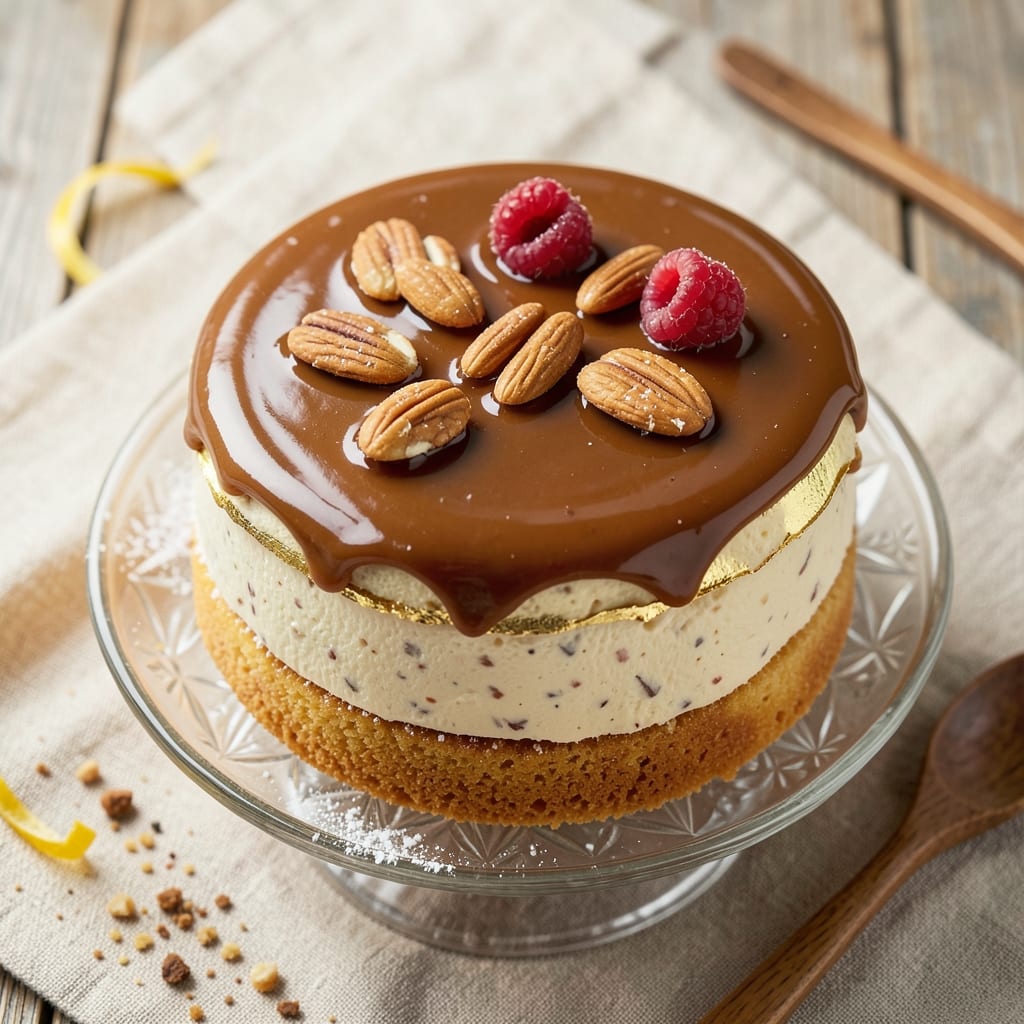
This amaretto mousse cake delivers layers of nutty liqueur swirls and velvety texture that will impress even the most discerning dessert lovers. The secret lies in balancing rich amaretto flavor with silky mousse and a sturdy cake base—no one will guess it's easier than it looks. What sets this recipe apart is the perfect ratio of alcohol to cream, ensuring each bite has that signature almond-kissed sweetness without being overpowering.
The foundation starts with a simple yet sturdy cake batter that holds up beautifully when layered. Meanwhile, the mousse gets its signature texture from properly stabilized egg whites and a touch of gelatin, creating that signature lightness while maintaining structure. Chilling times are critical here—too soon, and the layers won't set properly; too long, and the cake could become too firm.
What you'll end up with is a showstopping dessert featuring alternating layers of moist cake and airy mousse, swirled with ribbons of amaretto-infused cream. The nutty aroma alone will have guests anticipating each bite, while the balanced sweetness makes it perfect for special occasions or when you want to treat yourself. This recipe delivers restaurant-quality results with minimal fuss.
Whether you're serving this to guests or simply indulging in a solo dessert night, the combination of textures and flavors makes it unforgettable. The key is patience—letting each layer set properly ensures clean slices and that perfect first bite. Let's create this decadent masterpiece together.
Ingredients for amaretto mousse cake
These carefully balanced ingredients create layers of nutty perfection—where sturdy cake meets airy mousse swirled with amaretto magic.
| Ingredient | Amount | Notes |
|---|---|---|
| All-Purpose Flour 🌾 | 2 cups | Sifted for light texture |
| Granulated Sugar 🍚 | 1 ½ cups | Superfine preferred for smoothness |
| Unsalted Butter 🧈 | 1 cup | Cold, cubed for cake layers |
| Large Eggs 🥚 | 4 whole | Room temperature for even mixing |
| Vanilla Extract 🌿 | 1 tbsp | Pure Madagascar preferred |
| Baking Powder 🍞 | 1 ½ tsp | Freshly measured for lift |
| Salt 🧂 | ½ tsp | Fine sea salt for balance |
| Heavy Whipping Cream 🥛 | 2 cups | Cold, full-fat for stability |
| Granulated Sugar 🍚 | 1 cup | For mousse sweetness |
| Amaretto Liqueur 🍷 | ½ cup | High-quality, almond-forward |
| Large Egg Whites 🥚 | 6 whole | Room temperature, separated |
| Unflavored Gelatin 🍬 | 1 ½ tsp | Bloomed in cold water |
| Almond Extract 🌿 | ½ tsp | Pure, not imitation |
| Powdered Sugar 🍚 | ½ cup | For final dusting |
The amaretto liqueur is non-negotiable here—Disaronno or Giffard deliver that authentic almond depth. If you can't find either, Luxardo works in a pinch, but expect slightly less intensity. For the cake, King Arthur flour gives the best texture, though any high-quality all-purpose will do. The butter? Plugrá or Land O'Lakes unsalted are my go-tos—they hold their shape beautifully when chilled. Eggs should be room temperature; cold ones can create pockets in your batter. Pro tip: Buy extra eggs—you'll need the whites for the mousse too.
No amaretto? Maraschino cherry juice plus almond extract mimics the flavor, though the alcohol's role in stabilizing the mousse won't be perfectly replicated. For gelatin, unflavored powder is easiest—just bloom it in cold water for 5 minutes. The powdered sugar? Domino is fine, but Confectioners' sugar from a bulk bin often has less cornstarch, which means smoother mousse. Short on almond extract? Extra vanilla plus a pinch of ground almonds adds depth. And if you're feeling fancy, toast the almonds lightly—their aroma will elevate every layer.
This cake demands patience—chill each layer for at least 2 hours before assembling, and 4 hours total before serving. The mousse can be made a day ahead and stored in the fridge, but bring it to room temperature before swirling. Leftovers? Keep covered in the fridge for up to 3 days, though honestly, it disappears faster than that. For presentation, dust with powdered sugar right before serving—sift it through a fine mesh strainer for that restaurant-quality finish.
Why You'll Love This Recipe
- No Mixer Needed: I swear by this—just a whisk and a bowl. The eggs and butter come together so smoothly when you beat them by hand, and the flour folds in like butter. No standing around waiting for a machine to do the work.
- Almond-Butter Bliss: That amaretto swirl? It’s like a creamy hug in every bite. The vanilla and sugar caramelize just enough to balance the nutty kick from the amaretto, and the cake stays light—no heavy, greasy aftertaste.
- Date Night or Dessert Party: Serve it chilled for dinner guests or let it sit at room temp for a casual weekend treat. The mousse layer stays stable, so it’s just as impressive sliced neatly as it is when scraped straight from the pan.
- Leftover Luxury: This cake actually tastes better the next day—if you can wait that long. The flavors meld, and the texture stays luscious. Plus, it’s cheap to make with pantry staples, so you can bake a big one without guilt.
Step-by-step instructions for amaretto mousse cake
Here's how to create layers of buttery cake and velvety mousse infused with rich amaretto flavor.
Prepare the Classic Cake Layers
Preheat your oven to 350°F and grease three 8-inch round cake pans, lining the bottoms with parchment paper. In a large mixing bowl, combine the 2 cups all-purpose flour, 1.5 cups granulated sugar, 1.5 tsp baking powder, and 0.5 tsp salt. Whisk until evenly distributed—this ensures light, airy layers.
In a separate bowl, beat the 1 cup cold unsalted butter until creamy (about 2 minutes). Gradually add the 4 room-temperature eggs, one at a time, mixing well after each addition. Scrape down the sides of the bowl as needed to maintain even consistency. Stir in the 1 tbsp vanilla extract and 0.5 tsp almond extract for depth of flavor.
With the mixer on low speed, gradually add the dry ingredients to the wet mixture, mixing just until combined—overmixing develops gluten, which can make the cake dense. Divide the batter evenly among the prepared pans and bake for 25-30 minutes, or until a toothpick inserted into the center comes out clean. Let the layers cool in the pans for 10 minutes, then transfer to a wire rack to cool completely.
Create the Amaretto Mousse Filling
In a small bowl, sprinkle the 1.5 tsp unflavored gelatin over 3 tablespoons cold water and let it bloom for 5 minutes. Meanwhile, in a separate heatproof bowl, combine the 2 cups cold heavy whipping cream and 1 cup granulated sugar. Place this bowl over a pot of simmering water (double boiler), stirring constantly until the sugar dissolves and the mixture reaches 160°F. Remove from heat and stir in the bloomed gelatin until fully dissolved.
Transfer the mixture to a clean bowl and let it cool to room temperature, stirring occasionally. Once cooled, fold in the 0.5 cup amaretto liqueur and 0.5 tsp almond extract. In a separate bowl, whip the 6 egg whites to stiff peaks, then gently fold them into the amaretto mixture until fully incorporated. Chill the mousse in the refrigerator for at least 4 hours, or until set but still spoonable.
Assemble the Cake Layers
Place one cake layer on a serving plate or cake stand. Spread a thin layer of the amaretto mousse over the top, leaving a ½-inch border around the edges. Repeat with the remaining two layers, creating a sandwich-style cake. For extra indulgence, pipe additional mousse around the sides of the cake to create a decorative border.
To ensure the layers stay intact, wrap the assembled cake in plastic wrap and refrigerate for at least 2 hours. This chilling time allows the mousse to fully set and the flavors to meld together. Once set, dust the top and sides of the cake with 0.5 cup powdered sugar for a professional finish.
Serve and Enjoy
Slice the cake with a sharp, serrated knife that has been dipped in hot water and wiped dry—this ensures clean cuts through the layers. Serve each slice immediately, as the mousse is best enjoyed fresh from the refrigerator. The contrast between the moist, almond-infused mousse and the tender cake layers creates a harmonious balance of textures and flavors.
For an extra touch, garnish each serving with a sprinkle of powdered sugar and a drizzle of amaretto liqueur. Pair with a cup of freshly brewed coffee or a glass of chilled dessert wine to complement the nutty, liqueur-forward flavors of this decadent cake.
Pro Tips For Making Amaretto Mousse Cake
- Whisk Eggs Room-Temp: Cold eggs from the fridge won’t whip properly—pop them in a bowl of warm water for 10 minutes first. I learned this the hard way when my mousse collapsed like a sad soufflé. Room-temperature eggs emulsify better and give that silky texture you’re after. ---
- Sift Flour Twice: Don’t just dump the flour—sift it directly into the butter-sugar mix, then sift it again before folding into the eggs. This keeps the batter light and prevents dense layers. Yes, it’s extra work, but your cake will thank you. ---
- Avoid Overmixing the Batter: Once you add the flour to the egg mixture, fold just until combined—maybe 10-12 strokes max. Overmixing develops gluten, and your cake will turn out tough instead of tender. Stop when there’s barely no flour streaks left. ---
- Chill the Cake Pan: Place your baking pan in the freezer for 15 minutes before pouring the batter. This helps the edges set faster and prevents a sunken center. I was skeptical until I tried it—now I never skip it.
Regional styles of this recipe
Italian Origins
The amaretto mousse cake finds its roots in traditional Italian dessert culture, where almond-based flavors have been celebrated for centuries. The name "amaretto" comes from the Italian word for "bitter almond," reflecting the nutty depth of this liqueur. In Northern Italy, particularly in regions like Piedmont, almond pastries and liqueurs have been crafted since the 16th century—making this dessert a modern evolution of those classic flavors. 🌿
French Elegance
French patisserie techniques elevate this cake with its signature mousse layers. The method of stabilizing mousse with gelatin and whipped egg whites traces back to classic French mousse recipes, like those for chocolate or fruit-based desserts. French bakers often use amaretto as a flavor enhancer in their desserts, creating a luxurious twist on traditional cakes. The delicate balance of textures—light mousse and moist cake—is pure French finesse.
American Twist
In the United States, this dessert gained popularity as a sophisticated yet approachable treat for gatherings. Home bakers often adapt it with local ingredients, like substituting high-quality American amaretto brands such as Disaronno or Luxardo. The cake's layered structure makes it a crowd-pleaser, perfect for celebrations like birthdays or holiday dinners. It’s a dessert that bridges old-world elegance with modern convenience.
Regional Adaptations
In Southern Italy, you might find a version with added orange zest to complement the almond flavor, inspired by Sicilian desserts. Meanwhile, in France, some bakers incorporate a touch of calvados (apple brandy) alongside the amaretto for a dual-liqueur twist. Each adaptation keeps the core nutty essence while adding local flair—proving this dessert is as versatile as it is delicious. 🌍
Nutrition facts
Frequently asked questions
Can I make this cake without alcohol?
The amaretto liqueur is key for both flavor and texture, but you can substitute ½ cup maraschino cherry juice plus ½ teaspoon almond extract for the alcohol. For the mousse's stability, you'll need to increase the gelatin to 2 teaspoons since alcohol helps set the mixture. The flavor won't be identical, but it'll still taste delicious!
How do I prevent the mousse from being too sweet?
Balance is everything! Start by using ½ cup granulated sugar in the mousse (as written) and taste before adding more. The amaretto already adds natural sweetness, so resist the urge to overdo it. For extra richness without sugar, fold in 1 tablespoon toasted almond butter after chilling—it enhances the nutty flavor without extra sweetness.
Can I bake the cake layers ahead of time?
Wrap cooled layers tightly in plastic wrap and store at room temperature for up to 3 days, or freeze for 1 month. Thaw overnight in the fridge before assembling. Pro tip: Re-crumb the cake layers with a fork before adding fresh mousse to prevent sogginess—this creates a clean break between the old and new layers.
Why did my mousse turn grainy?
Graininess usually means the gelatin didn't fully dissolve or the egg whites weren't whipped enough. Always bloom gelatin in cold water for 5 minutes and heat the cream mixture to 160°F to ensure complete melting. For the egg whites, whip them to stiff peaks—they should hold their shape when the whisk is lifted. If it's too late, strain the mousse through a fine-mesh sieve before folding in the whites.
How do I make this cake gluten-free?
Replace the all-purpose flour with a 1:1 gluten-free baking flour blend (like Bob's Red Mill) and add ½ teaspoon xanthan gum to improve structure. For the mousse, use gluten-free gelatin (like vegetarian agar-agar) if needed. Note that gluten-free cakes may be slightly denser—bake for 2-3 minutes longer to ensure doneness.