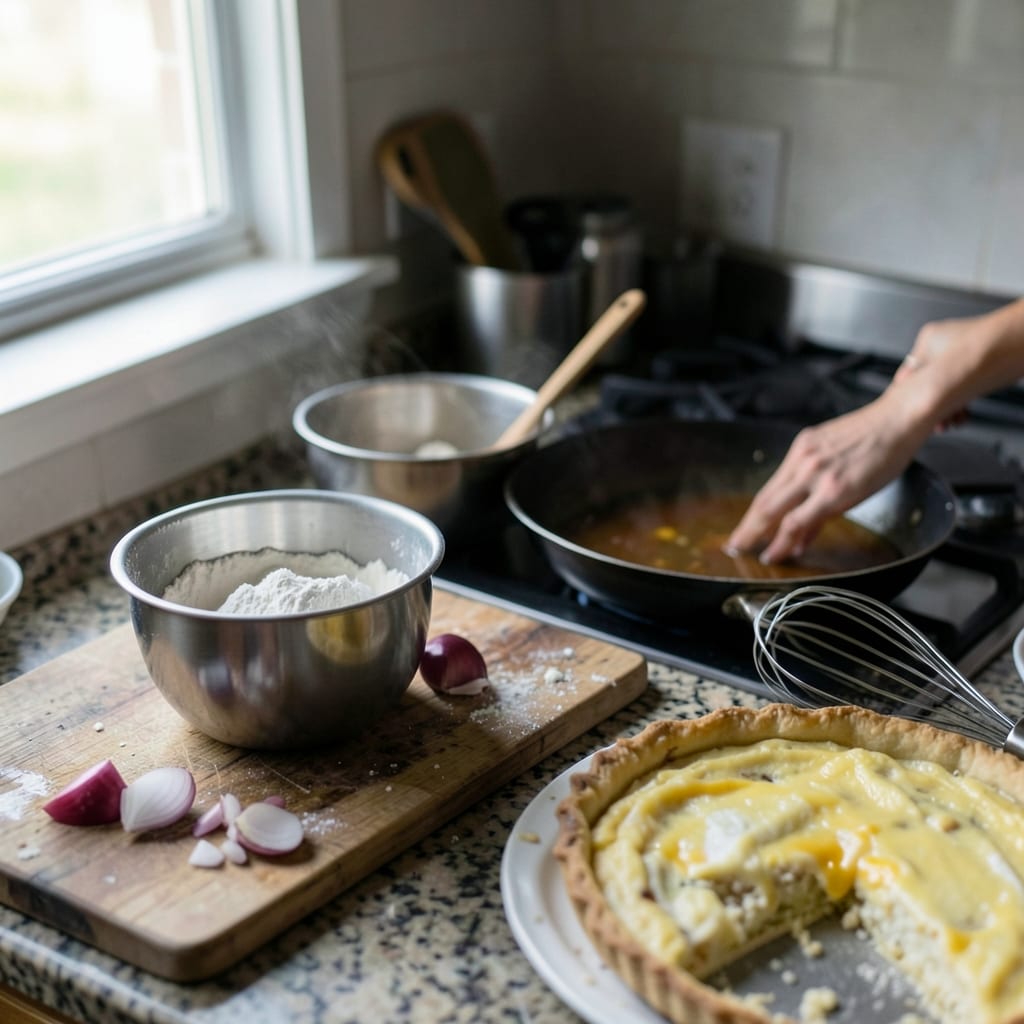
Why I started Cake Recipes Bake
It was a Tuesday afternoon in my tiny New Orleans apartment, and I was trying to bake my abuela’s *pastel de tres leches* for the first time without her there to correct me. The cake collapsed halfway through baking, and the filling leaked like a sad soufflé.
A neighbor knocked on my door and asked if I’d set off the fire alarm—turns out, the smoke from my charred crust had done just that. That’s when I realized: baking isn’t just about recipes.
It’s about the stories behind them, the mistakes, and the way a little patience turns disaster into something delicious.
So I started *Cake Recipes Bake* to share those stories—whether it’s a classic cake with a twist, a modern dessert that still feels like home, or the quiet joy of baking something that tastes like memory.
This is for anyone who’s ever burned a batch, doubted a measurement, or wanted to know why their cake didn’t rise. No perfection here, just good food and better company.
Meet the founder

I grew up in a kitchen so small my abuela had to move the stove to fit her cast-iron skillets. She’d scold me for rushing the sponge cake batter (‘*Mija, let the eggs breathe!*’), then laugh when I’d accidentally overmix the batter and end up with a dense brick.
One afternoon, I tried making her *buñuelos* alone—skipping the step where she’d let the dough rest ‘until the moon feels like sitting down.’ The result? A greasy, flat pancake that tasted like regret.
She took one bite, sighed, and said, ‘Now you understand.’ That was the day I learned baking is half science, half prayer.
The only tool I’ve never replaced is *Bessie*, my 1972 Handley Mixer. She’s missing a gear, the cord is duct-taped in three places, and she still sputters when I overwork the butter.
But she’s been there for every failed batch, every late-night frosting session, and the day I finally nailed my abuela’s recipe. She sits on the counter like a silent judge, and I swear she hums when I’m doing it right.
I used to think baking was about precision. Then I burned a batch of *tarte tatin* because I didn’t realize the apples needed to caramelize *before* the crust went in.
The smoke alarm went off, the fire department showed up (again), and I ended up eating the charred mess straight from the pan with a spoon. That’s when I started writing down *why* things went wrong—and how to fix them.
Now, every recipe here has a ‘What Could Go Wrong’ section. Trust me, you’ll thank me later.
I have a habit of tasting everything twice—once raw, once baked. My team (Ethan, our resident ‘science guy,’ and Mimi, who can spot a bad batch before it’s out of the oven) calls it my ‘double-check of doom.’ I don’t care.
If I’m going to put something in front of you, it better be worth the bite. Also, I hum while I work. Loudly. Bessie seems to like it.
Baking isn’t just about following a recipe—it’s about heart, patience, and a little bit of magic.
Janelle Barrera, Founder & Editor
Meet the mascot

It started as a doodle on a napkin at Café du Monde, where I was waiting for my *beignets* to cool. I’d just burned a batch of *pogne de riz* and was too embarrassed to face the line.
The first scribble was a lopsided cake with three legs and a chef’s hat—more like a drunk cartoon than anything recognizable. My friend Mabel, who’s an illustrator, took one look and said, ‘That’s not a cake. That’s a cake that’s been to a party.’
The next version was proper ink on sketch paper: a cake with a face, holding a whisk like a scepter, and a tiny apron that kept slipping off. I gave it a name—*Cupcake*—because it looked like it had just rolled out of a bakery window.
The whisk was a nod to my abuela’s rule: ‘No whisk, no magic.’ But the apron had to go—it kept getting tangled in the lines, and at the size of a browser tab, it just looked like a blob.
By the third draft, *Cupcake* was simplified to a circle with arms, a sprinkle of frosting for a smile, and a whisk that doubled as a tongue when it was excited.
The legs were gone (too chaotic), the hat became a single dot (because even cakes get tired of hats), and the apron? Replaced with a single flour dusting on its cheek—like it’d been baking all night.
Now it sits at the top of every page, reminding me (and you) that baking is equal parts chaos and charm.
What I promise you
This is your kitchen, not a showroom. Every recipe here is tested until it’s reliable—not just ‘good enough for Instagram.’ If a step feels off, I’ll tell you why. If a tool is optional, I’ll say so. No fancy gadgets, no pretentious language.
What you can hold me to
- Every ingredient has a clear substitute (and a warning if it ruins the dish).
- Measurements are in both metric and imperial—no guessing, no ‘eyeballing.’
- If a recipe fails, you’ll get a ‘Plan B’ before you even start.
- The ‘Why This Works’ section explains the science (and the soul) behind it.
How I create a recipe
A recipe starts in my kitchen, usually at 3 a.m. after I’ve stared at a blank notebook for too long. I don’t follow anyone else’s steps—I start with a question: *What’s the one thing people hate about this dish?* For example, soufflés are intimidating because they collapse.
So I asked: *Can I make one that doesn’t need a water bath?* The answer was yes, but it required a trick with the egg whites and a timer that beeps every 30 seconds. That’s how you get a recipe that actually works.
The first stage: building the foundation
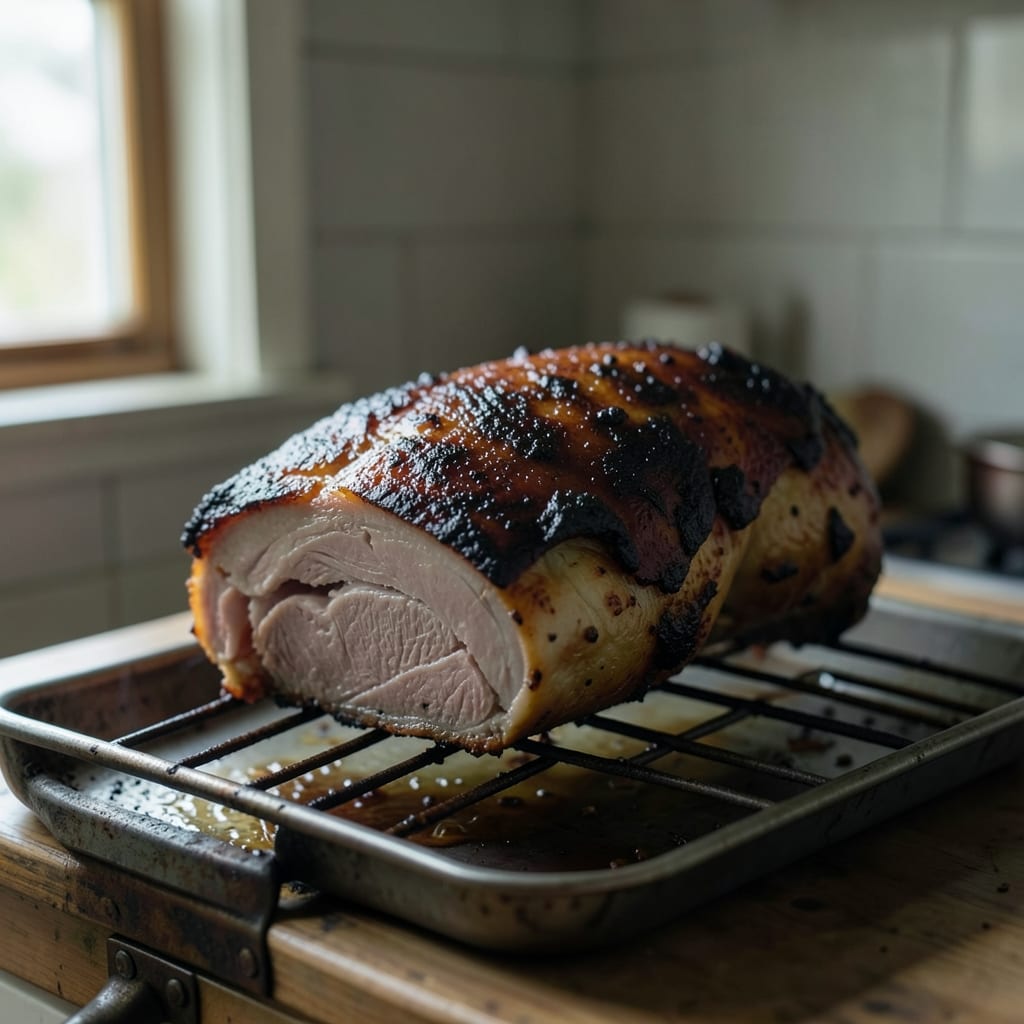
This is where the hands do the talking. For cakes, that means creaming butter and sugar until it’s light enough to float a whisk in—about 5 minutes at medium speed, no shortcuts. If the mixture feels greasy or the sugar doesn’t dissolve completely, you’ve gone wrong.
For cookies, it’s chilling the dough for exactly 45 minutes (no more, or they’ll spread like pancakes). Watch the color: underbaked cookies are pale; overbaked ones are the color of old parchment. And if the oven thermometer says 350°F but your candy thermometer says 375°F?
You’re baking in a liar’s oven. Time to recalibrate.
The second stage: the fix
This is where the magic happens—or the panic, if you’re me. For a sunken cake, I fold in an extra egg white and let it proof in the oven for 10 minutes before baking.
For cookies that spread too much, I swap half the butter for shortening and add a teaspoon of cornstarch to the dough. The key is watching, not guessing: if the edges of a pie crust are browning before the center is set, you’re not rotating the pan enough.
And if your custard curdles? Start over. Some things can’t be fixed.
How a page gets onto this site
While the dish is still warm, I scribble notes on a legal pad: *‘Too much vanilla—taste like a soap opera.’ ‘Next time, let the dough rest 20 mins longer.’ ‘Ethan ate half the batter. Jerk.’* Then I type it up, cut the fluff, and let it sit for a week.
If I catch myself skipping a step or using a vague word like ‘soft,’ I know it’s not ready.
Sometimes a recipe gets rewritten three times—like my *chocolate lava cake*, which needed an extra 10 minutes in the oven (and a threat to fire Ethan if he touched the batter before me).
Write to me
I love hearing about your baking disasters and triumphs. Did you nail a recipe on the first try? Burn the crust off a pie? Invent a hybrid dessert that defies logic? Send it to the contact page—I’ll feature the best stories here.
And if you’re struggling with a recipe, ask away. No question is too silly, no failure is too big. Just promise me one thing: don’t eat the raw dough. (I speak from experience.)
Thanks for letting me be part of your kitchen, one bite at a time.
—Janelle
The recipes are grouped by category: Appetizers, Beverages, Breakfast & Brunch, Desserts, Main Courses and Reviews.