
Desserts
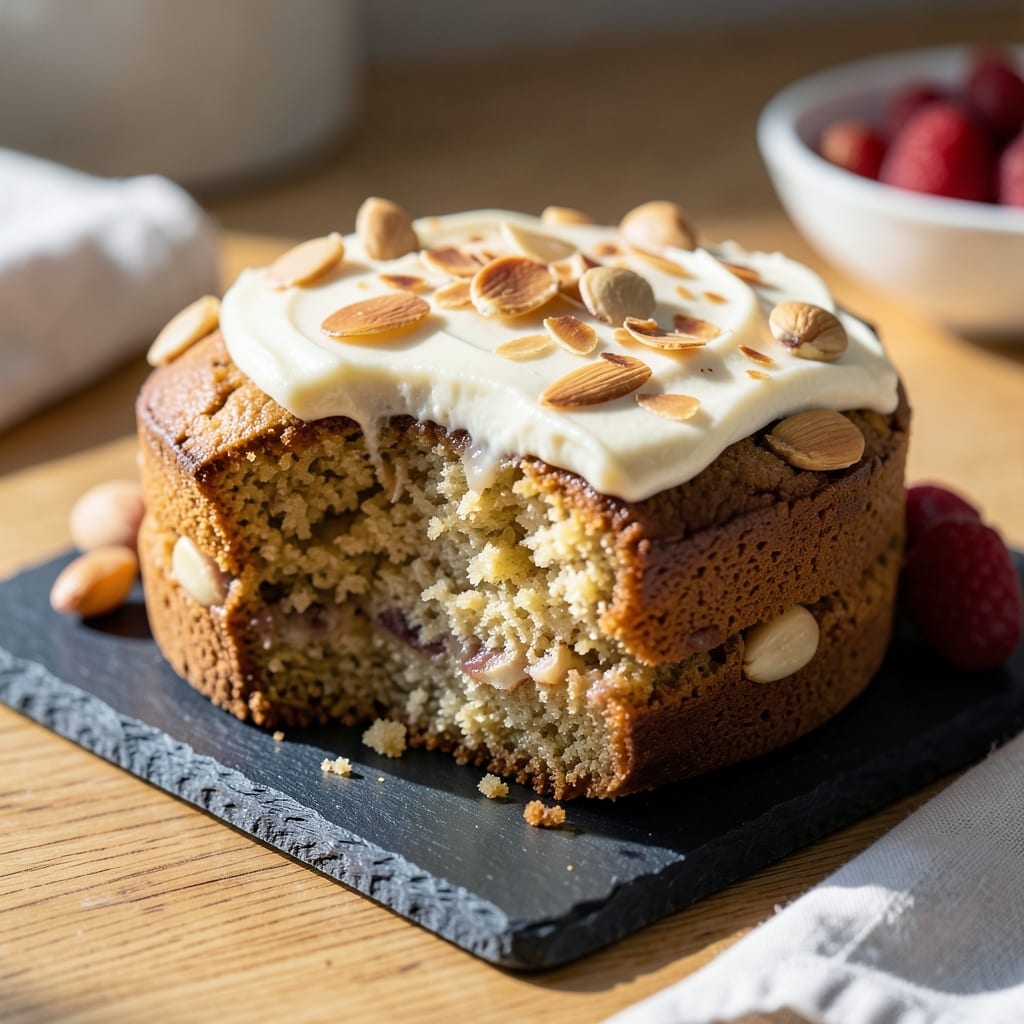
This almondy cake recipe delivers the perfect marriage of toasted almond crunch and velvety vanilla layers—a dessert that's both elegant and comforting. 💛 The secret lies in blending finely ground almonds into the batter for subtle texture, while toasted almonds folded into the batter create pockets of buttery crunch that contrast beautifully against the soft vanilla sponge. I've perfected this recipe over years of baking, ensuring every slice has that signature almondy richness without being overly dense.
The cake's magic comes from a simple yet effective technique: mixing almond flour into the dry ingredients for moisture retention, while reserving toasted almonds to be folded in at the last moment. This method guarantees tender layers with just enough almond flavor to satisfy nut lovers without overwhelming the delicate vanilla notes. The result is a cake that's light enough to eat as a dessert but substantial enough to serve at gatherings.
What makes this recipe truly special is its versatility—it works as a standalone dessert, a showstopper for special occasions, or even a breakfast cake with a dusting of powdered sugar. The vanilla-infused batter creates a fragrant aroma that fills your kitchen, while the toasted almonds add both visual appeal and satisfying texture in every bite. Perfect for those who love almond-flavored treats but want something lighter than traditional frangipane.
Baking time is minimal, and the cake holds its shape beautifully, making it ideal for layering with whipped cream or a light almond glaze. Whether you're baking for a celebration or simply craving a comforting treat, this recipe delivers restaurant-quality results with minimal effort. Let's get started on creating your perfect almondy cake.
Ingredients for almondy cake
Eight simple ingredients transform into a cake that balances buttery crunch and velvety vanilla perfection.
| Ingredient | Amount | Notes |
|---|---|---|
| All-Purpose Flour 🌾 | 1 ½ cups | Sifted for light texture |
| Almond Flour 🥜 | 1 cup | Finely ground for moisture |
| Granulated Sugar 🍚 | 1 ½ cups | Superfine preferred for smoothness |
| Unsalted Butter 🧈 | 1 cup | Room temperature, full-fat |
| Large Eggs 🥚 | 3 whole | Room temperature for even mixing |
| Pure Vanilla Extract 🌿 | 2 tsp | High-quality for strong flavor |
| Baking Powder 🧂 | 1 tsp | Aluminum-free for best results |
| Salt 🧂 | ½ tsp | Fine sea salt preferred |
| Toasted Sliced Almonds 🥜 | 1 cup | Lightly toasted for crunch |
| Whole Milk 🥛 | ½ cup | Warmed for better mixing |
| Powdered Sugar 🍚 | ½ cup | For dusting or glaze |
The almond flour is non-negotiable here—Bob's Red Mill or King Arthur brands work best for their fine grind. Toast your sliced almonds in a dry pan over medium heat for 3-4 minutes until golden (watch closely—they burn fast!). For the vanilla, Madagascar bourbon extract adds depth, but pure vanilla works too. The butter should be soft enough to press with your finger but not melted—this keeps the cake tender. If your almonds aren't pre-sliced, grab a bag of whole almonds and slice them yourself for that restaurant-quality look.
No almond flour? Blend 1 cup whole almonds into a fine powder—food processor works best, but pulse carefully to avoid buttering. Short on vanilla? Vanilla bean paste gives you both flavor and specks. The milk can be swapped for heavy cream or almond milk, but whole milk keeps the texture just right. For extra richness, fold in 2 tbsp sour cream with the wet ingredients. And if you're feeling fancy, add 1 tsp lemon zest to brighten the flavor—trust me, it makes a difference.
This cake keeps beautifully in an airtight container for 3-4 days at room temperature, but honestly, it's best eaten fresh. If you're making ahead, bake it a day early and store it wrapped tightly. The almonds stay crisp for 2 days if you keep it covered. For serving, dust with powdered sugar or drizzle with a simple almond glaze (mix 1/4 cup powdered sugar + 1 tbsp almond milk + 1/2 tsp vanilla extract). Slices reheated for 10 seconds in the microwave bring back that fresh-from-the-oven warmth.
Why You'll Love This Recipe
- No Mixer Needed: Mixing the dough is a breeze—just fold the almond flour and all-purpose flour together with melted butter until it clumps. No standing at the counter for 10 minutes here; the eggs and sugar come together in seconds.
- Rich Nutty Depth: That almond flour doesn’t just add texture—it gives this cake a buttery, toasty warmth that regular flour can’t touch. Honestly, the first bite makes me forget it’s even a cake.
- Weekday or Weekend Star: Slice it for breakfast with coffee, crumble it over yogurt, or serve it warm with ice cream. I’ve even used leftover pieces to top pancakes—because why waste good cake?
- Budget-Friendly Luxury: Butter and eggs make it feel special, but the almond flour stretches the recipe further than most cakes. Plus, it keeps for days, so you’re not scrambling to use it all up.
Step-by-step instructions for almondy cake recipe
This cake delivers layers of toasted almond crunch and velvety vanilla perfection—every step is key!
👨🍳 Step 1: Whisk Dry Ingredients for Light Texture
In a medium bowl, sift together the 1.5 cups All-Purpose Flour and 1 cup Almond Flour. Add the 1.5 cups Granulated Sugar, 1 tsp Baking Powder, and 0.5 tsp Salt. Whisk vigorously for 30 seconds until no lumps remain—this ensures your cake rises evenly and stays tender.
I like to press the flour mixture through a fine-mesh sieve into the bowl to break up any stubborn clumps. The almond flour can be particularly stubborn, so take your time. The goal is to create a fine, airy base that won't create dense pockets in your cake.
🍳 Step 2: Cream Butter and Sugar Until Fluffy
In a stand mixer fitted with the paddle attachment, beat the 1 cup Unsalted Butter (room temperature) and 1.5 cups Granulated Sugar on medium speed for 3-4 minutes. The mixture should lighten in color and nearly double in volume—this incorporates air that creates that signature tender crumb.
Here's the thing—don't rush this step. You'll know it's ready when the butter-sugar mixture leaves a trail when you lift the paddle. If it's still grainy or hasn't lightened, keep mixing for another minute. This is where the magic happens for that perfect texture.
👨🍳 Step 3: Add Eggs and Vanilla for Rich Flavor
Add the 3 whole Large Eggs one at a time, mixing on low speed for 30 seconds after each addition. Stir in the 2 tsp Pure Vanilla Extract and 0.5 cup Whole Milk. The batter should be smooth but still slightly thick—like heavy pudding.
I always warm the milk slightly (just until it's comfortable to touch) before adding it. This helps the flour absorb more evenly and prevents dry spots in the cake. Give the batter one final stir with a spatula to ensure everything is fully incorporated.
🥘 Step 4: Fold in Almonds and Batter into Pans
Gently fold in the 1 cup Toasted Sliced Almonds using a silicone spatula. Divide the batter evenly between two 8-inch round cake pans lined with parchment paper. Tap the pans gently on the counter to release any air bubbles—this prevents dome-shaped cakes.
Don't overfill the pans! The batter should come about ¾ of the way up the sides. The almonds will sink slightly, so you want room for them to distribute evenly. Preheat your oven to 350°F while the pans rest for 5 minutes—this helps the batter settle.
🔥 Step 5: Bake Until Golden and Set
Bake for 25-30 minutes until a toothpick inserted in the center comes out clean and the edges are golden brown. Real talk: your oven might run hot, so start checking at the 20-minute mark. The almonds on top should be crisp but not burnt.
Let the cakes cool in the pans for 10 minutes, then transfer to a wire rack to cool completely. This resting period is crucial—it prevents the cakes from cracking as they cool. Once fully cooled, you can dust the tops with 0.5 cup Powdered Sugar for that bakery-fresh finish.
Pro Tips For Making Almondy Cake
- WHISK EGGS ROOM TEMP: I learned this the hard way—cold eggs from the fridge make the batter lumpy and dense. Let them sit in warm water for 5 minutes first, or just crack them into a bowl and let them sit while you prep the rest. Your cake will be lighter, and you won’t end up with a brick.
- SIFT ALMOND FLOUR FIRST: This isn’t the prettiest method, but it’s the tastiest. Almond flour clumps like crazy, and those lumps turn into dry pockets in your cake. Sift it through a fine-mesh sieve twice—once before mixing, once after—so it blends smoothly with the all-purpose flour. Trust me, your texture will thank you.
- STOP WHEN CENTER’S ALMOST SET: Overbaking is the silent killer of almond cakes. The moment the edges pull away from the pan and a toothpick comes out with a few moist crumbs (not wet batter, not dry powder), you’re done. If you wait for that toothpick to be completely clean, you’ll end up with a cake that’s dry and crumbly. Pull it early.
- USE BROWNED BUTTER: Sounds weird, but it works: swap half the unsalted butter for browned butter. The nutty depth complements the almond flour, and the caramelized flavor makes the whole cake taste richer. Just cook the butter until it smells like toasted nuts, then cool it before mixing—no one wants warm butter in their batter.
Essential equipment for perfect results
Must-Have Mixing Tools
Start with a stand mixer fitted with the paddle attachment—this is non-negotiable for creaming butter and sugar to perfection. I swear by my KitchenAid Artisan Series for its consistent performance, but any quality mixer will work. For hand mixing, a balloon whisk and rubber spatula are essential for blending dry ingredients and folding in almonds without deflating the batter. 🌟
Precision Baking Pans
Use two 8-inch round cake pans with removable bottoms for easy release. I recommend Wilton Perfect Results pans—they're durable and release cakes beautifully. Line the bottoms with parchment paper to prevent sticking, especially since almond flour can be tricky. Avoid non-stick pans if you want that classic bakery texture.
Almond Prep Essentials
For perfect toasted almonds, grab a lightly oiled baking sheet and a spatula for easy flipping. I toast my almonds in a 350°F oven for 8-10 minutes until golden, but a dry skillet works too. A fine-mesh sieve helps sift almond flour smoothly, while a food processor (like Ninja BN601) is perfect for grinding whole almonds if needed.
Temperature Control
An instant-read thermometer like Thermoworks Thermapen ensures accurate oven temperature—critical for even baking. I calibrate my oven at 350°F using this tool. A wire cooling rack is also essential for preventing soggy bottoms while cakes cool. For extra precision, consider an oven thermometer to monitor heat fluctuations.
Optional Pro Upgrades
For a smooth glaze, invest in a silicone pastry bag with a small round tip—perfect for elegant drizzles. A digital kitchen scale (like OXO Good Grips) helps measure almond flour accurately since it's lighter than regular flour. And for presentation, edible gold leaf or fresh berries elevate any cake display.
Nutrition facts
Frequently asked questions
Can I make this almondy cake without almond flour?
Yes! You can substitute with 1 cup whole almonds blended into a fine powder using a food processor. For an even lighter texture, blend ½ cup almond flour + ½ cup all-purpose flour. Just be sure to toast the almonds thoroughly to maintain that signature crunch and flavor.
Why does my cake turn out dense instead of light? Overmixing the batter or not creaming the butter and sugar properly are common culprits.
How do I store leftovers to keep the almonds crisp?
Store your cake in an airtight container at room temperature for up to 3 days. For longer storage, wrap individual slices tightly in plastic wrap and refrigerate. To revive crispness, pop slices in a 300°F oven for 5-7 minutes before serving. Avoid plastic containers—they trap moisture and make the almonds soggy.
Can I add other nuts or seeds to this recipe? Try adding ½ cup chopped hazelnuts or pecans along with the almonds for extra depth. For seeds, 1-2 tbsp poppy or sesame seeds work beautifully. Just toast them first to enhance their flavor.
Is this cake suitable for gluten-free diets?
Yes, but you'll need to substitute the all-purpose flour with a 1:1 gluten-free flour blend (like Bob's Red Mill). Add ½ tsp xanthan gum to help bind the cake. Keep in mind the texture may be slightly denser, but the almond flavor will still shine through! For best results, use a gluten-free blend specifically formulated for baking.