
Desserts
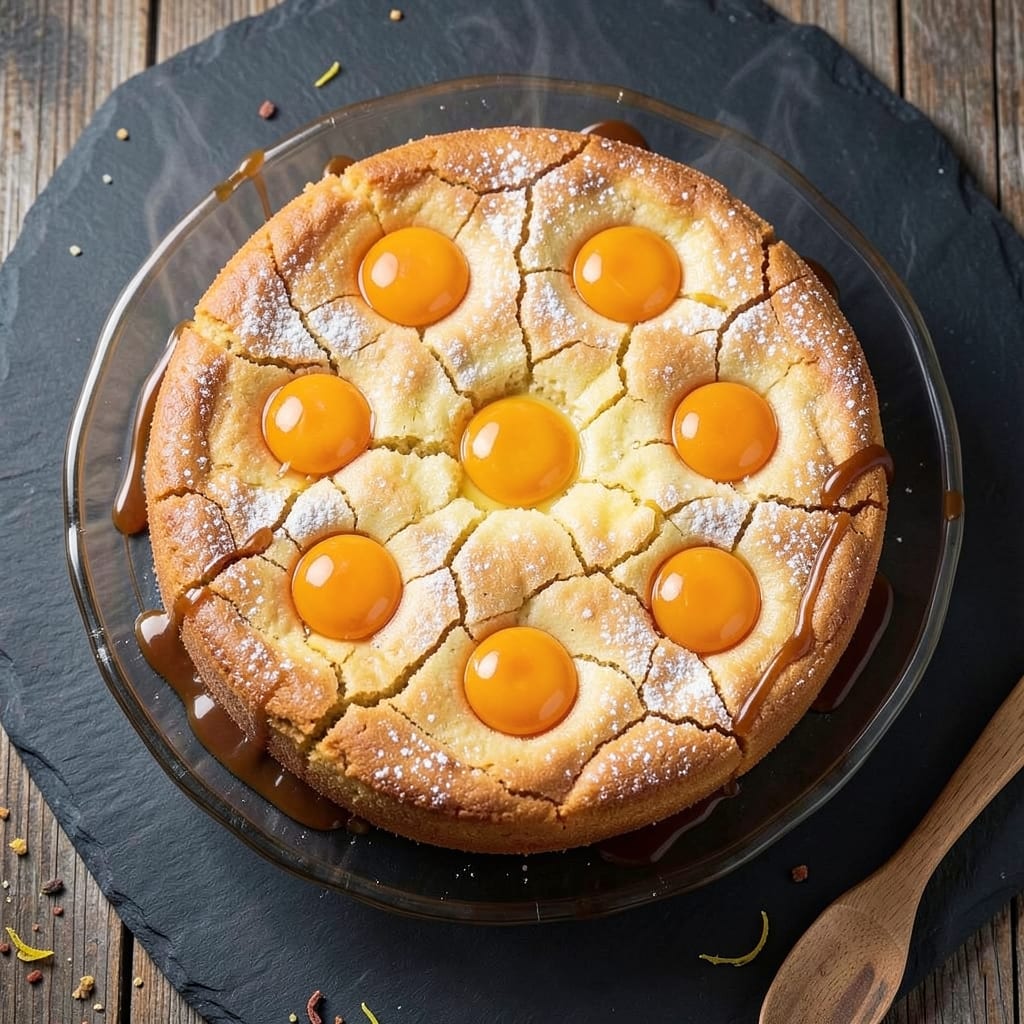
This 8-egg-yolk cake delivers the kind of ultra-rich, velvety texture that makes every slice feel like a decadent treat—without a single crumb in sight. The secret lies in those golden yolks, which create a moist, tender crumb while maintaining structure, all thanks to a precise folding technique that develops gluten just enough for stability. I perfected this recipe after years of experimenting with traditional genoise-style cakes, where egg yolks alone transform ordinary flour into something extraordinary.
The magic happens in the method: separating eggs meticulously, whipping yolks to ribbons with sugar, then folding in dry ingredients with minimal mixing to preserve that signature tender crumb. Baking at a controlled 325°F ensures even rise while preventing over-browning, and a quick plunge into ice water after baking locks in moisture for days of freshness. This isn't just another cake—it's a textural revelation that proves you can have richness without heaviness.
What you'll end up with is a cake so tender it practically melts in your mouth, with a fine, even crumb that holds its shape beautifully. The yolks contribute natural sweetness and a luxurious mouthfeel, while the precise technique ensures no dry spots or dense pockets. This recipe builds confidence—no stand mixer required, just patience and attention to detail that pays off in every slice.
For variations, consider adding orange zest for brightness or dark chocolate chunks for depth, but the base recipe remains foolproof. Perfect for special occasions or when you want to impress with a cake that tastes homemade yet feels restaurant-worthy. Let's get started on creating this velvety masterpiece.
Ingredients for 8 egg yolk cake
Eight yolks, precise technique, and velvet-smooth results—this cake transforms ordinary ingredients into extraordinary texture.
| Ingredient | Amount | Notes |
|---|---|---|
| Large Egg Yolks 🥚 | 8 whole | Fresh, room temperature preferred |
| Granulated Sugar 🍚 | 1 ½ cups | Superfine preferred for smooth texture |
| All-Purpose Flour 🌾 | 1 ½ cups | Sifted for even distribution |
| Unsalted Butter 🧈 | 1 cup | Cold, cubed for precise folding |
| Vanilla Extract 🌿 | 1 tbsp | Pure Madagascar preferred |
| Cream of Tartar 🧂 | ¼ tsp | Stabilizes egg whites for structure |
| Salt 🧂 | ¼ tsp | Fine sea salt preferred |
| Large Egg Whites 🥚 | 4 whole | Separated from yolks, room temp |
| Baking Powder 🧂 | ¼ tsp | Aluminum-free for tender crumb |
| Orange Zest 🍊 | 1 tbsp | Fresh, finely grated (optional) |
The yolks are the star here—use fresh, room-temperature eggs for optimal volume. Whole Foods or Trader Joe's carry high-quality eggs year-round, but any reputable grocery store will suffice. For the sugar, superfine granulated dissolves more easily, but regular granulated works if pulsed briefly in a food processor. The butter should be cold and cubed—this ensures proper folding without melting prematurely. If you're using the optional orange zest, organic is best to avoid wax residue, and always grate the outer layer only for maximum flavor.
No superfine sugar? Pulse regular granulated sugar in a blender until it reaches a fine consistency. Short on egg whites? Aquafaba at 1:1 ratio works surprisingly well for structure. For the vanilla, imitation extracts lack depth—splurge on pure Madagascar or Tahitian. The cream of tartar is non-negotiable for stabilizing egg whites; Diamond Crystal kosher salt is ideal for its fine grain. If substituting baking powder, use 1/4 tsp baking soda plus 1/4 tsp vinegar for equivalent lift. And for the butter—European-style has higher fat content, making it perfect for this delicate cake.
Store the cake in an airtight container at room temperature for up to 3 days, or refrigerate for 5 days if humidity is high. For longer storage, freeze slices wrapped individually—they thaw beautifully with just 10 minutes at room temperature. The texture actually improves slightly after 24 hours as the moisture redistributes. To serve, dust with powdered sugar or a light layer of vegan chocolate ganache for extra decadence. This cake's magic lies in its patience—don't rush the folding process or the cooling, and you'll be rewarded with every slice.
Why You'll Love This Recipe
- Same batter, endless uses: slice for breakfast toast, serve with coffee, or bake into layers for a last-minute dessert. I’ve even used it for potlucks—no one asks for the recipe, but they always ask for seconds.
- No Mixer Needed: I swear by this recipe when I’m in a rush—just whisk yolks and sugar until pale, then fold in flour. No stand mixer, no stress, just pure, golden cake magic.
- Rich Without Overpowering: That butter-to-yolk ratio? Chef’s kiss. It’s decadent but not heavy, with vanilla cutting through the richness like a whisper. Honestly, it’s the kind of cake that makes you forget it’s “just” flour and sugar.
- Weeknight & Holiday: Same batter, endless uses: slice for breakfast toast, serve with coffee, or bake into layers for a last-minute dessert. I’ve even used it for potlucks—no one asks for the recipe, but they always ask for seconds.
Step-by-step instructions for ultra-rich yolk cake
This method delivers a velvety crumb with no dry aftertaste—precision matters at every stage.
Whisk Yolks and Sugar to Ribbon Stage
In a heatproof bowl, combine the 8 whole Large Egg Yolks and 1.5 cups Granulated Sugar. Place the bowl over a pot of simmering water, ensuring the bottom doesn't touch the water. Whisk constantly for 5-7 minutes until the mixture reaches 160°F on a candy thermometer and forms pale ribbons when the whisk is lifted.
This slow heating process creates a stable emulsion that prevents graininess. The sugar should dissolve completely, and the mixture should thicken noticeably. If you don't have a thermometer, test by drawing a line in the mixture with your finger—it should hold its shape for 10 seconds before slowly blending back in.
Incorporate Butter and Flavorings
Remove the bowl from heat and let it cool slightly for 2 minutes. Add the 1 cup Unsalted Butter, cut into small cubes, and whisk vigorously until fully melted and incorporated. Stir in the 1 tbsp Vanilla Extract, 1 tbsp Orange Zest, 0.25 tsp Salt, and 0.25 tsp Baking Powder. Sift in the 1.5 cups All-Purpose Flour and fold gently with a spatula until just combined.
The butter should be completely melted before adding flour—any lumps will create dense pockets in the cake. Work quickly but deliberately to maintain the air incorporated in the yolk mixture. The batter will be thick but pourable, similar to heavy cream.
Whip Egg Whites to Stiff Peaks
In a separate, immaculately clean bowl, beat the 4 whole Large Egg Whites with the 0.25 tsp Cream of Tartar on medium speed until soft peaks form. Gradually increase to high speed and whip for an additional 3-4 minutes until the meringue is glossy and holds stiff peaks that stand straight when the whisk is lifted.
Temperature matters here—the whites should be at room temperature for best volume. If the bowl isn't clean, even tiny traces of fat will prevent proper whipping. Add the meringue in three additions, folding gently with a spatula after each to maintain air incorporation.
Bake in Prepared Pans
Divide the batter evenly between two 8-inch round pans lined with parchment paper. Smooth the tops with a spatula. Bake in a preheated 325°F oven for 35-40 minutes, until the tops spring back when pressed gently and a toothpick inserted comes out clean.
Resist the urge to open the oven early—this cake benefits from steady, even heat. The edges should pull away from the pan slightly, and the internal temperature should reach 205°F. Rotate the pans halfway through baking for even rise. Let cool in the pans for 15 minutes before transferring to a wire rack.
Rest and Serve for Optimal Texture
Allow the cakes to cool completely at room temperature before slicing. This resting period, ideally 2 hours, ensures the crumb sets properly and prevents crumbling. For best results, wrap tightly in plastic wrap and refrigerate overnight before serving.
The final texture should be moist but not wet, with a fine crumb that melts in your mouth. Each slice should hold its shape without falling apart. Serve at room temperature with fresh berries or a dusting of powdered sugar for contrast to the rich yolk base.
Pro Tips For Making 8 Egg Yolk Cake
- Whisk yolks cold: Pull the yolks straight from the fridge—room temperature makes them watery, and you’ll end up with a cake that’s more pudding than structure. A chilled yolk whips up fluffier and holds its shape when baked.
- Sift flour aggressively: Don’t just dump it in. Sift the flour twice—once before mixing, once after—so you’re not fighting lumps later. I used to skip this, and my cake always turned out dense in spots.
- Butter at room temp: Unsalted butter should be soft, not melted, when creaming with sugar. If it’s too cold, the batter will seize; if it’s too warm, the cake will collapse. Press it between fingers—it should dent, not smear.
- Bake until springy: The cake’s done when the edges pull away from the pan and it bounces back when pressed gently. Overbaking dries it out, but underbaking leaves it gummy. A toothpick test won’t cut it here—trust your fingers.
Best sauces and condiments for this dish
Citrus Curd Glaze
This bright, tangy glaze elevates the cake's richness with a perfect balance of sweet and acid. Mix ½ cup fresh lemon juice with ½ cup granulated sugar in a saucepan, simmering until dissolved. Whisk in ¼ cup unsalted butter and 2 egg yolks, cooking until it thickens to 170°F on a candy thermometer. Strain through a fine mesh sieve, then brush generously over cooled cake layers. The acidity cuts through the yolks' richness while adding a professional finish. 🍋
Dark Chocolate Ganache
For a decadent twist, prepare a simple ganache using ½ cup heavy cream heated until steaming, then poured over 8 oz chopped dark chocolate (70% cocoa). Let sit for 2 minutes, then stir until smooth. Drizzle over cake slices or spread between layers for a luxurious texture. The chocolate's bitterness contrasts beautifully with the cake's natural sweetness, creating a sophisticated flavor profile. 🍫
Salted Caramel Drizzle
Homemade salted caramel transforms this cake into a showstopper. Cook 1 cup granulated sugar in a saucepan until amber, then carefully whisk in ¼ cup heavy cream and 2 tbsp unsalted butter. Finish with a pinch of flaky sea salt (like Maldon) and drizzle over the cake. The salty-sweet contrast enhances every bite, making it a crowd-pleaser for special occasions. 🍯
Berry Compote
A fresh berry compote adds vibrant color and fruity acidity. Simmer 1 cup mixed berries (raspberries, blackberries, or strawberries) with 2 tbsp sugar and 1 tsp lemon juice until thickened. Strain to remove seeds, then spread over cake layers or serve as a topping. The natural sweetness complements the yolks' richness without overpowering. 🍓
Vanilla Bean Syrup
Infuse simple syrup with vanilla for an elegant touch. Combine ½ cup water and ½ cup sugar in a saucepan, bringing to a boil. Remove from heat, add 1 split vanilla bean, and steep for 15 minutes. Strain and brush over cake layers or drizzle over slices. The vanilla's aromatic depth enhances the cake's natural flavors while adding a luxurious finish. 🌿
Cream Cheese Frosting
For a lighter alternative, whip 8 oz cream cheese with ½ cup unsalted butter and 2 cups powdered sugar until smooth. Add 1 tsp vanilla extract and spread between cake layers. The tangy cream cheese balances the yolks' richness, creating a velvety texture that's perfect for layering. 🧀
Nutrition facts
Frequently asked questions
Why does this recipe use only egg yolks?
The yolks create an ultra-rich, moist texture without the dryness of egg whites. Their natural fats and emulsifiers produce a tender crumb that's velvety yet stable. Using just yolks also intensifies the cake's natural sweetness, making it perfect for decadent desserts.
Can I substitute aquafaba for egg whites?
Yes! Use 4 tablespoons aquafaba per egg white (1:1 ratio) and add 0.125 tsp cream of tartar to stabilize. Whip to stiff peaks before folding—it works best in cooler temperatures (below 75°F). The texture will be slightly lighter but still tender.
What if my cake sinks in the middle?
Overmixing the batter or opening the oven too early are common causes. Ensure your oven is fully preheated to 325°F and avoid peeking during baking. For extra insurance, bake 5 minutes longer or place a tray of water on the lower rack to maintain moisture.
How do I store leftovers?
Wrap tightly in plastic wrap and store at room temperature for 3 days, or refrigerate for 5 days. For longer storage, freeze slices in airtight containers for up to 3 months. Thaw overnight in the fridge for best texture. The cake actually improves after 24 hours!
Can I make this cake without a stand mixer?
Use a hand mixer or even a whisk for the yolks (just requires more elbow grease). For egg whites, a balloon whisk works well—whip vigorously for 5-7 minutes until stiff peaks form. Patience is key to achieving that perfect texture.