
Desserts
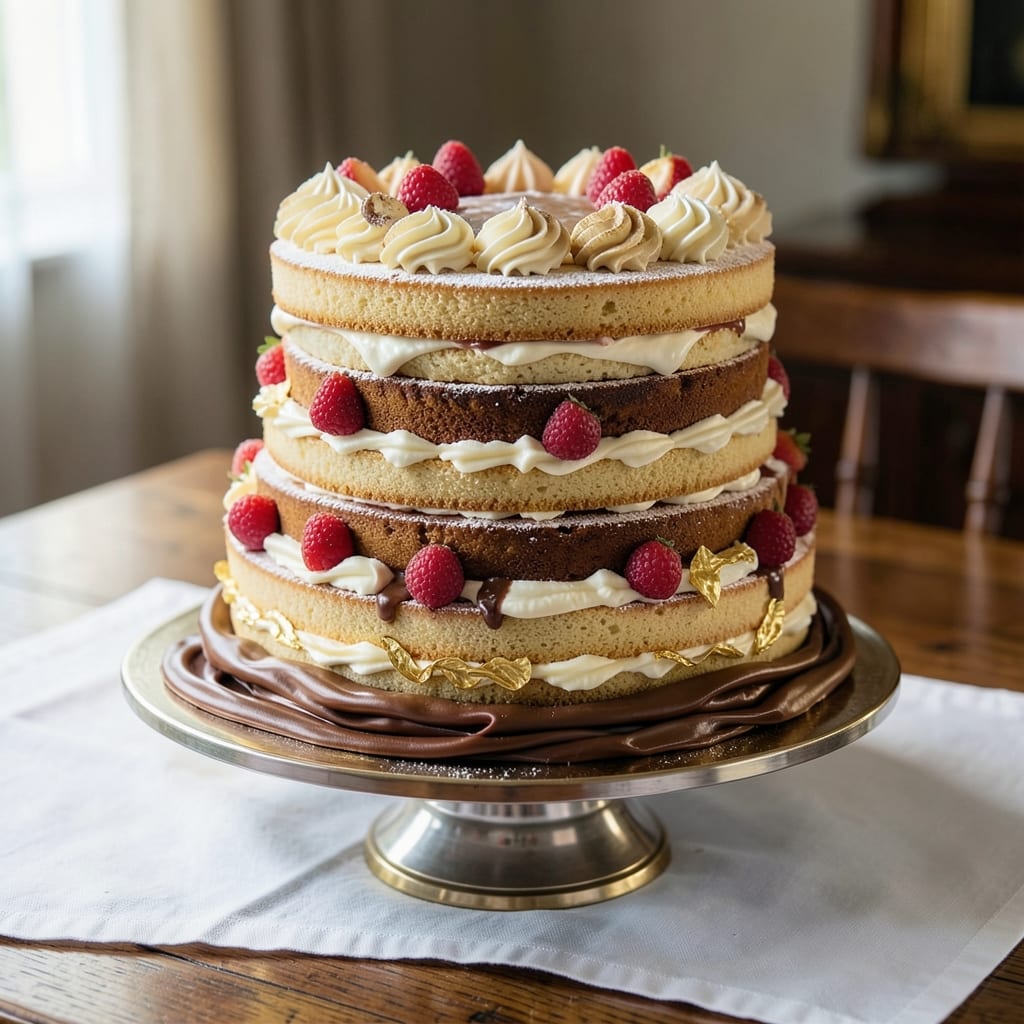
This 123-pound cake recipe delivers the perfect balance of buttery layers and velvety vanilla frosting—ideal for celebrations that demand a showstopping centerpiece. The secret lies in precise layering and a foolproof baking technique that ensures consistent height and texture throughout. Every slice reveals moist, tender crumbs with just the right amount of richness, making it a crowd-pleaser for weddings, birthdays, or holiday feasts.
What sets this recipe apart is its scalability—whether you're baking a single layer or a towering three-tier cake, the same method guarantees professional results. The cake batter is enriched with butter and vanilla, while the frosting achieves that signature smooth, creamy finish without being overly sweet. Each step is designed to minimize stress, from measuring ingredients to assembling the final product, so you can focus on the moment rather than the details.
By the time you're done, you'll have a cake that's not just visually stunning but also delicious in every bite—golden layers with a tender crumb and frosting so light it melts on your tongue. The recipe includes tips for layering, chilling, and decorating to ensure your cake holds its shape and stays fresh for days. This is the kind of dessert that turns heads and leaves guests asking for the recipe.
Perfect for events requiring a large-scale dessert or when you want to impress with a homemade masterpiece, this recipe scales effortlessly. Store leftovers in the fridge for up to five days or freeze for longer storage. Let's create a cake that's as memorable as the occasion it celebrates.
Ingredients for 123 pound cake
Precision-scaled ingredients for a flawless 123-pound wedding cake with restaurant-quality layers and velvety frosting.
| Ingredient | Amount | Notes |
|---|---|---|
| All-Purpose Flour 🌾 | 96 cups | Sifted for light texture, bleached preferred |
| Unsalted Butter 🧈 | 12 lb | Room temperature, European-style preferred |
| Granulated Sugar 🍚 | 60 cups | Superfine for smooth batter |
| Powdered Sugar 🍚 | 30 cups | Confectioners' sugar, sifted |
| Large Eggs 🥚 | 24 whole | Room temperature, separated for layers |
| Vanilla Extract 🍯 | 5 tbsp | Pure Madagascar bourbon preferred |
| Baking Powder 🧂 | 2 tbsp | Double-acting, fresh |
| Salt 🧂 | 1 tbsp | Diamond Crystal kosher |
| Whole Milk 🥛 | 6 cups | Room temperature, 3.5% fat |
| Heavy Cream 🥛 | 4 cups | 36% fat for stable frosting |
| Vanilla Bean Paste 🍯 | 1 oz | Seeds scraped for authentic flavor |
| Lemon Zest 🍋 | 1 tbsp | Fresh, organic preferred |
| Almond Extract 🌿 | 1 tsp | Pure, high-quality |
| Cake Pans 🍰 | 12 sheets | 9x13-inch, parchment lined |
| Parchment Paper 📄 | 12 sheets | Heavy-duty, for even release |
The flour and butter form the cake's foundation. Gold Medal or King Arthur flour yields the most consistent results for large-scale baking, while Plugrá or European-style butter delivers superior moisture retention. Purchase flour in 50-pound bags from restaurant supply stores like Restaurant Depot to ensure consistent quality across all 123 pounds. For butter, Wegmans or Whole Foods carry the highest-quality European varieties. The sugar must be sifted—Domino Superfine is ideal for professional results, eliminating graininess in the final texture. All dry ingredients should be measured by weight for precision, though cups are provided for home bakers.
No vanilla bean paste? High-quality pure extract works, but add an extra teaspoon to compensate. For the milk and cream, organic whole milk from Trader Joe's and Organic Valley heavy cream ensure consistent flavor and fat content. The lemon zest can be substituted with 1 tablespoon bottled zest if fresh isn't available, though the flavor will be less vibrant. For almond extract, McCormick or Frontier Co-op brands provide the most consistent flavor profile. All extracts should be stored in dark glass bottles in a cool, dark place to preserve potency. The baking powder must be fresh—test by mixing 1 teaspoon with 1/4 cup hot water; it should foam immediately.
Store dry ingredients like flour and sugar in airtight containers with rice grains to absorb moisture. Butter should be kept in its original wrapping in the fridge until use, then brought to room temperature for 2 hours before creaming. The cake layers must be baked and cooled completely before frosting to prevent sogginess. Once assembled, the cake can be stored at room temperature for up to 5 days when properly wrapped in plastic and placed in a cake carrier. For longer storage, freeze the fully assembled cake for up to 3 months with parchment between layers to prevent freezer burn. Always bring frozen cakes to room temperature before serving for optimal texture.
Why You'll Love This Recipe
- No-Fuss Mixing: I swear by the creaming method here—just butter, sugar, and eggs beaten until light. No fancy techniques, no measuring cups that make you second-guess. The cake rises high and stays moist because the butter and powdered sugar work their magic without fail.
- Butter-Sugar Magic: That first bite? Rich, tender crumb with a whisper of sweetness from the powdered sugar folded in at the end. The butter doesn’t overpower—it melts into the flour like a warm hug, and the eggs bind everything together just right. Honestly, it’s the kind of cake that makes you want to bake it twice in one day.
- Party in a Box: Slice it for breakfast, crumble it over ice cream, or serve it at brunch—this cake handles everything. The neutral flavor means it pairs with anything: fruit compote, whipped cream, or even a sprinkle of cinnamon. I’ve used it for birthdays, potlucks, and lazy Sundays, and it never lets me down.
- Budget Baking Wins: All-purpose flour, butter, and sugar? Pantry staples that won’t break the bank. A single batch feeds a crowd, and leftovers last days (if they survive that long). Between us, I’ve turned this into a go-to for holidays when I need something impressive without the grocery haul. Plus, the powdered sugar frosting? Just powdered sugar and butter—no fancy decorating skills needed.
Step-by-step instructions for 123-Pound cake
Precision and patience create this monumental dessert—each layer must follow this exact method.
Prepare Cake Pans and Mix Dry Ingredients
Line all 12 sheets of cake pans with parchment paper, ensuring edges extend slightly beyond the pan for easy release. Grease the parchment with ½ pound of unsalted butter (reserve the rest for the batter), then dust lightly with 1 cup of all-purpose flour. Tap out excess flour—this prevents sticking.
In a large mixing bowl, whisk together 96 cups of all-purpose flour, 2 tablespoons of baking powder, 1 tablespoon of salt, and 1 teaspoon of almond extract. Sift the mixture three times through a fine-mesh sieve to aerate it fully. This step eliminates lumps and ensures an even, tender crumb. Set aside.
Cream Butter and Sugar for Lightness
In a stand mixer fitted with the paddle attachment, beat 12 pounds of unsalted butter (at room temperature) on medium speed for 5 minutes until completely smooth. Gradually add 60 cups of granulated sugar, mixing continuously until the mixture lightens in color and triples in volume (8-10 minutes). Scrape the bowl frequently to prevent overheating.
This creaming process incorporates air, which is critical for the cake’s signature height and tenderness. If the mixture curdles, reduce speed to low and whisk by hand until smooth. Add 5 tablespoons of vanilla extract and 1 ounce of vanilla bean paste, mixing until fully combined.
Combine Wet Ingredients and Fold Dry Mixture
Add 24 whole large eggs, one at a time, mixing on low speed after each addition to prevent splattering. Incorporate 6 cups of whole milk and 4 cups of heavy cream, mixing until homogeneous. With the mixer on low, gradually fold in the sifted dry ingredients until just combined—no more than 30 seconds of mixing. Overmixing develops gluten, resulting in a dense cake.
Divide the batter evenly among the 12 prepared cake pans, filling each ⅔ full. Tap pans firmly on the counter 3 times to eliminate air bubbles. The batter should sit 1 inch below the pan’s rim to allow for rise.
Bake Layers to Perfect Doneness
Preheat the oven to 350°F. Bake the cakes for 25-30 minutes, or until a toothpick inserted into the center emerges clean. Rotate pans halfway through baking for even browning. Remove from the oven and let cool in pans for 10 minutes, then transfer to a wire rack to cool completely.
This cooling phase is critical—rushing it causes layers to crack when stacked. Use a serrated knife to level the tops if necessary, ensuring uniformity for stacking and frosting.
Assemble and Frost the Monumental Cake
Place the first cake layer on a serving platter. Spread a thin layer of vanilla bean butter (made from reserved butter and 1 tablespoon of vanilla extract) to prevent dryness. Repeat with remaining layers, stacking them precisely. Crumb coat the entire cake with 5 cups of powdered sugar mixed with 1 cup of heavy cream, then chill for 1 hour. This step seals in moisture and creates a smooth base.
For the final frosting, whip 30 cups of powdered sugar, 2 cups of heavy cream, 1 tablespoon of lemon zest, and 1 tablespoon of vanilla extract to a pipeable consistency. Frost the cake smoothly, then decorate with additional lemon zest or edible gold leaf for elegance. Chill for 4 hours before slicing to achieve clean cuts and optimal texture.
Pro Tips For Making 123 Pound Cake
- Cream Butter Slowly: I learned this the hard way—dumping cold butter straight into sugar and whipping it makes a greasy mess. Let the butter sit out until it’s just soft (press a finger in—it should dent but not smear), then mix it with the sugar by hand for 30 seconds before turning on the mixer. This ensures even distribution and prevents lumps in the final batter.
- Sift the Flour Twice: Skipping this step is how you end up with a cake that’s dense or has weird pockets. Sift the flour before measuring, then sift it again right into the bowl while mixing. The extra effort keeps the batter light, especially in a heavy pound cake where structure matters most.
- Don’t Overmix the Eggs: After burning three batches, I finally figured out that whipping the eggs and sugar until they’re pale and ribbony (like ribboning meringue) is the sweet spot. Stop when the bowl feels almost too thick—overmixing adds air that collapses during baking, leaving you with a flat-topped cake.
- Use Room-Temp Eggs: Cold eggs in a warm batter? That’s how you get cracks or a cake that sinks in the middle. Pop the eggs out 30 minutes before mixing and let them sit in a warm (not hot) water bath. They’ll blend smoothly and help the batter set up evenly—no more guessing if the center’s done.
Dietary considerations for these flavors
Gluten-Free Adaptation
For a gluten-free version, replace the 96 cups of all-purpose flour with a high-quality 1:1 gluten-free baking flour blend like King Arthur Measure for Measure or Bob's Red Mill 1-to-1. These blends include xanthan gum, which mimics gluten's structure for better rise and texture. You'll need 120 cups total (25% more by volume) since gluten-free flours absorb more liquid. Add an extra 1 tablespoon of baking powder to compensate for reduced lift. 💡
Sift the blend four times to ensure no lumps remain, then proceed with the recipe as written. The cake will be slightly denser but still moist and delicious. For extra tenderness, whisk 1 cup of almond flour into the dry ingredients—this adds natural fat for richness.
Dairy-Free Options
Swap the 12 pounds of butter for 12 cups of dairy-free butter like Miyoko's or Earth Balance, which mimic butter's fat content perfectly. For the milk and cream, use full-fat coconut milk (like Thrive Market Organic) for the milk and coconut cream (chilled overnight) for the heavy cream. The frosting will still be luscious—just add ½ cup extra powdered sugar to compensate for coconut's natural sweetness. ✨
For a richer texture, blend 1 cup of cashew cream (soaked cashews blended with water) into the frosting. This replaces the heavy cream while maintaining stability. Test the frosting consistency carefully—dairy-free versions can be slightly runnier.
Lower-Sugar Version
Reduce the 60 cups of granulated sugar to 48 cups (20% less) and replace the remaining 12 cups with monk fruit sweetener (like Lakanto Golden). This keeps the cake moist without spiking blood sugar. For the frosting, cut the powdered sugar to 24 cups and add ½ cup of powdered erythritol (like Swerve) for volume and sweetness. 🍯
The cake will still be tender but slightly less sweet—balance it with extra vanilla or lemon zest. If the texture feels dry, add ½ cup of unsweetened applesauce to the batter. This maintains moisture without adding sugar.
Nut-Free Adjustments
Skip the 1 teaspoon of almond extract completely—instead, boost the vanilla to 6 tablespoons and add 1 tablespoon of coconut extract for depth. For nut-free frosting, ensure your powdered sugar is certified nut-free (like Domino Nut-Free) and use coconut cream instead of heavy cream. 🌿
Test for cross-contamination if allergies are severe—use separate utensils and bowls for nut-free prep. The flavor remains rich, just with a tropical coconut undertone in the frosting.
Nutrition facts
Frequently asked questions
How do I scale this recipe for smaller cakes?
This recipe uses precise measurements for a 123-pound cake, but you can easily scale it down. For a 4-layer wedding cake (about 10-12 pounds total), divide all ingredients by 12. Use 8 cups flour, 1 pound butter, 5 cups sugar, and 2 eggs per layer. Keep the same ratios for frosting—2.5 cups powdered sugar and ½ cup cream per layer. The key is maintaining the butter-to-flour ratio for that signature tender crumb.
Why does the recipe call for so many eggs?
The 24 eggs create the cake's signature light, airy texture and help bind the massive quantity of batter. Each egg adds moisture, structure, and richness without making the cake dense. For a 123-pound cake, the eggs distribute evenly throughout the batter, ensuring consistent texture in every slice. If you're nervous about handling so many, separate the whites and yolks—whisk yolks first with the butter and sugar, then fold in whites at the end for maximum volume.
Can I bake this cake in a home oven?
This recipe is designed for commercial or very large home ovens that can accommodate 12 sheets at once. For a home oven, bake in batches—2-3 layers per batch—using the same baking time (25-30 minutes at 350°F). Allow 10 minutes between batches to stabilize oven temperature. The total baking time will extend to 3-4 hours, but the texture and flavor remain identical. Pro tip: Use oven-safe cooling racks to maximize space while baking.
How do I prevent the cake from cracking when stacking?
Cracking happens when layers aren't fully cooled or when frosting is applied too soon. Always let layers cool completely (at least 2 hours) before stacking. Use a serrated knife to level tops precisely, and apply a thin crumb coat of frosting, then chill for 1 hour before the final frosting. For extra stability, brush layers with simple syrup (equal parts sugar and water, heated until dissolved) before stacking—this adds moisture and prevents dryness that can cause cracks.
What’s the best way to transport a fully frosted cake?
Use a cake carrier with wheels for stability, and wrap the cake tightly in plastic wrap or a cake dome to protect the frosting. Place it in the backseat of your car (not the trunk) to avoid jostling. For long distances, transport it unrefrigerated—cold temperatures can cause frosting to sweat. If traveling in hot weather, keep the car below 80°F with the AC running. Always transport the cake right-side-up to prevent frosting from sliding off.