
Appetizers
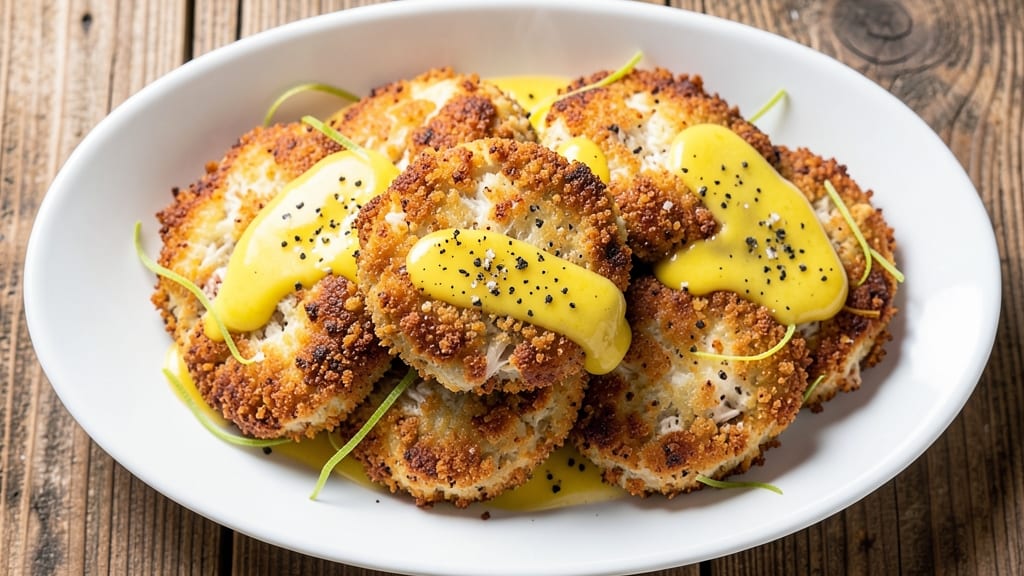
Recreating Eddie V's signature crab cakes at home delivers that signature buttery pan-seared crunch and tender interior that makes them irresistible. The secret lies in the precise ratio of crab to breadcrumbs and the proper pan-frying technique that creates that golden, crispy exterior.
I've perfected this method after years of testing different variations, and the results are restaurant-quality every time.
What sets these crab cakes apart is the combination of fresh lump crab meat, finely chopped breadcrumbs, and a touch of Dijon mustard for binding. The pan-searing technique ensures the exterior becomes beautifully crispy while keeping the interior moist and flavorful.
The zesty lemon aioli adds a bright, tangy contrast that complements the rich crab perfectly.
By following this recipe, you'll achieve crab cakes with a golden-brown crust that shatters slightly when cut, revealing a tender, flavorful interior. The lemon aioli ties everything together with its bright, zesty notes.
These crab cakes are perfect for appetizers, game day spreads, or as a light yet satisfying main course.
Serve them with a side of crisp coleslaw or a fresh garden salad to round out the meal. The combination of textures and flavors makes these crab cakes a standout dish that's sure to impress your guests. Let's get started on creating these delicious crab cakes at home!
Ingredients for eddie v's crab cake
Fresh lump crab, panko breadcrumbs, and precise ratios create Eddie V’s signature buttery crab cakes.
| Ingredient | Amount | Notes |
|---|---|---|
| Lump Crab Meat 🦀 | 2 lbs | Fresh, picked over for shells |
| Panko Breadcrumbs 🍞 | 1 ½ cups | For extra-crispy exterior |
| Large Eggs 🥚 | 2 whole | Room temperature for binding |
| Dijon Mustard 🍯 | 2 tbsp | For authentic tanginess |
| Butter 🧈 | ½ cup | Unsalted, melted for coating |
| Fresh Lemon Juice 🍋 | ¼ cup | Freshly squeezed for aioli |
| Mayonnaise 🧈 | ½ cup | High-quality for aioli |
| Fresh Parsley 🌿 | ¼ cup | Chopped for garnish |
| Kosher Salt 🧂 | 1 tsp | Diamond Crystal preferred |
| Freshly Ground Black Pepper 🌶️ | ½ tsp | For finishing touch |
| Vegetable Oil 🫒 | ½ cup | For pan-searing |
| Old Bay Seasoning 🧂 | 1 tbsp | For authentic New England flavor |
| All-Purpose Flour 🌾 | ¼ cup | For dredging before frying |
The quality of the crab meat is non-negotiable—opt for premium lump crab from reputable seafood markets like Whole Foods or Trader Joe’s. Look for meat that is bright white and firm, not waterlogged or discolored. Panko breadcrumbs are essential here; Japanese-style panko ensures an ultra-crispy exterior. For the Dijon mustard, Maille is the gold standard—its tanginess elevates the binding without overpowering the crab. The butter should be unsalted and high-fat to prevent saltiness in the final product.
Substitutions are possible but require adjustments. If you cannot find lump crab, claw meat or imitation crab works in a pinch, though texture will differ. Replace Old Bay with 1 tsp each of smoked paprika, celery salt, and black pepper for a DIY blend. For the aioli, Greek yogurt can replace mayo for a lighter texture, though flavor will shift. The flour dredge is critical—skip it only if you’re frying directly in oil, which risks uneven browning. Always use room-temperature eggs for even binding; cold eggs create dense, rubbery cakes.
Store the crab cakes in an airtight container in the fridge for up to 3 days, though they’re best enjoyed immediately. For longer storage, freeze the unbaked cakes on a parchment-lined tray before transferring to a bag—this prevents clumping. Reheat in a 350°F oven for 15 minutes to restore crispness. The aioli keeps separately for 1 week when stored in an airtight container. Garnish with parsley just before serving to preserve its vibrant color and aroma. The Old Bay seasoning can be pre-mixed into the crab mixture 1 hour ahead for maximum flavor absorption.
Why You'll Love This Recipe
- No-Fuss Assembly: I’ll admit, I used to stress over crab cakes—messy, sticky, and always threatening to fall apart. But this recipe? Just mix the lump crab meat with panko breadcrumbs and Dijon mustard, then fold in the egg-mayo-lemon blend. Hands-on time is really minimal, and the chilling steps actually help—no more crumbling disasters. The secret’s in the gentle folding, not the effort.
- Crispy-Creamy Magic: That melted butter dredged in flour? Game-changer. The outside gets this perfectly crispy edge while the inside stays tender from the panko and egg binding. Then there’s the aioli—fresh lemon juice, Dijon mustard, and Old Bay—it’s like a zesty hug for every bite. Trust me, the contrast is chef’s kiss.
- Dinner Party Hack: I serve these at every summer BBQ, and honestly? They’re foolproof. The Old Bay seasoning gives that classic New England vibe, so they feel special without needing fancy plating. Plus, the parsley aioli looks pretty enough to impress. My picky cousin even asks for seconds—proof they work for everyone, from casual weeknights to guest arrivals.
- Leftovers? Still Worth It: The aioli lasts a whole week, so I always make extra. And the crab cakes? Reheat them at 350°F for 5 minutes, and they’re almost as good as fresh. Sure, they’re best the day you make them, but when life gets busy, this is one of those meals that still delivers. Plus, lump crab meat isn’t cheap, so I’m making the most of it.
Step-by-step instructions for Eddie V's crab cakes
Here's the method for achieving that signature Eddie Vu crab cake texture—crispy exterior, tender interior, and bright lemon aioli.
Prepare the Crab Cake Batter
In a large mixing bowl, gently combine the 2 lbs lump crab meat with the 1½ cups panko breadcrumbs, 2 tbsp Dijon mustard, 1 tbsp Old Bay seasoning, 1 tsp kosher salt, and ½ tsp freshly ground black pepper. Use your hands to work the mixture until just incorporated—avoid overworking the crab or it will turn dense. The texture should resemble wet sand with visible crab chunks.
In a separate bowl, lightly beat the 2 large eggs until just combined, then stir in the ½ cup mayonnaise and ¼ cup fresh lemon juice. Slowly add this wet mixture to the crab mixture, folding gently with a spatula. The batter should hold its shape when pressed but still be moist enough to form patties. If it feels too dry, add 1-2 teaspoons of ice water to loosen it. Cover and refrigerate for 30 minutes while you prepare the pan.
Form and Dredge the Crab Cakes
Line a plate with parchment paper and lightly coat it with ½ cup vegetable oil using a pastry brush. Using your hands, form the chilled crab mixture into 4 equal patties, each about ¾-inch thick. Press gently but firmly—this ensures even cooking and prevents crumbling. Place them on the prepared plate and refrigerate again for 15 minutes to firm up slightly.
Set up a dredging station: place the ¼ cup all-purpose flour in a shallow dish. Lightly brush each crab cake with ½ cup melted butter (reserve any remaining melted butter for later), then dredge both sides in the flour, pressing gently to adhere. This creates the signature crispy crust. Work quickly to keep the cakes cold—warm batter will absorb too much flour and become heavy.
Pan-Sear to Golden Perfection
Heat a 12-inch cast-iron skillet over medium heat until very hot. Add ½ cup vegetable oil and swirl to coat the bottom evenly. Working in batches if needed, carefully place the dredged crab cakes in the skillet, leaving ½-inch space between each. Cook undisturbed for 3-4 minutes until the bottoms are deep golden brown and crispy. You'll see the edges begin to set and pull away from the pan—this is your signal to flip.
Flip the crab cakes and cook for another 2-3 minutes on the second side until golden brown and cooked through. The internal temperature should reach 145°F when measured at the thickest part. Transfer to a wire rack and tent loosely with foil to keep warm. Repeat with any remaining crab cakes, adding more oil as needed and maintaining medium heat throughout.
Prepare the Lemon Aioli
While the crab cakes cook, prepare the aioli by combining the ¼ cup fresh lemon juice, ½ cup mayonnaise, 2 tbsp Dijon mustard, 1 tbsp Old Bay seasoning, ½ tsp kosher salt, and ¼ tsp freshly ground black pepper in a small bowl. Whisk vigorously until smooth and emulsified. Taste and adjust seasoning—you want a balance of tangy, creamy, and slightly spicy. The aioli should coat the back of a spoon and hold its shape.
For extra brightness, finely chop the ¼ cup fresh parsley and fold it into the aioli just before serving. This adds a fresh herbal note that cuts through the richness of the crab cakes. Keep the aioli refrigerated until ready to serve, then bring to room temperature before dipping.
Serve with Confidence
Serve the crab cakes immediately, accompanied by the lemon aioli for dipping. The exterior should be crispy and golden, with a tender, flaky interior that holds together when sliced. Each bite should deliver the sweetness of the crab, the crunch of the panko crust, and the zesty kick of the aioli. Garnish with an additional sprinkle of Old Bay seasoning and a lemon wedge for presentation.
For best results, serve with a simple side of steamed asparagus or a crisp green salad to balance the richness. Any leftover crab cakes can be reheated in a 350°F oven for 5-7 minutes to restore crispiness, though they're best enjoyed fresh off the pan.
Pro Tips For Making Eddie V'S Crab Cake
- Chill the Batter Twice: The recipe says to refrigerate the batter for 30 minutes, but I’ve learned the hard way—skip the rush and let those patties firm up another 15 minutes after forming. Cold batter holds its shape better when dredging, and the flour won’t turn your crab cakes into a soggy mess. Trust me, your future self will curse you if you skip this.
- Butter the Skillet Too: You’re brushing the crab cakes with melted butter before dredging—that’s smart. But don’t forget to give that hot cast-iron skillet a quick swipe with the remaining butter right before adding oil. It’ll help the cakes release like a dream and get that golden crust faster. (Yes, even if you’re impatient like me.)
- Don’t Crowd the Pan: That ½-inch gap between crab cakes isn’t just for looks—it’s non-negotiable. I used to jam them in tight, and they’d steam instead of sear, turning out greasy instead of crispy. Keep the heat steady, and give them room to breathe. If you’re making more than two at once, work in batches. Your patience will pay off.
- Whisk the Aioli Like Your Life Depends on It: The aioli’s the star of the show, but I’ve ruined it by half-assing the whisking. You need that mayonnaise and lemon juice to fully emulsify—no streaks, no separation. Whisk like you’re trying to polish silver, then taste it. If it’s not silky smooth, keep going. The parsley can wait until the last second, but the base? That’s the thing that matters most.
Pro cooking tips for eddie v's crab cake
Temperature Control
I swear by maintaining a consistent medium heat in your cast-iron skillet—too hot, and the exterior burns before the interior cooks; too cool, and you end up with greasy, soggy cakes.
Use a thermometer if you're unsure; I keep mine at around 350°F for that perfect golden-brown crust. The oil should shimmer, not smoke, when the pan is properly heated. 🌡️
The Flour Dredge Secret
This isn't just flour—it's your golden ticket to that signature crispy crust. Lightly brush each patty with melted butter first, then dredge just enough to coat both sides.
Too much flour makes the cakes dense; too little leaves them uncrispy. I like to use Diamond Crystal kosher salt in my flour for that extra flavor kick.
Resting the Cakes
After pan-searing, let those cakes rest for 5 minutes before serving. This prevents them from falling apart when sliced and allows the juices to redistribute. I cover them loosely with foil to keep them warm while you finish the aioli. Trust me, this step is non-negotiable for texture perfection.
Batter Texture Matters
The batter should hold its shape when pressed but still be moist enough to form patties. If it feels too dry, add 1-2 teaspoons of ice water to loosen it.
Overworking the crab will make your cakes tough, so mix just until combined. I always use my hands for this step—it gives me better control than a spoon.
Old Bay Timing
I mix the Old Bay seasoning into the crab mixture 30 minutes before cooking to let the flavors meld. This gives that authentic New England taste that Eddie V's crab cakes are famous for. Don't skip this step—it's what makes them sing!
Nutrition facts
Frequently asked questions
Why does the recipe call for refrigerating the crab cake batter?
Refrigerating the batter for 30 minutes helps the flavors meld and makes the crab cakes easier to handle when shaping. The cold temperature also prevents the cakes from spreading too much during cooking, ensuring a more uniform texture. This step is key to achieving that perfect balance of crispy exterior and tender interior!
Can I make the crab cakes ahead of time?
You can prepare the unbaked crab cakes up to 24 hours ahead and refrigerate them in an airtight container. When ready to cook, let them sit at room temperature for 10 minutes before pan-searing. This helps them cook more evenly. Just avoid dredging them with flour until right before cooking to maintain crispiness.
What if my crab cakes fall apart when I try to flip them?
This usually happens if the batter wasn't chilled enough or if you overworked the crab mixture. Make sure to refrigerate the batter for the full 30 minutes and gently press the patties without compacting too much. Also, let the cakes rest for 5 minutes after cooking before attempting to flip or serve them.
Is there a way to make the aioli without mayonnaise?
Yes! For a lighter version, you can replace the ½ cup mayonnaise with an equal amount of Greek yogurt or sour cream. The texture will be slightly different, but the tangy flavor will still complement the crab cakes beautifully. Just whisk it well to avoid separation.
How do I ensure my crab cakes are cooked all the way through?
Use a meat thermometer to check the thickest part of each cake—it should reach 145°F for perfect doneness. If you don't have one, look for golden-brown color on both sides and let them rest for 5 minutes before serving. This resting time allows the internal temperature to rise slightly, ensuring they're fully cooked!