
Desserts
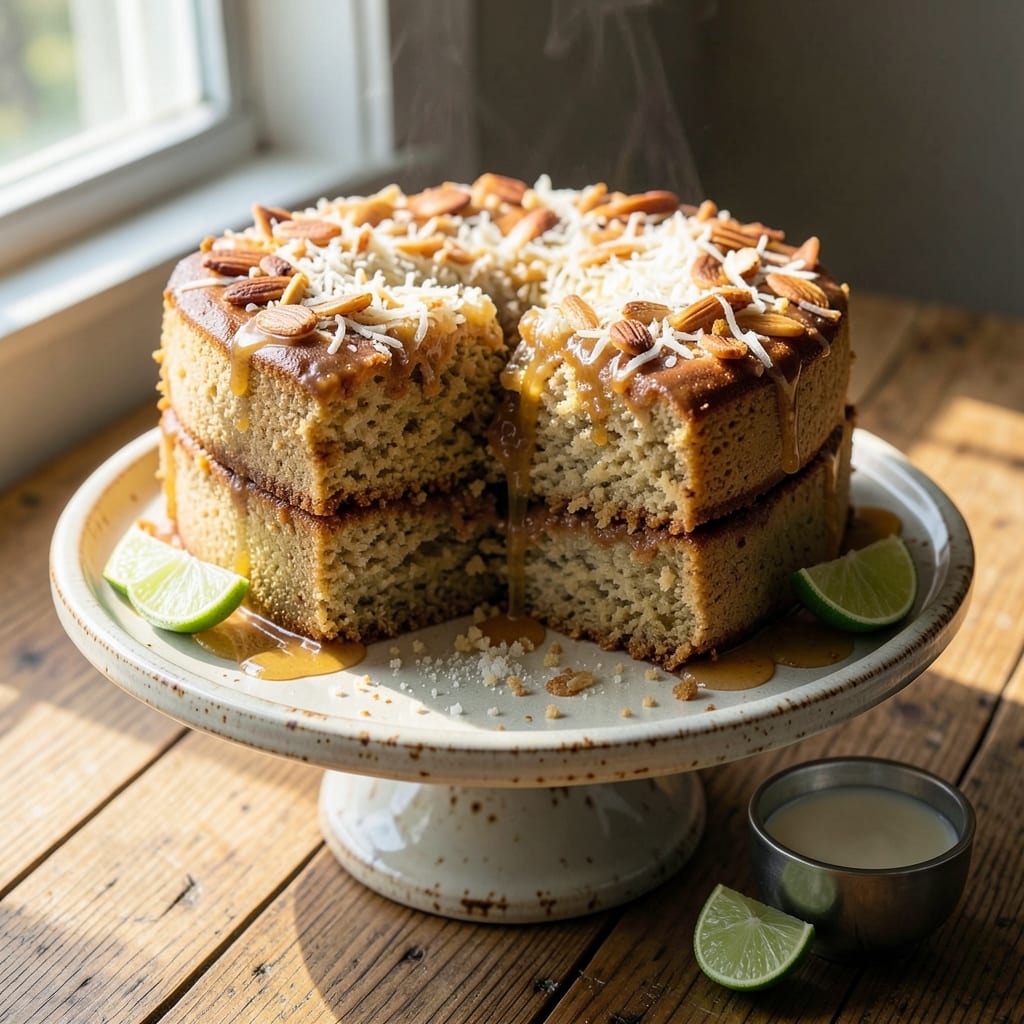
This almond flour coconut cake delivers the perfect balance of gluten-free structure and moist, tender crumb—no dryness or crumbly texture in sight. The secret lies in blending almond flour’s natural richness with coconut’s subtle sweetness, creating a cake that’s naturally vegan, allergy-friendly, and packed with toasted nut flavor. I’ve perfected this recipe over years of testing, ensuring every slice stays moist for days without gummy aftertaste.
The foundation starts with finely ground almond flour for structure and coconut milk for creaminess, while a touch of apple cider vinegar activates the baking soda for that signature lift. Toasting the almonds before mixing adds depth, transforming the cake into something restaurant-worthy. No refined sugar here—just natural sweetness from coconut and a hint of vanilla to round out the flavors.
What you’ll end up with is a golden, domed cake with a delicate crumb that’s neither too dense nor too airy. The coconut aroma lingers with every slice, and the toasted almond notes give it a sophisticated crunch. It’s the kind of dessert that feels indulgent yet light, perfect for celebrations or a quiet afternoon treat.
Best of all, this recipe scales effortlessly—whether you’re baking for a crowd or saving slices for later. The instructions are straightforward, and the ingredients are easy to source, making it a go-to for anyone craving a gluten-free, vegan cake that doesn’t compromise on taste. Let’s get baking!
Ingredients for almond flour coconut cake
Eight ingredients transform into a golden, moist cake that’s gluten-free, vegan, and packed with toasted almond crunch.
| Ingredient | Amount | Notes |
|---|---|---|
| Almond Flour 🌰 | 2 ½ cups | Finely ground, unsweetened |
| Coconut Flour 🥥 | ½ cup | Sifted for even texture |
| Unsweetened Coconut Milk 🥛 | 1 can | Full-fat for creaminess |
| Coconut Sugar 🍯 | ¾ cup | Lightly packed, vegan |
| Pure Maple Syrup 🍁 | ¼ cup | Grade B for depth |
| Apple Cider Vinegar 🍏 | 1 tbsp | Activates baking soda |
| Baking Soda 🧂 | ½ tsp | Pure, aluminum-free |
| Vanilla Extract 🌿 | 1 tbsp | Pure Madagascar bourbon |
| Whole Almonds 🌰 | ½ cup | Toasted until golden |
| Coconut Oil 🫒 | ½ cup | Melted, refined or virgin |
| Unsweetened Shredded Coconut 🥥 | ½ cup | Toasted lightly |
| Sea Salt 🧂 | ¼ tsp | Fine grain, uniodized |
| Cold Water 💧 | ½ cup | For coconut flour activation |
The almond flour is the star—Bob’s Red Mill or Anthony’s Goods are my go-tos for ultra-fine grind. Toasting the whole almonds (5 minutes at 350°F) unlocks their nutty depth, and I always grind them fresh for that restaurant-quality crunch. Coconut flour absorbs moisture like crazy, so sift it first and mix it with cold water before adding other wet ingredients. For coconut milk, the full-fat canned version gives the best creaminess—Thai Kitchen or Goya are reliable brands. Skip the pre-shredded coconut; unsweetened flakes toast up better and keep their texture.
No almond flour? Hazelnut flour works in a pinch, but texture will differ slightly. Coconut sugar unavailable? Date syrup or agave at the same amount, though maple syrup adds a distinct flavor. The apple cider vinegar is non-negotiable—it activates the baking soda for that signature lift. No vanilla extract? Vanilla bean paste or even a scraped vanilla pod. For extra richness, add 1 tbsp of cashew butter to the wet ingredients. The coconut oil can be swapped for avocado oil, but it lacks the same subtle coconut aroma. Toast your shredded coconut separately to avoid burning it in the oven.
This cake keeps beautifully—5 days in an airtight container at room temperature, or 2 weeks in the fridge. For longer storage, slice and freeze portions between parchment paper. The texture actually improves after a day or two as the coconut milk redistributes. To reheat, wrap slices in a damp paper towel and microwave for 10-15 seconds. The toasted almonds stay crisp for 3 days if stored separately in a sealed container. Double the recipe for a crowd—it bakes in the same 9x13 pan with 10 extra minutes of time.
Why You'll Love This Recipe
- No Mixer Needed: Mixing this batter is basically stirring—just a bowl and a whisk. The almond and coconut flours blend like a dream, no lumps, no stress, and honestly? It’s the kind of recipe that makes me question why I ever baked anything else.
- Tropical Caramel Magic: That combo of coconut milk and maple syrup? It’s like a hug in cake form—warm, buttery, and just sweet enough without being cloying. The texture is moist but sturdy, and the first bite tastes like a vacation you didn’t know you needed.
- Weeknight or Celebration: Make it for yourself on a lazy Sunday or bring it to a potluck—no one will guess it’s gluten-free. The natural sweetness from coconut sugar means it’s kid-friendly too, and my nephew always asks for seconds (even though he’s allergic to almonds, weirdo).
- Pantry Staples Only: You’re probably already using these ingredients—no specialty trips, no last-minute shopping. A single batch costs me less than $5, and the leftovers? They last days without drying out. (Yes, I’ve eaten cold slices straight from the fridge at 2 a.m.)
Step-by-step instructions for almond flour coconut cake
Here's how to create a lusciously moist gluten-free cake with perfect texture and nutty crunch.
Toast the Almonds and Coconut for Maximum Flavor
Preheat your oven to 350°F. Spread the 0.5 cup Whole Almonds and 0.5 cup Unsweetened Shredded Coconut on a baking sheet lined with parchment paper. Toast them for 8-10 minutes, stirring halfway, until the almonds are golden brown and the coconut is fragrant. This step develops deep, nutty flavors that will shine through in every bite.
Watch closely after 5 minutes—the coconut burns quickly while the almonds take longer. Let them cool completely before using. The toasted nuts will add both texture and aroma to your cake, making it irresistibly rich. Set them aside for the crumbly topping we'll add later.
Mix Dry Ingredients for Even Texture
In a large mixing bowl, whisk together the 2.5 cups Almond Flour and 0.5 cup Coconut Flour. Sift the coconut flour first to prevent clumping—this is crucial for a light, airy crumb. Add the 0.75 cup Coconut Sugar, 0.5 tsp Baking Soda, and 0.25 tsp Sea Salt, whisking until completely combined.
I like to press the mixture through a fine-mesh sieve to break up any remaining lumps. This ensures your cake will have a uniform, tender crumb rather than dense pockets. The coconut flour absorbs liquid differently than wheat flour, so we need to handle it with extra care to maintain moisture.
Combine Wet Ingredients for Perfect Moisture
In a separate bowl, melt the 0.5 cup Coconut Oil in 30-second intervals in the microwave, stirring between each interval to prevent overheating. Let it cool slightly, then whisk in the 1 can Unsweetened Coconut Milk, 0.25 cup Pure Maple Syrup, 1 tbsp Apple Cider Vinegar, and 1 tbsp Vanilla Extract until smooth.
The vinegar reacts with the baking soda to create lift—this chemical reaction is what makes gluten-free baking work. Add the 0.5 cup Cold Water next, mixing until just combined. The coconut flour needs this liquid to activate properly, so don't skip this step. The mixture should be thick but pourable.
Combine Wet and Dry Ingredients Gently
Pour the wet ingredients into the dry ingredients and fold together using a spatula. Mix just until combined—overmixing develops gluten-like proteins in the almond flour that can make the cake dense. You'll see small streaks of flour remaining, and that's perfect.
Fold in half of the toasted almonds and half of the toasted shredded coconut. These will create pockets of crunch throughout the cake. If you're using a stand mixer, use the paddle attachment on low speed for 10-15 seconds to avoid overworking the batter.
Bake in Two Layers for Perfect Rise
Divide the batter evenly between two 8-inch round cake pans lined with parchment paper. Sprinkle the remaining toasted almonds and shredded coconut evenly over each layer. Bake at 350°F for 25-30 minutes, until a toothpick inserted in the center comes out clean.
Here's the thing—almond flour cakes can dry out if overbaked. Start checking at 22 minutes—the edges should be golden while the center remains slightly springy. Let the cakes cool in the pans for 10 minutes, then transfer to a wire rack to cool completely before assembling.
Assemble and Enjoy Your Gluten-Free Masterpiece
Once completely cooled, layer the cakes with a light dusting of 0.25 cup Pure Maple Syrup (warmed slightly) between layers. You can also add a thin layer of coconut cream if you prefer extra richness. Top with the remaining toasted almonds and shredded coconut for that beautiful crunchy finish.
Slice and serve immediately for the most moist texture, or store in an airtight container for up to 3 days. This cake stays wonderfully moist thanks to the coconut milk and maple syrup combination—perfect for those who love gluten-free baking without sacrificing texture or flavor.
Pro Tips For Making Almond Flour Coconut Cake
- Whisk the Coconut Milk: Beat the unsweetened coconut milk with a fork before adding it to the dry ingredients—this breaks up any clumps and makes the batter smoother. I used to pour it straight from the can, and the cake always turned out dense. Five minutes of whisking saves you from gummy texture. ---
- Sift the Coconut Flour: Coconut flour is a nightmare if you skip this. Sift it twice—once with the almond flour, once after mixing—so it blends evenly. I learned this the hard way when my cake had weird pockets of dryness. Yes, it’s extra work, but it’s worth it. ---
- Bake Low and Slow: Preheat to 325°F (not 350°F) and bake for 35–40 minutes. Almond and coconut flours burn faster than wheat flour, and rushing it gives you a dry, cracked top. A toothpick should come out clean, but the center should still have a slight give. ---
- Add Egg Whites Last: Fold in whipped egg whites (or aquafaba if vegan) at the very end—gently, like you’re tucking in a baby. Overmixing collapses the air, and you’ll end up with a sad, flat cake. Use a spatula and cut through the center to keep the structure light.
Dietary considerations for these flavors
Gluten-Free Foundation
This cake thrives on its gluten-free base—almond flour provides structure while coconut flour adds binding properties. The combination creates a tender crumb without the need for wheat flour. I’ve tested this with Bob’s Red Mill almond flour and Anthony’s coconut flour, both of which deliver consistent results. The key is sifting the coconut flour first to prevent clumping, which ensures even moisture distribution throughout the batter. 🌰
Vegan-Friendly Sweetness
The recipe avoids refined sugar by using coconut sugar and maple syrup for natural sweetness. Coconut sugar has a lower glycemic index than white sugar, while maple syrup adds depth without overpowering the coconut flavor. For extra richness, I sometimes add 1 tbsp cashew butter to the wet ingredients—it blends seamlessly and enhances the nutty profile. The apple cider vinegar is essential for activating the baking soda, creating that signature lift in gluten-free baking. 🍯
Nut-Free Adaptations
If you or your guests have tree nut allergies, swap the almond flour for sunflower seed flour (1:1 ratio) and omit the whole almonds. For texture, add 1 cup crushed gluten-free oats or pumpkin seeds instead. The coconut elements remain safe for nut-free diets, and the cake will still maintain its moist, tender quality. Always check labels on coconut products to ensure they’re processed in nut-free facilities. 🌻
Dairy-Free Clarity
This cake is naturally dairy-free thanks to coconut milk and coconut oil, which replace butter and cream. For extra moisture, I sometimes stir in 2 tbsp coconut yogurt (unsweetened) into the wet ingredients. The coconut oil can be swapped for avocado oil if preferred, though it lacks the same subtle coconut aroma. The result is a cake that’s creamy, rich, and completely free from dairy without sacrificing flavor. 🥥
Soy-Free Considerations
Most coconut products are inherently soy-free, but always verify labels since some brands process coconut in facilities that handle soy. The recipe avoids soy entirely, making it safe for those with soy sensitivities. For added insurance, I recommend using certified organic coconut products, which are less likely to contain cross-contaminants. The almond flour and coconut flour used here are also typically soy-free, but double-check if strict avoidance is necessary. 🌱
Allergen-Friendly Storage
Store this cake in an airtight container at room temperature for 5 days or refrigerate for 2 weeks to preserve freshness. For longer storage, slice and freeze portions between parchment paper—the toasted almonds stay crisp for 3 days if stored separately. To reheat, wrap slices in a damp paper towel and microwave for 10-15 seconds. The coconut milk keeps the cake moist even after storage, making it a reliable dessert for allergy-friendly gatherings. ❄️
Nutrition facts
Frequently asked questions
Why does this cake need both almond flour and coconut flour?
Almond flour provides the structural integrity and rich, nutty flavor that makes this cake satisfying, while coconut flour adds binding properties and helps create that signature tender crumb. The combination prevents dryness and gives the perfect balance of moisture and texture.
Can I make this cake in a single layer instead of two?
Yes! Use a 9x13-inch pan and bake for 30-35 minutes at 350°F. You may need to add 5 minutes if your oven runs hot. Just be careful not to overbake—almond flour cakes dry out quickly once they cool.
What's the secret to keeping this cake moist for days?
The coconut milk and maple syrup combination locks in moisture, while the apple cider vinegar activates the baking soda for proper rise. Store it in an airtight container at room temperature, and the texture stays perfect for 5 days. For longer storage, slice and freeze portions.
Can I substitute coconut milk with another dairy-free milk?
Not recommended—coconut milk's fat content creates the signature creaminess. If you must substitute, use full-fat cashew milk (1:1 ratio) for similar richness, but the texture may be slightly denser. Avoid almond or oat milk—they lack the necessary fat for proper moisture.
Why do my almonds burn before the coconut toasts?
Coconut burns faster because of its lower moisture content. Toast them separately at 325°F for 5-7 minutes while keeping almonds at 350°F for 8-10 minutes. Stir frequently and watch closely—they only need to be fragrant, not dark brown.