
Desserts
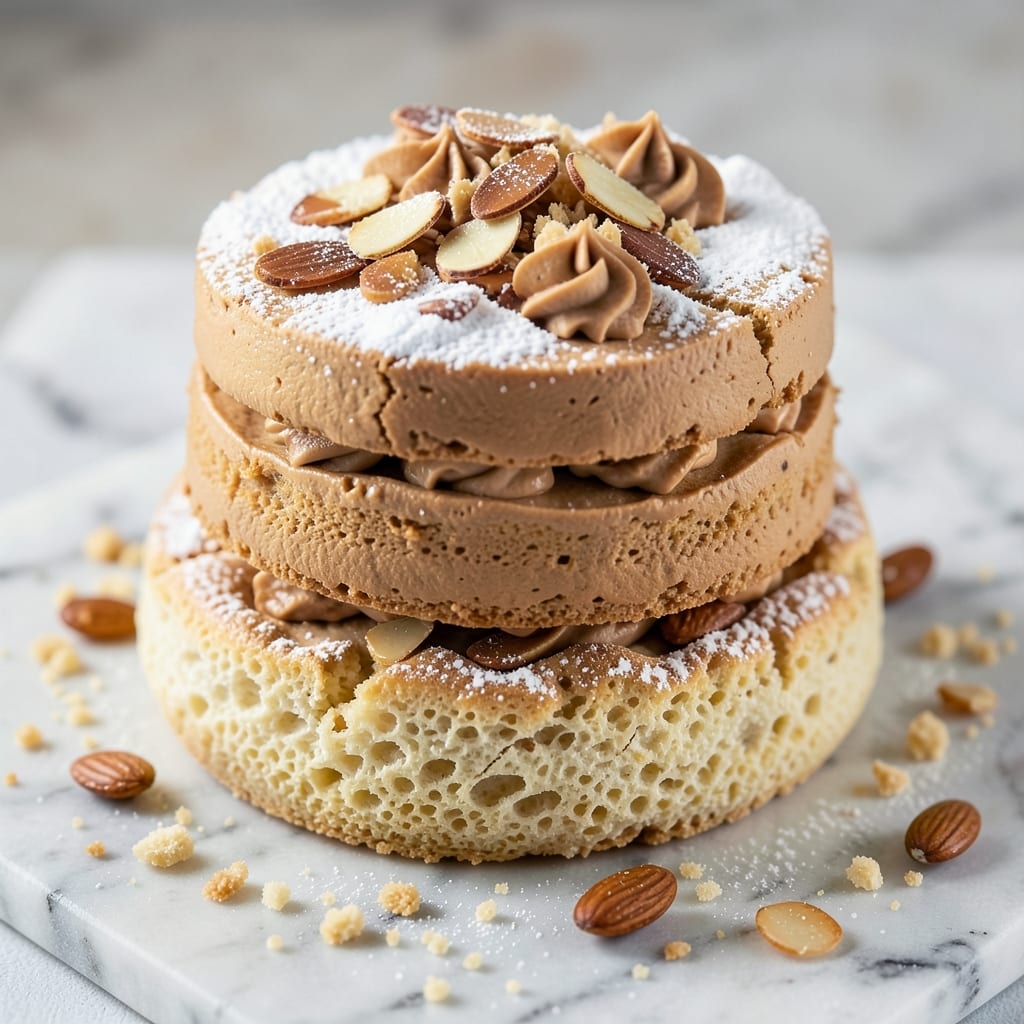
This almond dacquoise cake recipe transforms delicate meringue into towering, crispy layers with a velvety almond cream center—elegance meets indulgence in every bite. The secret lies in the French meringue method, where sugar and egg whites create a glossy, crack-resistant base that holds its shape perfectly. I've refined this technique over years to ensure those signature crispy towers stay light yet sturdy enough to support the nutty filling without collapsing.
The magic happens in three precise stages: first, the meringue base must be baked just until set but still tender enough to slice cleanly. Then comes the almond cream—whipped egg whites folded into toasted almond paste and butter, creating a rich, marbled filling that contrasts beautifully with the crispy meringue. Finally, the assembly requires patience: layering, chilling, and slicing at the perfect angle for dramatic presentation.
What you'll achieve is a cake that looks like it belongs in a Parisian pâtisserie, with its crispy, golden meringue towers and luscious almond swirls peeking through. The texture is a perfect balance: the meringue offers satisfying crunch, while the almond cream provides a smooth, nutty contrast. This is the kind of dessert that elevates any celebration from ordinary to extraordinary.
Whether you're baking for a special occasion or simply treating yourself, this recipe delivers restaurant-quality results with just a few key techniques. The best part? It's more forgiving than it looks—once you master the meringue, the rest is straightforward. Let's get started on creating your own edible masterpiece.
Ingredients for almond dacquoise cake
Elegant ingredients for a showstopping dessert—crispy meringue meets velvety almond cream magic.
| Ingredient | Amount | Notes |
|---|---|---|
| Large Egg Whites 🥚 | 8 whole | Room temperature for best volume |
| Granulated Sugar 🍚 | 3 cups | Superfine preferred for smoothness |
| Unsalted Butter 🧈 | 1 cup | Cold, cubed for almond cream |
| Almond Paste 🌰 | 1 cup | High-quality, unsweetened |
| Toasted Sliced Almonds 🌰 | 1 ½ cups | For meringue decoration |
| Vanilla Extract 🌿 | 1 tsp | Pure, high-quality |
| Salt 🧂 | ¼ tsp | Fine sea salt |
| Cornstarch 🌾 | 1 tbsp | For meringue stability |
| Almond Extract 🌰 | ½ tsp | For enhanced almond flavor |
| Powdered Sugar 🍚 | ½ cup | For dusting between layers |
The egg whites are your star—room temperature makes all the difference for perfect volume. Grab a digital thermometer (I use the Thermoworks one) to check they're at 70°F before whipping. For almond paste, Ghirardelli or Nocciolata are my go-tos—avoid the pre-sweetened kind unless you want a caramelized surprise. Toast your sliced almonds in a 350°F oven for 8-10 minutes until golden, then cool completely before using. Pro tip: sift your powdered sugar before dusting layers—clumps ruin the presentation.
No almond extract? Double the vanilla and add a pinch of cinnamon for depth. Running low on cornstarch? Arrowroot powder works 1:1. For the butter, European-style (like Plugrá) has higher fat content—ideal for the almond cream's richness. If you can't find unsalted butter, reduce the salt to 1/4 tsp. The meringue sugar must be superfine (pulse regular sugar in a food processor with 1 tbsp cornstarch if needed). And never skip the chilling between layers—patience here prevents collapse.
Meringue towers keep for 2 days at room temperature (covered loosely), but the almond cream starts to soften after 12 hours. For longer storage, wrap tightly in plastic and refrigerate for up to 5 days—bring to room temp before serving. Freezing isn't recommended—the texture suffers. To reheat, pop slices in a 350°F oven for 5-7 minutes until crispy again. Slice with a hot knife for clean cuts every time—dip in hot water first!
Why You'll Love This Recipe
- No Whipped Cream Needed: I’ll admit, I used to skip dacquoise because it felt like too much fuss—until I realized you only need egg whites and sugar for the meringue. No heavy cream, no stabilizers, just that perfect airy crunch every time. Honestly, it’s the kind of recipe that makes me feel like a baking pro without the stress.
- Crunch That Lasts: Between us, the moment those toasted almonds hit the oven and turn golden? That’s the best part. The almond paste adds a buttery richness, but it’s the crispy edges from the sliced almonds that make this cake ridiculously satisfying. One bite and you’ll forget about store-bought anything.
- Layer Like a Pro: Here’s what sold me—this cake stacks like a dream. Two layers of meringue, a buttercream or jam filling, and you’ve got a showstopper that’s still way easier than a Victoria sponge. I’ve used it for birthdays, last-minute dessert dates, and even as a fancy-ish lunch with tea. No one ever questions how little effort it took.
- Budget-Friendly Fancy: Almond paste might sound pricey, but a little goes a long way, and you can even make your own if you’re feeling ambitious. The rest? Egg whites, sugar, butter—stuff you already have. Plus, leftovers? They disappear faster than you can say “second slice.” My go-to is cutting it into bars for a quick breakfast or snack.
Step-by-step instructions for almond dacquoise cake
Let's build those stunning meringue towers with perfect crispiness and nutty depth.
Prepare the Almond Cream Filling
In a stand mixer fitted with the paddle attachment, combine the 1 cup unsalted butter (cold and cubed) with the 1 cup almond paste. Beat on medium speed for 2-3 minutes until completely smooth and creamy. This step is crucial for achieving that signature dacquoise texture—don't rush it.
Next, add the 3 cups granulated sugar, 1 tsp vanilla extract, 0.5 tsp almond extract, and 0.25 tsp salt. Mix on medium-high speed for another 3-4 minutes until the mixture is light, fluffy, and pale in color. You'll know it's ready when it nearly doubles in volume and leaves a trail when the beaters are lifted. This almond cream will be the secret to your cake's rich, nutty flavor and tender crumb.
Whip the Meringue to Peak Stiffness
In a separate, spotlessly clean mixing bowl (any grease will prevent proper meringue formation), beat the 8 whole large egg whites on medium speed until soft peaks form. Gradually add the 3 cups granulated sugar while mixing on high speed. Increase speed to high and whip for 8-10 minutes until the meringue is glossy and holds stiff peaks.
Here's the thing—you want the meringue to be thick enough to hold its shape when piped, but not dry. It should be smooth like frosting and leave a trail when the beaters are lifted. If it's not stiff enough, the towers won't hold their structure. I like to test by flipping the bowl upside down—if nothing falls out, it's ready. Add the 1 tbsp cornstarch during the last minute of whipping to improve stability.
Assemble the Dacquoise Layers
Divide the almond cream into 8 equal portions (about 2 tablespoons each) and pipe or spoon them onto 8 parchment-lined baking sheets, spacing them about 2 inches apart. Then, carefully pipe the meringue around each almond cream portion, creating a 1-inch high ring that tapers slightly at the top. This creates the classic dacquoise tower shape.
Gently press 1.5 cups toasted sliced almonds into the sides of each meringue ring, pressing them firmly so they stick. The almonds will add texture and flavor while helping to hold the meringue in place during baking. Preheat your oven to 325°F while you work—this gentle temperature ensures even baking without burning the meringue.
Bake to Crispy Perfection
Place the baking sheets in the preheated oven and bake for 15-18 minutes until the meringue is golden brown and crispy. The towers should look dry to the touch and pull away from the parchment easily. Don't overbake—they'll continue setting as they cool, and overbaking makes them brittle.
Let the towers cool completely on the baking sheets for 30 minutes before carefully transferring them to a wire rack. This gradual cooling prevents cracking. Once fully cooled, dust the tops and sides lightly with 0.5 cup powdered sugar using a fine-mesh sieve. This step adds that signature dacquoise elegance and helps create the classic crumbly texture between layers.
Layer and Serve with Confidence
To assemble the cake, place 4 towers on a serving platter, arranging them in a square. Add a layer of almond cream between each tower, then top with the remaining 4 towers. Dust generously with additional powdered sugar and decorate with extra toasted sliced almonds for presentation. Serve immediately for the best texture—these delicate towers are best enjoyed fresh.
Here's where the magic happens: each bite should deliver that perfect balance of crisp meringue, rich almond cream, and nutty crunch. The cake should be light yet sturdy, with clean layers that separate easily. If you've followed these steps carefully, you'll have a dacquoise that's as impressive to look at as it is to eat—crispy on the outside, tender within, and bursting with almond flavor in every bite.
Pro Tips For Making Almond Dacquoise Cake
- Whip Egg Whites Cold: Pop your egg whites straight from the fridge—room temperature is the enemy of stiff peaks. I used to rush this, and my meringue would collapse like a sad soufflé. Cold whites hold structure better, so just crack them into a spotless bowl (no grease, not even a trace) and get whipping. ---
- Toast Almonds Low: Toast your sliced almonds in a dry pan over medium-low heat, stirring constantly—burnt almonds taste bitter, and no one wants that. Pull them when they’re just golden, not brown, and let them cool completely before folding into the almond paste. Warm almonds release oil and make the layers soggy. ---
- Pipe in Stages: Don’t dump all the meringue at once—pipe the first layer, let it set firm (about 15 minutes), then add the almond paste, then the second meringue. This prevents a greasy, collapsed mess. Use a piping bag with a large star tip for clean, even swirls—no need for fancy tools, just steady hands. ---
- Chill Before Buttercream: Once your dacquoise layers are baked and cooled, stick the whole thing in the fridge for at least 2 hours before adding buttercream. Cold layers hold together better, and the buttercream won’t melt into a sticky disaster. I learned this after my first attempt turned into a gooey pancake.
Pro cooking tips for this recipe
Meringue Mastery
The French meringue method is non-negotiable for dacquoise—it's what gives those towers their signature crispness and crack-resistant structure. Use a digital thermometer to monitor egg white temperature at 70°F before whipping, as cold whites won't reach peak volume. I swear by the KitchenAid stand mixer with the whisk attachment for this step—it's more stable than handheld mixers. Whip on high speed for 8-10 minutes until the meringue forms stiff peaks that hold their shape when the bowl is flipped upside down. 🔥
Almond Cream Secrets
The almond cream should be light, fluffy, and pale—almost like a pale yellow buttercream. I use European-style butter (like Plugrá) because it has a higher fat content that creates a richer texture. Beat the butter and almond paste together for 2-3 minutes until completely smooth before adding any sugar or extracts. This ensures the almond flavor is evenly distributed and the cream doesn't turn grainy. 🌰
Tower Assembly Tips
When piping the meringue rings, work quickly but carefully—meringue loses volume as it sits. Use a piping bag with a large star tip (like Wilton 1M) to create the tapered shape. Space your towers 2 inches apart on the baking sheet to allow for even baking and easy removal. Press the toasted almonds into the meringue firmly but gently—too much pressure will crack the towers, but not enough will cause them to collapse during baking. ⚡
Baking Precision
Bake at 325°F—this gentle heat is crucial for even cooking without burning the meringue. The towers are done when they're golden brown and pull away from the parchment easily. I test by gently tapping the bottom—they should sound hollow. Overbaking by even 1 minute makes them brittle and dry. Let them cool completely on the baking sheet before transferring to a wire rack to prevent cracking. 💫
Layering Like a Pro
Dust the powdered sugar between layers using a fine-mesh sieve—this creates that signature crumbly texture and prevents the towers from sticking together. When assembling, place the towers close together but not touching—this creates the illusion of a single cake while maintaining individual integrity. Serve immediately for the best texture, as the almond cream softens over time. 💡
Equipment Upgrades
A silicon baking mat (like OXO Good Grips) prevents sticking better than parchment for meringue towers. For piping precision, I recommend the Ateco 806 tip—it gives you clean, even rings every time. And invest in a high-quality offset spatula (like Mercer Culinary) for spreading the almond cream between layers without tearing the meringue. These small upgrades make all the difference in professional results. ✨
Nutrition facts
Frequently asked questions
Why does my meringue collapse when baking?
Meringue collapses most often from humidity or improper whipping. First, ensure your egg whites are at room temperature—cold whites won't whip properly. Second, check for any grease in your bowl (even a trace can prevent stiff peaks). Finally, bake at 325°F—higher temps cause rapid moisture loss and cracking. If humidity is an issue, bake with a tray of water in the oven to create steam.
Can I make this cake without egg whites?
For a vegan version, substitute egg whites with 1 cup aquafaba (chickpea brine) whipped to stiff peaks, plus 1 tbsp cornstarch for stability. Replace the 8 egg whites 1:1. For the almond cream, use vegan butter and ensure your almond paste is egg-free. The texture will be slightly denser but still delicious.
How do I store leftover dacquoise?
Store the assembled cake in an airtight container at room temperature for up to 2 days. For longer storage, refrigerate for 5 days—just let it sit at room temp for 30 minutes before serving to restore crispness. Avoid freezing as it alters the meringue texture. To revive stale meringue, warm slices in a 350°F oven for 5-7 minutes until crispy again.
What's the best way to slice dacquoise for clean layers?
Use a hot knife (dip in hot water first) for perfectly clean slices. Cut through the center of each tower at a 45-degree angle to create dramatic layers. Work quickly—meringue softens as it sits. For even cleaner cuts, chill the cake for 15 minutes before slicing to firm up the almond cream.
Can I make individual servings instead of a full cake?
Yes! Scale down by making 4 smaller towers (about 0.5-inch high) on a single baking sheet. Use a smaller piping tip (like Wilton 1A) for mini versions. Assemble 2 towers per serving plate with a dollop of almond cream between them. These bite-sized versions are perfect for parties—they're easier to handle and serve!