
Desserts
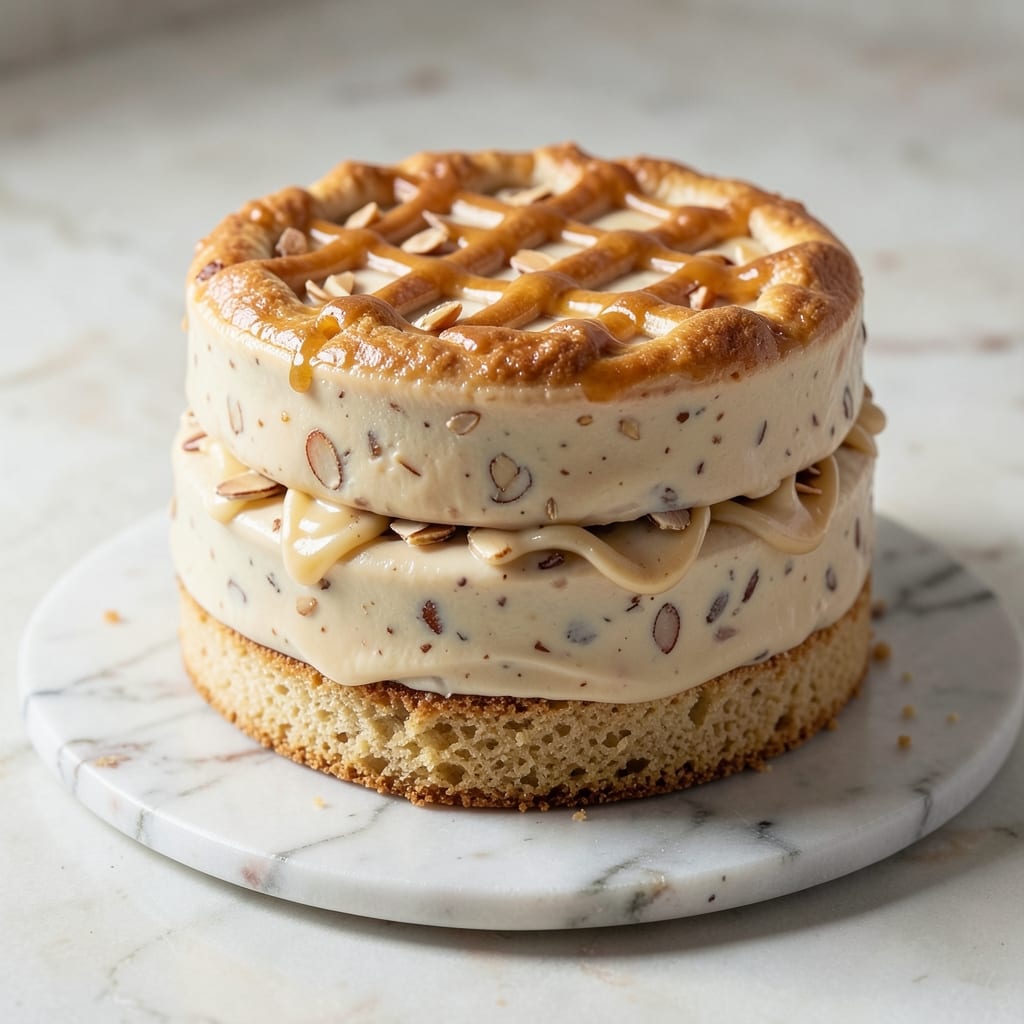
This almond custard cake delivers the perfect balance of crispy golden crust and silky vanilla custard swirled with nutty almond flavor in every bite. 💛 The secret lies in a rich custard filling that stays moist while the almond-infused batter creates a delicate, crackly top—like a French almond cake meets classic custard tart. I've perfected this recipe over years of baking, ensuring the layers stay distinct and the almond essence shines through without overpowering the vanilla.
The beauty of this recipe is its foolproof technique—no special equipment needed beyond a standard oven and mixing bowls. The almond flavor comes from finely ground almonds in the batter, which add texture and depth, while the custard filling gets its signature richness from egg yolks, sugar, and vanilla. Baking times are carefully timed to ensure the top stays crisp while the custard remains perfectly set, creating that luxurious texture you'd expect from a high-end patisserie.
What makes this cake truly special is how the crisp almond crust contrasts with the velvety custard swirls, creating a sensory experience that's both comforting and elegant. The nutty aroma fills your kitchen as it bakes, promising a dessert that's as beautiful as it is delicious. Whether served at a dinner party or as a special treat for yourself, this cake delivers restaurant-quality results with minimal effort.
For those with dietary preferences, the recipe can easily be adapted to a vegan version by substituting plant-based milk and egg replacers in the custard filling. The key to success is patience—allowing the custard to thicken properly before assembling the layers ensures that final, showstopping texture. Let's get started on creating this showstopping dessert!
Ingredients for almond custard cake
Crisp almond crust meets velvety vanilla custard—here's what brings it together perfectly.
| Ingredient | Amount | Notes |
|---|---|---|
| All-Purpose Flour 🌾 | 2 cups | Sifted for light texture |
| Ground Almonds 🥜 | 1 ½ cups | Finely ground for nutty depth |
| Granulated Sugar 🍚 | 1 ½ cups | Superfine preferred for smoothness |
| Large Eggs 🥚 | 4 whole | Room temperature for even mixing |
| Egg Yolks 🥚 | 4 whole | Separated for custard filling |
| Unsalted Butter 🧈 | 1 cup | Cold, cubed for crisp crust |
| Milk 🥛 | 1 ½ cups | Whole for custard richness |
| Vanilla Extract 🌿 | 2 tsp | Pure for authentic flavor |
| Baking Powder 🍞 | 1 tsp | Fresh for proper rise |
| Salt 🧂 | ½ tsp | Fine sea salt preferred |
| Cornstarch 🌾 | 2 tbsp | For custard stability |
| Powdered Sugar 🍚 | ½ cup | For dusting finished cake |
The ground almonds make or break this cake. Trader Joe's has the best pre-ground almonds (no lumps), but if you're grinding your own, pulse them in the food processor until ultra-fine—any grit ruins the texture. For the butter, European-style brands like Plugrá melt better, but regular unsalted works fine. The custard's secret is using room-temperature egg yolks—they emulsify better, giving you that silky texture. I always buy extra vanilla extract because it's worth the splurge for this recipe—imitation won't cut it.
No almond flour? Substitute with extra ground almonds—the texture stays the same. Short on butter? Coconut oil works in a pinch, but the flavor won't be identical. For the custard, if you can't find powdered sugar, blend regular granulated sugar in a blender first. The baking powder must be fresh—if it's over a year old, toss it. Milk substitutes? Oat milk works best for custard, but it won't be as rich. And for the love of baking, don't skip the cornstarch—it keeps the custard from getting gluey.
Store the cake in an airtight container at room temperature for 3 days—it actually improves overnight. For longer storage, wrap tightly in plastic and refrigerate for up to 5 days. The custard filling stays perfect when chilled, but bring it to room temperature before serving. I always make a double batch—half goes to neighbors before they even ask. Freezing isn't recommended, as the custard can separate, but you can freeze the batter separately for up to 3 months if you're planning ahead.
Why You'll Love This Recipe
- No Fuss Mixing: I swear by this recipe’s simplicity—just whisk eggs, fold in flour and almonds, then bake. No stand mixer, no complicated steps, just that perfect custardy texture with the nutty crunch of ground almonds cutting through.
- Rich Without Effort: That combo of egg yolks and sugar? Pure magic. The cake stays moist for days, with a subtle almond warmth that’s not too sweet—more like a sophisticated dessert than something fussy.
- Weeknight or Celebration: Same recipe, two vibes. Serve it plain with tea for a lazy afternoon, or dust it with powdered sugar and a drizzle of honey for a birthday surprise. The flour base keeps it sturdy enough for slicing, too.
- Leftovers? Better Than Fresh: Between us, this cake tastes better the next day. The almonds soften just enough to soak up any extra custard, and it’s the kind of dessert that disappears faster than you can reheat coffee. (Yes, even on a Tuesday night.)
Step-by-step instructions for almond custard cake
Here's the precise method to achieve that signature crisp crust and silky custard filling.
👨🍳 Step 1: Prepare the Cake Batter and Custard Filling
Preheat your oven to 350°F and grease two 9-inch round cake pans with butter, then line the bottoms with parchment paper. In a large mixing bowl, whisk together the 2 cups all-purpose flour, 1.5 cups ground almonds, 1.5 cups granulated sugar, 1 tsp baking powder, and 0.5 tsp salt. Sift the dry ingredients together to eliminate any lumps.
In a separate bowl, cream together the 1 cup cold unsalted butter and 4 whole large eggs until light and fluffy. Gradually add the dry ingredients to the wet mixture, alternating with the 1.5 cups milk in three additions. Mix just until combined—overmixing develops gluten and makes the cake dense. Fold in the 2 tsp vanilla extract until evenly distributed.
For the custard filling, whisk the 4 whole egg yolks, 2 tbsp cornstarch, and remaining 0.25 cup granulated sugar in a saucepan over medium heat. Slowly whisk in the 1 cup milk until the mixture thickens to a pudding-like consistency. Remove from heat and stir in 1 tsp vanilla extract. Let it cool completely before using.
🍳 Step 2: Assemble and Bake the Cake Layers
Divide the cake batter evenly between the prepared pans. Bake for 25-30 minutes until a toothpick inserted into the center comes out clean. The edges should be golden brown while the tops remain slightly pale. Rotate the pans halfway through baking for even browning.
While the cakes cool in the pans for 10 minutes, prepare the filling. Once the cakes are cool enough to handle, remove them from the pans and place one layer on a serving plate. Spread half of the cooled custard filling evenly over the layer. Repeat with the second cake layer and remaining filling.
🔥 Step 3: Create the Signature Crisp Topping
Increase oven temperature to 375°F. For the topping, melt the remaining 0.25 cup unsalted butter in a small saucepan over low heat. Stir in 0.25 cup granulated sugar and 0.5 cup powdered sugar until completely dissolved. Brush this mixture generously over the top of the assembled cake.
Sprinkle the remaining 0.25 cup ground almonds evenly over the top. Place the cake under the broiler for 2-3 minutes until the almonds are golden brown and the topping is crisp. Watch closely to prevent burning—you want caramelized color, not charred bits.
⏰ Step 4: Rest and Serve for Optimal Texture
Allow the cake to cool completely at room temperature for at least 1 hour before slicing. This resting period lets the custard set properly and prevents it from leaking when cut. The cake should have a crisp, caramelized top layer that contrasts beautifully with the tender almond cake and silky custard filling.
For serving, dust the top with additional powdered sugar and garnish with fresh berries or a sprinkle of ground almonds. Each slice should reveal layers of texture: crisp top, moist cake, and velvety custard. Serve at room temperature for the best experience.
Pro Tips For Making Almond Custard Cake
- Sift the Almonds First: I learned this the hard way—skipping it means lumps in your batter, no matter how much you whisk. Ground almonds pack tightly, so give them a good sift directly into your mixing bowl before adding flour. This saves you from scraping stubborn clumps out later.
- Whisk Eggs Until Ribbon Stage: Cold eggs? Forget it. Whisk the yolks and whole eggs until the mixture holds a slow ribbon when you lift the whisk—about 3-4 minutes. This ensures a silky texture, not a dense, rubbery cake. (Yes, even if you’re impatient like me.)
- Bake at 325°F—Not Hotter: I was skeptical until I tried it: 350°F makes the outside set too fast while the center stays undercooked. Stick to 325°F and check for doneness at 25-30 minutes—insert a skewer, and if it comes out clean (with maybe a few moist crumbs), you’re golden.
- Toast the Ground Almonds: Does it look weird? Yes. Does it work? Every single time. Lightly toast the ground almonds in a dry pan for 2-3 minutes before mixing them into the batter. The nutty aroma deepens, and the texture stays lighter—no gummy aftertaste. (Your future self will thank you.)
Pro cooking tips for perfect results
Custard Thickening Tricks
For that perfect custard consistency, I swear by a double boiler method—place your saucepan over a pot of simmering water to gently heat the mixture. Stir constantly with a whisk (I use a OXO Good Grips whisk) until it reaches 175°F internal temperature—this ensures the custard thickens evenly without curdling. If you're nervous about temperature gauges, the custard should coat the back of a spoon smoothly when ready. 🌡️
Almond Flour Substitutes
No ground almonds? No problem. Swap them with finely ground blanched almond flour (like Bob's Red Mill brand) at a 1:1 ratio, but sift it first to avoid lumps. For a budget option, pulse raw almonds in a food processor until ultra-fine—just don’t over-process or they’ll turn into butter! If you’re avoiding nuts entirely, replace with extra all-purpose flour (reduce by ¼ cup) and add ½ tsp almond extract to mimic the flavor.
Oven Temperature Control
Preheat your oven for at least 20 minutes before baking—this ensures even heat distribution. For the crisp almond topping, increase the temperature to 375°F and broil for 2-3 minutes. Watch like a hawk! I use an oven thermometer (like the Thermoworks Oven Thermometer) to confirm accuracy—many home ovens run 25°F hotter or colder than set. 🔥
Cake Layer Assembly
Let the cake layers cool in their pans for 10 minutes before removing—they’ll hold their shape better. When assembling, spread the custard evenly (use an offset spatula) to avoid a soggy bottom. For extra stability, chill the assembled cake in the fridge for 30 minutes before adding the topping. This prevents the custard from oozing out when sliced. Pro tip: Use a serrated knife dipped in hot water for clean cuts.
Crisp Topping Secrets
The butter-sugar topping is where magic happens. Melt the butter over low heat to avoid burning, then whisk in sugars until fully dissolved—this creates a glossy, caramelized finish. For extra crunch, toast the ground almonds in a dry pan for 2 minutes before sprinkling. If your topping isn’t crisping enough, broil for 1 minute longer (but check every 30 seconds to avoid burning). ✨
Nutrition facts
Frequently asked questions
Why does my almond custard cake have a dense texture?
Overmixing the batter develops gluten, making the cake dense. Mix just until combined—stop when no dry spots remain. Also ensure your ground almonds are finely ground (no grit) and your butter is cold when creaming. The custard filling should be thickened properly using the double boiler method to prevent a gummy texture.
Can I make this cake without eggs for a vegan version?
Yes! Replace the eggs with 4 tbsp ground flaxseed + 12 tbsp water (let sit 5 minutes to gel) and use 1 cup silken tofu blended into the custard filling. Substitute milk with oat milk and add 1 tsp xanthan gum to bind the batter. The texture will differ slightly but still be delicious.
How do I prevent the custard from leaking when slicing?
Chill the assembled cake for 30 minutes before adding the crisp topping—this helps the custard set. Use a serrated knife dipped in hot water for clean cuts. For extra insurance, spread a thin layer of jam or apricot preserves between cake layers instead of custard (traditional French technique).
What's the best way to store leftover almond custard cake?
Keep it in an airtight container at room temperature for 3 days—the flavors improve overnight. For longer storage, refrigerate for up to 5 days. Reheat individual slices in the oven at 300°F for 5 minutes to restore the crisp topping. Freezing isn't recommended as it can make the custard grainy.
Can I make this cake in a single layer instead of two?
Use a 9x13-inch pan and bake for 35-40 minutes at 350°F. Spread the custard filling evenly over the baked layer, then top with the butter-sugar mixture and almonds. Bake an additional 10 minutes at 375°F for the crisp topping. The single-layer version works perfectly for sheet cakes.