
Desserts
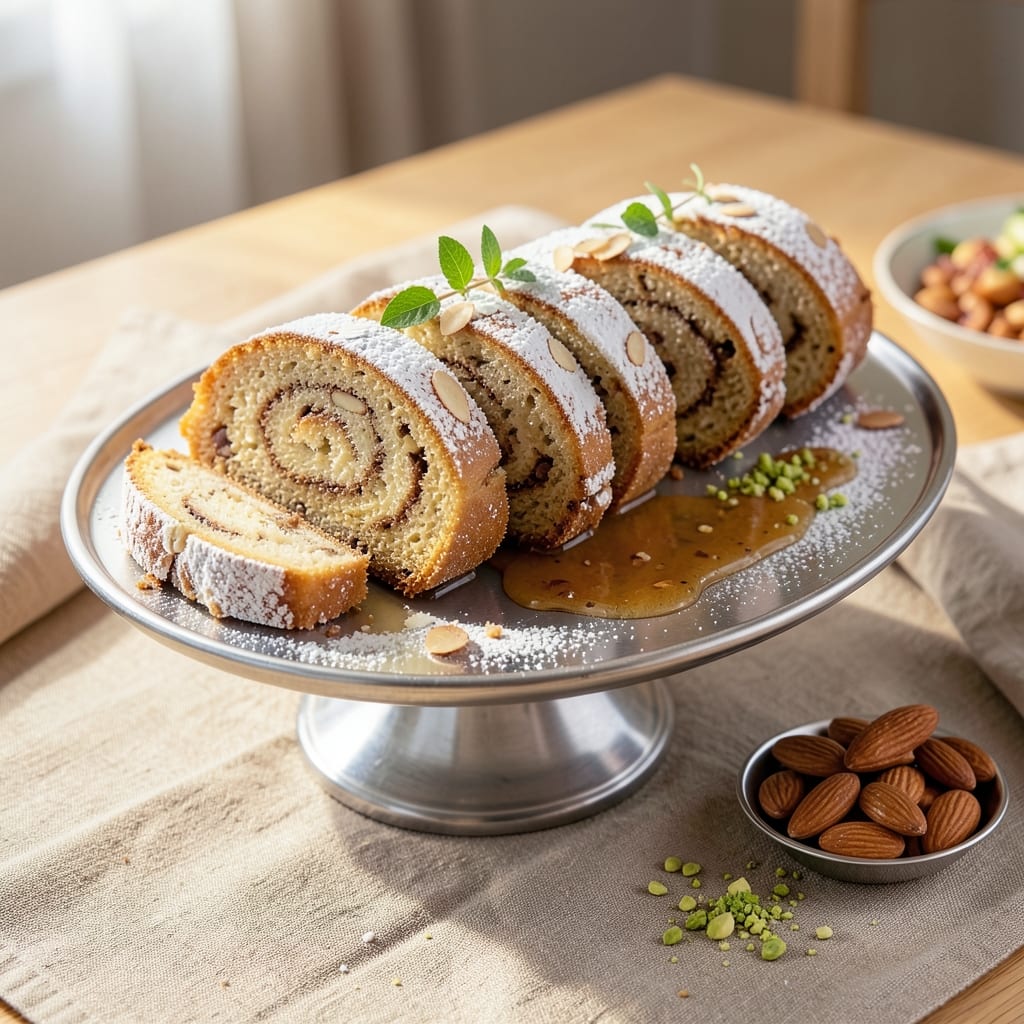
This almond cake roll recipe delivers layers of delicate sponge cake, rich almond filling, and velvety Swiss meringue buttercream swirls that look like professional patisserie work. 💛 The key to success lies in precise baking times and proper assembly techniques that create that signature smooth, elegant roll shape everyone admires.
What sets this recipe apart is the balance of textures—light, airy cake layers that contrast beautifully with the dense almond filling and airy buttercream. I've perfected the technique for achieving clean edges and a tight roll without cracks, even for beginners. The Swiss meringue buttercream adds that restaurant-quality finish with its smooth, glossy appearance and perfect sweetness level.
By the time you're done, you'll have a stunning dessert that's impressive enough for special occasions but simple enough for weeknight treats. The almond flavor shines through in both the filling and cake, creating a sophisticated yet approachable dessert that's sure to become a crowd-pleaser. Let's get started on creating your perfect cake roll.
This recipe includes all the essential steps—baking the cake layers, preparing the almond filling, assembling the roll with precision, and adding those beautiful buttercream swirls. I'll share my professional tips for achieving that flawless presentation and troubleshooting common issues that might arise during assembly.
Ingredients for almond cake roll
Eight delicate layers of almond-infused sponge, velvety buttercream, and rich filling—all you need for patisserie-worthy perfection.
| Ingredient | Amount | Notes |
|---|---|---|
| All-Purpose Flour 🌾 | 2 ½ cups | Sifted for lightness |
| Ground Almonds 🌰 | 1 ½ cups | Finely ground, not almond flour |
| Unsalted Butter 🧈 | 1 ¼ cups | Room temperature, European preferred |
| Granulated Sugar 🍚 | 2 cups | Superfine for smooth texture |
| Large Eggs 🥚 | 6 whole | Room temperature, separated |
| Almond Extract 🌿 | 1 tsp | Pure, not imitation |
| Baking Powder 🧂 | 1 ½ tsp | Spoon and level |
| Salt 🧂 | ¼ tsp | Fine sea salt |
| Heavy Cream 🥛 | 1 ½ cups | Cold, 35% fat |
| Powdered Sugar 🍚 | 3 cups | Sifted, for buttercream |
| Vanilla Extract 🍃 | 1 ½ tsp | Pure Madagascar |
| Almond Paste 🌰 | 1 ½ cups | Smooth, not marzipan |
| Lemon Zest 🍋 | 1 tbsp | Fresh, organic preferred |
| Confectioners' Glaze 🍬 | ½ cup | For final shine |
The almond paste and ground almonds are where the magic happens. Trader Joe's has the best pre-made almond paste—smooth and consistent, no graininess. For ground almonds, Bob's Red Mill is my go-to; it's finely ground and stays fresh longer. The European-style butter (like Plugrá) makes all the difference—it's higher in fat and gives that tender crumb. If you can't find it, Land O'Lakes works in a pinch, but bring it to room temperature first. The eggs? Pasture-raised if possible, but any large eggs will do—just make sure they're room temp to prevent cracks in the cake layers.
No almond extract? Almond essence or a pinch of ground almonds in the filling can mimic the flavor. For the buttercream, if you're avoiding dairy, vegan butter and coconut cream work beautifully—just reduce the powdered sugar slightly. The lemon zest is non-negotiable for brightness, but if you're out, a splash of lemon juice in the filling will help. The cake layers need to be baked just until golden—overbaking = tough sponge. And trust me, weighing your flour (4 oz = 1 cup) gives you the most consistent results every time.
Store the cake layers between parchment paper in an airtight container for up to 2 days—they'll keep their moisture. The almond filling can be made 3 days ahead and stored in the fridge, while the buttercream stays fresh for 5 days if covered tightly. For assembly, work in a cool kitchen (65-70°F) to prevent the buttercream from melting. Roll it up immediately—once it sets, unrolling becomes a nightmare. And if you're making it ahead, chill the assembled roll for 2 hours before slicing for cleaner cuts.
Why You'll Love This Recipe
- No-Fuss Layers: The batter comes together in five minutes—just fold the dry ingredients into melted butter and eggs. Honestly, I’ve made this while scrolling through my phone. The ground almonds give it that signature tenderness without needing a mixer.
- Buttery-Almond Magic: That first bite? Crisp edges from the butter, then a melt-in-your-mouth almond center. Between us, it’s the kind of cake that makes you forget about store-bought—especially when you roll it with jam or custard.
- Weekend or Weeknight: Slice it thin for breakfast pastries or serve a whole roll at brunch. My husband’s coworkers begged for the recipe after one slice—no fancy plating needed. (Yes, even on a Tuesday night.)
- Budget-Friendly Luxury: Ground almonds and butter stretch further than you’d think, and the cake keeps well for days. I’ve packed leftovers for lunch without a second thought—no sad, dry crumbs here. Plus, eggs and flour are pantry staples.
Step-by-step instructions for Swiss meringue buttercream swirls
Here's how to create that signature almond cake roll with velvety buttercream swirls.
👨🍳 Step 1: Prepare the Almond Cake Batter
Preheat your oven to 350°F and line a 15x10-inch jelly roll pan with parchment paper, leaving overhang on two long sides. Sift together the 2.5 cups all-purpose flour, 1.5 tsp baking powder, and 0.25 tsp salt in a medium bowl. Set aside.
In a large mixing bowl, beat the 1.25 cups unsalted butter and 2 cups granulated sugar on medium speed until light and fluffy, about 3-4 minutes. Add the 6 whole large eggs, one at a time, mixing well after each addition. Scrape the bowl as needed. Stir in the 1 tsp almond extract and 1 tbsp lemon zest until fully combined.
Gradually add the dry ingredients to the wet mixture, mixing on low speed until just combined. Fold in the 1.5 cups ground almonds using a spatula until evenly distributed. The batter should be smooth and slightly thick—this is perfect for creating that tender, moist cake.
🍳 Step 2: Bake the Cake and Prepare for Rolling
Pour the batter into the prepared jelly roll pan and spread it evenly using an offset spatula. Bake for 12-14 minutes until the edges are golden and a toothpick inserted in the center comes out clean. Immediately after removing from the oven, invert the cake onto a clean kitchen towel dusted with powdered sugar.
Peel off the parchment paper and gently peel back the towel to expose the hot cake. Lay a second clean towel over the cake and carefully roll it up, starting from one of the short ends. This step is crucial—rolling while the cake is hot helps create that signature tight spiral. Let it cool completely on a wire rack.
🥘 Step 3: Make the Swiss Meringue Buttercream
In a heatproof bowl, combine the 1.5 cups heavy cream and 3 cups powdered sugar. Place the bowl over a pot of simmering water (double boiler) and heat, stirring constantly, until the mixture reaches 160°F on a candy thermometer. Remove from heat and beat with an electric mixer on high speed until the mixture cools to 110°F and forms stiff peaks.
Add the 1.5 tsp vanilla extract and continue beating until the meringue is glossy and holds stiff peaks. In a separate bowl, beat the 1.25 cups unsalted butter (softened) until smooth. Gradually fold the butter into the meringue until fully incorporated and the buttercream is light and fluffy. This process should take about 5-7 minutes of careful folding.
🥘 Step 4: Roll and Fill the Cake
Unroll the cooled cake and spread a thin layer of the almond paste over the surface using an offset spatula. This step adds that signature almond flavor and helps the filling adhere. Spread about 1 cup of the Swiss meringue buttercream evenly over the almond paste, leaving a ½-inch border around the edges.
Roll the cake up tightly, starting from the short end with the filling. As you roll, use the overhanging parchment paper to help guide and secure the roll. Once fully rolled, place it seam-side down on a serving plate. Spread the remaining buttercream over the entire surface of the cake, using a spatula to create smooth, even swirls.
🔪 Step 5: Finish and Decorate
Use a sharp serrated knife to trim the ends of the cake roll for clean edges. Dip the knife in hot water between cuts to ensure smooth slices. Spread the 0.5 cup confectioners' glaze over the entire surface of the cake using a pastry brush. This glaze gives the cake a beautiful shine and helps it hold its shape.
Let the glaze set for 10-15 minutes before slicing. For presentation, dust the top with additional powdered sugar or garnish with finely chopped almonds. Serve at room temperature for the best texture and flavor. Each slice should reveal that perfect swirl of almond paste and buttercream, making it a showstopper every time.
Pro Tips For Making Almond Cake Roll
- Sift the Almonds: I learned this the hard way—skipping it makes the texture uneven. Pulse ground almonds in a food processor for 10-15 seconds after measuring them to break up any clumps, then sift directly into the dry ingredients. This keeps the batter light and prevents dense pockets in your roll. ---
- Don’t Overmix the Batter: The moment your mixer starts looking like a science experiment (gloppy, sticky, refusing to hold shape), stop. Overworking the eggs and butter turns your almond cake into a dense brick. Mix just until the flour disappears—about 30 seconds by hand or 1 minute on low speed. ---
- Chill the Dough: Sounds weird, but it works—especially in warm kitchens. Wrap the rolled dough in plastic and refrigerate for 30 minutes before slicing. This prevents the almond butter from oozing out when you cut it, and the slices hold their shape better when baking. ---
- Use Room-Temp Eggs: Cold eggs curdle when mixed with butter, making your batter grainy. Take eggs out of the fridge 15 minutes before whipping them—just long enough to warm slightly. Warm eggs also emulsify better with the butter, giving you that signature tender crumb.
Flavor customization for this recipe
Classic Almond Variations
For a more intense almond flavor, increase the almond extract to 1.5 tsp and add ½ cup toasted slivered almonds to the filling. Toast the almonds in a dry pan over medium heat for 3-4 minutes until golden, then chop coarsely. Fold them into the almond paste before spreading—this adds crunch and visual appeal. 🌰
Citrus Brightness
Boost the lemon flavor by adding 1 tbsp fresh lemon juice to the almond paste filling. For extra zing, swap the lemon zest for orange zest—it pairs beautifully with almonds and gives a warm, slightly floral note. I like to use Blood Orange zest for a deeper, tangier twist. Balance it with ½ tsp extra vanilla extract to complement the citrus.
Chocolate Infusion
Add ¼ cup Dutch-process cocoa powder to the cake batter for a mocha-almond twist. Reduce the flour to 2.25 cups to maintain structure. For the filling, mix 2 oz melted dark chocolate (at least 70% cocoa) into the almond paste. This creates a rich, decadent flavor while keeping the signature almond essence. 🍫
Creamy Cheese Filling
Replace the almond paste with a cream cheese filling for a lighter texture. Mix 8 oz softened cream cheese, ½ cup powdered sugar, and 1 tsp almond extract until smooth. Spread this between the cake layers and buttercream. The tanginess of the cream cheese cuts through the sweetness, creating a sophisticated balance. Chill the roll for 1 hour before slicing to prevent crumbling.
Spiced Almond
Infuse warmth by adding ½ tsp ground cinnamon and ¼ tsp cardamom to the cake batter. For the filling, lightly toast 1 tsp fennel seeds in a dry pan, then grind them finely and mix into the almond paste. This creates an aromatic, slightly licorice-like depth that pairs beautifully with almond’s natural sweetness. Use sparingly—these spices are potent! 🌿
Fruit Swirls
Add fresh fruit for a lighter, seasonal variation. Spread a thin layer of raspberry jam (about ½ cup) between the cake and buttercream, then roll as usual. For a more elegant touch, use sliced strawberries or blueberries—arrange them decoratively before rolling, then secure with a strip of parchment. The acidity of the fruit brightens the rich almond flavors.
Nutrition facts
Frequently asked questions
Why does my almond cake roll crack when I unroll it?
The most common cause is overbaking the cake layers. They should be golden but still slightly springy to the touch when done. Let them cool completely on the wire rack before attempting to unroll. If they're still too warm, the buttercream will melt and cause cracks. Also, make sure your buttercream is at room temperature before spreading.
Can I make this cake roll without almond extract?
Yes! You can substitute with 1.5 tsp almond essence or add ½ cup finely ground almonds to the filling for flavor. For a different nutty profile, try 1 tsp hazelnut extract instead. The texture will remain the same, just the flavor will change slightly.
How do I prevent the cake from sticking to the parchment paper?
Lightly dust the parchment paper with powdered sugar before pouring the batter. This creates a natural barrier between the cake and paper. Also, make sure your pan is properly lined with no gaps—this helps with even baking and prevents sticking during the rolling process.
What's the best way to store a finished almond cake roll?
Keep it in an airtight container at room temperature for up to 2 days. For longer storage, refrigerate for up to 5 days (bring to room temperature before serving). Freezing isn't recommended as it can make the cake layers dry out. Always store with the cut side down to maintain shape.
Can I make this recipe with almond flour instead of ground almonds?
Not recommended for this specific recipe. Ground almonds provide the right texture for the cake layers, while almond flour would make the batter too dry. If you're looking for a gluten-free option, you can substitute ½ cup of the all-purpose flour with gluten-free flour blend, but keep the ground almonds for best results.