
Desserts
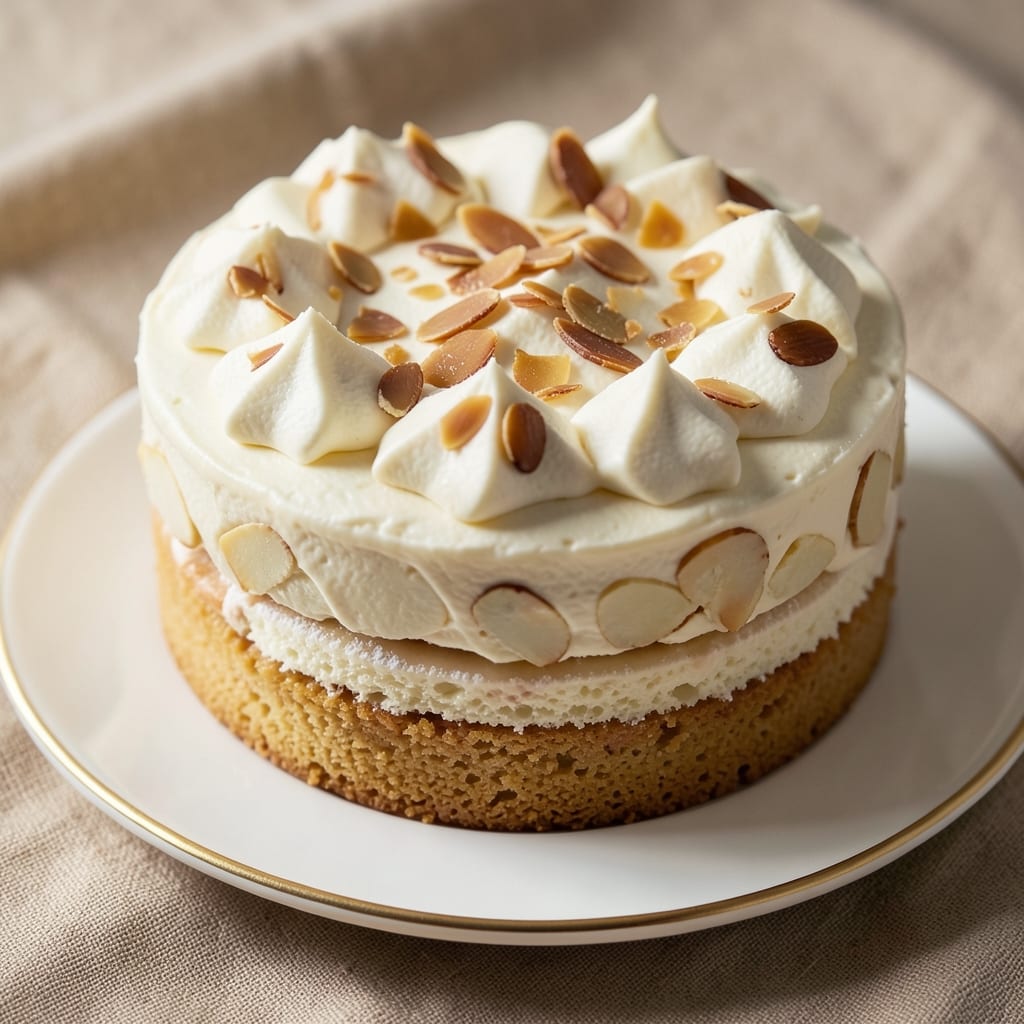
This almond cake frosting recipe transforms a simple vanilla buttercream into a luxurious, nutty masterpiece that rivals bakery quality. The secret lies in infusing the frosting with toasted almond flavor while maintaining a light, spreadable consistency perfect for swirling or piping. I developed this recipe after years of testing—balancing richness with airiness so every bite feels indulgent yet not overly heavy. The process starts with a classic vanilla buttercream base, elevated by toasted almond paste and a touch of almond extract for depth. For texture, we incorporate finely ground toasted almonds that add crunchy contrast without overpowering the smoothness. This frosting works equally well on a moist almond cake or as a standalone filling for layered desserts. What sets this apart is the dual texture technique: a velvety buttercream layer with crunchy almond bits that melt slightly when baked. The frosting holds its shape for piping but remains tender enough to create that signature "just out of the bakery" feel. It pairs beautifully with fruit compotes, chocolate ganache, or even a sprinkle of flaky sea salt for balance. Whether you're baking for a special occasion or treating yourself, this frosting delivers restaurant-quality results with minimal effort. The recipe scales perfectly for both small cakes and large sheet pans, ensuring every slice looks and tastes like a showstopper. Let's get started!
Ingredients for almond cake frosting
Twelve ingredients elevate simple buttercream into a luxurious almond-infused frosting with perfect texture balance.
| Ingredient | Amount | Notes |
|---|---|---|
| Unsalted Butter 🧈 | 1 ½ cups | Softened to room temperature |
| Powdered Sugar 🍚 | 4 cups | Sifted for smooth texture |
| Heavy Whipping Cream 🥛 | 1 cup | Cold for stability |
| Vanilla Extract 🌿 | 2 tsp | Pure Madagascar preferred |
| Almond Extract 🌰 | 1 tsp | High-quality for depth |
| Toasted Almond Paste 🥜 | ½ cup | Smooth, not grainy |
| Finely Ground Toasted Almonds 🌰 | ½ cup | Freshly ground for crunch |
| Large Egg Yolks 🥚 | 2 whole | Room temperature |
| Pinch of Salt 🧂 | ⅛ tsp | Fine sea salt |
| Flaky Sea Salt 🧂 | 1 tbsp | For garnish |
| Almond Flour 🌰 | ¼ cup | For texture enhancement |
| Vanilla Bean Seeds 🌿 | ½ tsp | Scraped from pod |
The butter and powdered sugar form the foundation—European-style butter yields superior flavor, while Domino powdered sugar ensures smoothness without graininess. For the almond components, store-bought almond paste like Marzipan or homemade works, but avoid brands with added oils. Toast your almonds until golden, then grind half for crunch and blend the rest into a smooth paste. Trader Joe's carries excellent vanilla and almond extracts, but McCormick brand extracts are also reliable for consistent results. The egg yolks add stability, so ensure they're at room temperature to prevent lumps.
No almond paste? Blend 1/4 cup toasted almonds with 2 tbsp neutral oil until smooth. Substitute almond extract with 1/2 tsp additional vanilla extract plus 1/4 tsp cinnamon for warmth. For a dairy-free option, replace butter with vegan butter or coconut oil, though texture may slightly differ. The frosting's lightness comes from whipping the butter and cream thoroughly—avoid overmixing or it'll become dense. Store-bought vanilla bean paste can replace seeds, though fresh is ideal for that signature depth.
This frosting holds beautifully for 3 days refrigerated and freezes for 3 months when stored in an airtight container. Rewhip briefly after refrigeration. For piping, use a Wilton 1M tip for rosettes or a star tip for swirls. Garnish with extra almonds or a sprinkle of flaky Maldon salt right before serving. Leftovers can be used as a filling for thumbprint cookies or layered desserts—just rewhip to desired consistency.
Why You'll Love This Recipe
- No Whisk Needed: I swear by this recipe—just beat the butter until fluffy, then fold in the powdered sugar like you’re mixing a snow angel. The heavy cream whips in seconds, and the almond extract does all the work for you. Honestly, my mixer gets less love than it deserves because this frosting is that effortless.
- Nutty Luxury: That first bite? The almond extract and vanilla team up to give it a sophisticated, almost marzipan-like richness without tasting like a bakery tried too hard. Between us, it’s the kind of frosting that makes store-bought look like a sad afterthought.
- Birthday to Brunch: Slather it on cake for a party, dollop it over pancakes for a weekend treat, or even spread it on toast with a sprinkle of flaky salt—it’s my go-to for anything that needs a fancy touch. I’ll be real: I’ve used it to impress guests and to bribe my kids into eating veggies. Works every time.
- Make-Ahead Magic: This frosting keeps for days in the fridge, and it’s the perfect last-minute fix for forgotten cake decorating. Just whip it back to fluffiness with a splash of cream, and you’re golden. Not the prettiest, but the taste makes up for it—and saves me from last-minute grocery runs.
Step-by-step instructions for vanilla-infused almond buttercream
This frosting delivers a perfect balance of silky texture and nutty depth—every element is essential.
Whip the Butter and Cream to Peak Stability
In a stand mixer fitted with the paddle attachment, beat the 1.5 cups unsalted butter and 1 cup heavy whipping cream on medium-high speed for 3-4 minutes. You'll see the mixture lighten noticeably and nearly double in volume as air incorporates. This step is critical—it creates the airy foundation that prevents a dense, greasy frosting.
The butter should be completely smooth with no visible lumps, and the mixture should look fluffy with soft peaks when you lift the paddle. If you're using cold ingredients straight from the fridge, this process will take slightly longer—don't rush it. The texture at this stage determines whether your frosting will be light and spreadable or heavy and cloying.
Gradually Incorporate Powdered Sugar
With the mixer running on low speed, gradually add the 4 cups powdered sugar through a fine-mesh sieve, about ½ cup at a time. This prevents clumping and allows the sugar to dissolve evenly into the butter mixture. After each addition, increase the speed to medium and beat for 1-2 minutes until fully incorporated.
Here's the thing—sifting the sugar is non-negotiable. Any lumps will create graininess in your frosting. You're aiming for a smooth, velvety consistency at this stage. The mixture should thicken noticeably but remain spreadable. If it looks too stiff, add 1 tablespoon of heavy cream to loosen it slightly.
Infuse with Vanilla and Almond Flavors
Add the 2 teaspoons vanilla extract, 1 teaspoon almond extract, 0.5 teaspoon vanilla bean seeds, and 0.125 teaspoon pinch of salt to the buttercream mixture. Mix on medium speed for 2-3 minutes until the flavors are fully incorporated and the frosting is completely smooth. The vanilla bean seeds will add subtle speckles of color and depth that elevate the flavor profile.
This is where the magic happens—don't skip the almond extract. While the toasted almond paste adds texture, the extract provides that essential almond flavor that complements the toasted notes. Taste the mixture at this point to ensure the balance is right. You want sweetness to be prominent but not overpowering, with clear almond notes.
Fold in Toasted Almond Elements
Remove the bowl from the mixer and gently fold in the 0.5 cup toasted almond paste and 0.5 cup finely ground toasted almonds using a silicone spatula. The paste will add richness and moisture, while the ground almonds provide that essential crunch. Work quickly but carefully to maintain the airy texture you've built—overmixing will deflate the frosting.
For best results, press the almond paste through a fine-mesh sieve before adding to eliminate any lumps. The ground almonds should be freshly toasted and finely pulverized—any large pieces will create an unpleasant texture. At this stage, the frosting should look like a thick, marbled buttercream with visible almond flecks.
Finish with Almond Flour for Texture
Add the 0.25 cup almond flour to the frosting and mix on low speed for 1-2 minutes until completely combined. The almond flour will enhance the nutty flavor while adding subtle body to the frosting. At this point, taste again and adjust sweetness if needed—you can add more powdered sugar if the frosting tastes too strong, or a touch more vanilla if it needs brightness.
The final frosting should be smooth, spreadable, and have just the right amount of crunch from the toasted almonds. For the perfect finish, spread the frosting onto your cake and immediately sprinkle with 1 tablespoon flaky sea salt while it's still wet. This creates those beautiful salted caramel pockets that contrast the sweetness and elevate every bite.
Pro Tips For Making Almond Cake Frosting
- CHILL THE BUTTER FIRST: Take your unsalted butter straight from the fridge—room temperature is the enemy here. I used to rush this and end up with a greasy, grainy mess instead of that silky texture. Cold butter whips up smoother and holds its shape better, especially when you’re mixing in powdered sugar later.
- WHIP THE CREAM STIFF: Don’t stop at soft peaks—push the heavy whipping cream to stiff peaks. It’ll look like it’s about to collapse, but that’s exactly when you fold it in. I learned this after my first batch turned out too thin and runny; stiff peaks guarantee a frosting that stays put on your cake.
- SIFT THE POWDERED SUGAR: Skip the scooping—sift that powdered sugar through a fine-mesh strainer before mixing. Lumps are the silent killer of smooth frosting, and you’ll thank yourself later when the texture is flawless. Yes, it’s an extra step, but it makes a real difference.
- MEASURE THE EXTRACTS PRECISELY: Almond extract is potent—use ½ teaspoon, not a splash. I once doubled it on a whim and ended up with a frosting that tasted like almond soap. Vanilla’s milder, but still: measure carefully. A dropper or small spoon works best.
Wine and beer pairings for this recipe
White Wine Pairings
For this almond cake with its rich, nutty frosting, a crisp Sauvignon Blanc from New Zealand is my go-to choice. The wine's bright acidity and citrus notes cut through the buttercream's richness while complementing the toasted almond flavors. Look for a bottle with 12-13% ABV—something like Cloudy Bay Sauvignon Blanc or Oyster Bay delivers that perfect balance. Serve it slightly chilled at 45-48°F to enhance its refreshing qualities. 🍷
Dessert Wine Harmony
If you prefer something sweeter, a Moscato d'Asti from Italy brings elegant bubbles and subtle fruitiness that pairs beautifully with the almond frosting. The wine's 5-6% residual sugar enhances the cake's sweetness without overpowering it. I recommend Saracco Moscato d'Asti—its light body and floral notes create a magical contrast. Serve at 40-42°F to preserve its delicate effervescence.
Beer Pairings
For beer lovers, a Belgian Witbier like Hoegaarden or Stella Artois offers a refreshing contrast to the rich frosting. The wine's coriander and orange peel notes complement the almond flavors while the effervescence cleanses the palate. Serve at 40-42°F to maintain its crispness. Alternatively, a light German Pilsner like Warsteiner provides a clean, crisp backdrop that lets the cake's flavors shine.
Coffee Pairing
For a more traditional pairing, serve this cake with a medium-roast coffee like Starbucks Pike Place Roast or Blue Bottle Coffee. The coffee's caramel and chocolate notes enhance the almond frosting's richness, while its acidity balances the sweetness. Brew it slightly stronger than usual—1.5 to 2 tablespoons of coffee per 6 ounces of water—to create a bold yet balanced flavor profile.
Seasonal Adaptations
In summer, pair this cake with a sparkling rosé like Whispering Angel—its berry notes and effervescence complement the almond frosting beautifully. For winter gatherings, a Port-style dessert wine like Graham's Six Grapes adds warmth and depth that pairs wonderfully with the rich frosting. Both options elevate the cake's flavors while providing a delightful contrast. 🍷✨
Nutrition facts
Frequently asked questions
Can I make this frosting without almond extract?
Yes, but the flavor will be subtly different. Replace the 1 teaspoon almond extract with ½ teaspoon vanilla extract plus ¼ teaspoon cinnamon for warmth. For a stronger almond taste, add 1 extra tablespoon of toasted almond paste and mix well. The texture won't change, just the depth of flavor.
How do I fix frosting that's too thick or too thin?
For thick frosting, add 1 tablespoon heavy cream at a time and rewhip until smooth. For thin frosting, gradually mix in 1 tablespoon powdered sugar until it reaches a spreadable consistency. Always check the butter temperature—if it's melted, chill the bowl for 10-15 minutes before reworking.
Can I use this frosting on other desserts besides cake?
This frosting works beautifully on cupcakes, cheesecakes, or as a filling for layered desserts. For piping decorations, use a Wilton 1M tip for rosettes or a star tip for swirls. It also makes an elegant glaze when thinned with 1-2 teaspoons milk and brushed over pound cake layers.
Why does my frosting taste bitter or almond-heavy?
This usually happens from too much almond extract or old/cheap extracts. Start with just ½ teaspoon almond extract and add more gradually. Use high-quality extracts (like McCormick) and avoid cooking extracts. If the bitterness persists, add ½ teaspoon lemon juice to balance the flavor.
How long can I store leftover frosting?
Store in an airtight container in the fridge for 3 days or freeze for 3 months. To reuse, let it soften at room temperature for 15-20 minutes before rewhipping. For a smoother texture after refrigeration, add 1 teaspoon warm water while mixing. Never refreeze thawed frosting.