
Desserts
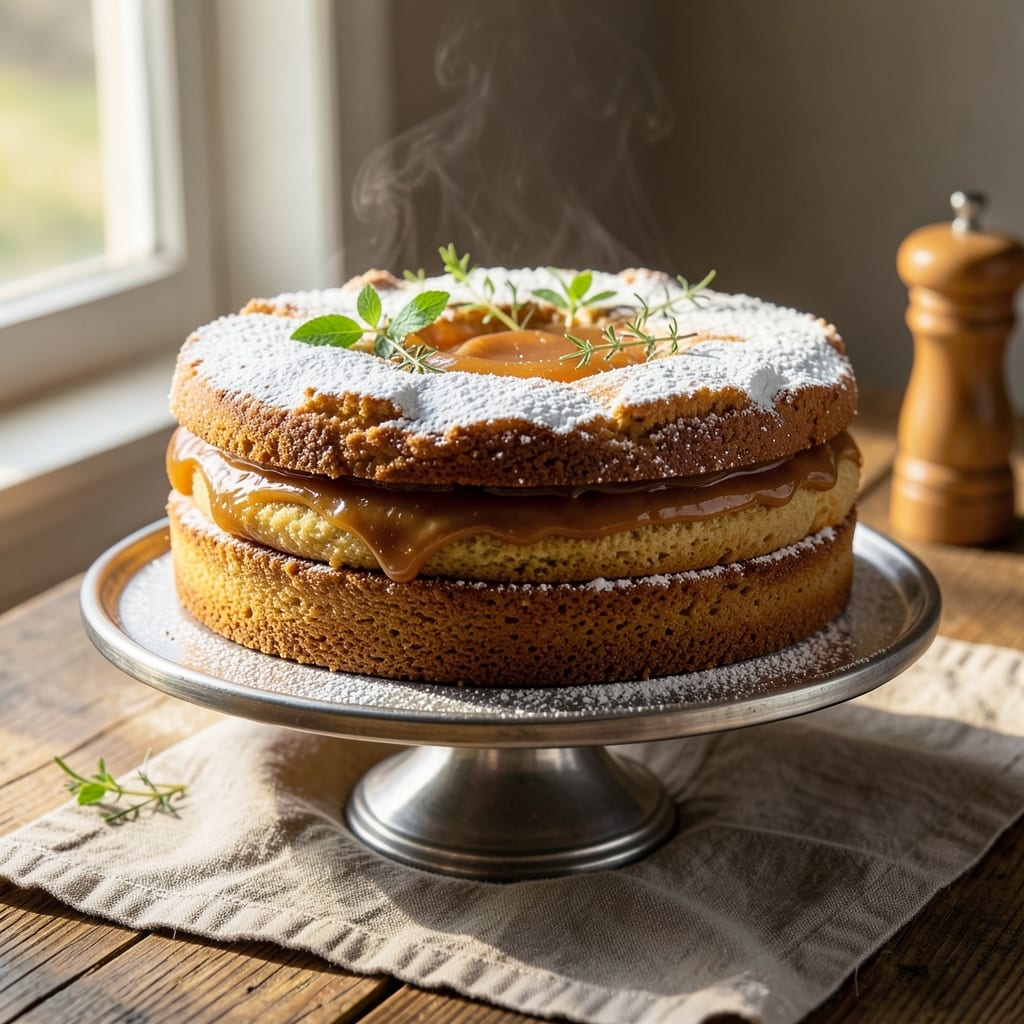
This alfajor cake recipe brings the beloved South American treat into a showstopping layered dessert that combines crisp shortbread layers with luscious dulce de leche filling. 💛 The secret lies in a delicate balance of texture and flavor—crunchy yet tender shortbread cakes sandwiched with Argentina's iconic caramelized milk filling, all topped with a dusting of powdered sugar for that classic alfajor finish.
What sets this recipe apart is its approachability—no specialized equipment or advanced techniques required, just precise measurements and patience for the perfect bake. The shortbread layers stay tender yet sturdy enough to hold the dulce de leche without crumbling, while the filling achieves that signature creamy, slightly grainy texture that makes alfajors irresistible.
By the time you slice into this cake, you'll be rewarded with layers of buttery shortbread that contrast beautifully with the rich, caramelized dulce de leche. The aroma alone—warm vanilla, toasted sugar, and milk caramel—will transport you straight to the cafés of Buenos Aires. Each bite delivers that perfect harmony of textures and flavors that makes this dessert unforgettable.
Perfect for celebrations, dinner parties, or treating yourself to a taste of South America, this alfajor cake is as impressive as it is delicious. Whether you're a seasoned baker or just starting out, this recipe delivers professional-quality results with minimal fuss—just follow the steps carefully, and you'll have a dessert that steals the show.
Ingredients for alfajor cake
Buttery layers, caramelized milk filling, and a dusting of powdered sugar—this alfajor cake brings South American magic to your kitchen!
| Ingredient | Amount | Notes |
|---|---|---|
| Unsalted Butter 🧈 | 1 ½ cups | Cold, cubed for shortbread layers |
| All-Purpose Flour 🌾 | 3 ½ cups | Sifted for light texture |
| Granulated Sugar 🍚 | 1 ½ cups | Superfine preferred for smoothness |
| Powdered Sugar 🍚 | 1 cup | For dusting layers and top |
| Large Eggs 🥚 | 2 whole | Room temperature |
| Pure Vanilla Extract 🌸 | 1 tbsp | High-quality for flavor |
| Fine Sea Salt 🧂 | ½ tsp | Diamond Crystal preferred |
| Dulce De Leche 🥛 | 2 cups | Store-bought or homemade |
| Heavy Cream 🥛 | ½ cup | For dulce de leche texture |
| Almond Flour 🌰 | ¼ cup | For extra richness |
| Ground Cinnamon 🌿 | ½ tsp | Optional for warmth |
| Baking Powder 🍞 | ½ tsp | For lift in layers |
| Cornstarch 🌾 | 1 tbsp | For smooth dulce de leche |
The butter is non-negotiable here—European-style unsalted (like Plugrá or Kerrygold) gives the richest flavor. Grab it cold from the fridge and cut it into cubes—this keeps the shortbread tender yet sturdy. King Arthur or Bob's Red Mill flour works best for light layers, but don't stress if you only have all-purpose. The dulce de leche? La Serenísima or Nocilla from the Latin market section are my go-tos—look for the thick, grainy texture that's signature to alfajors. If making your own, simmer sweetened condensed milk until it reaches that caramelized stage (about 3-4 hours).
No dulce de leche? Caramel sauce plus a splash of milk is a decent stand-in, though it won't have that signature grainy texture. Short on almond flour? Extra powdered sugar in the layers helps mimic the richness. The vanilla extract should be pure—Madagascar Bourbon or Tahitian varieties add depth. For the dulce de leche filling, if it's too runny, mix in 1 tbsp cornstarch to thicken it up. Pro tip: chill the filling for 30 minutes before assembling—it spreads less and stays creamy.
Store the shortbread layers between parchment paper in the fridge for up to 3 days—they'll keep their shape better. The assembled cake stays fresh for 5 days covered at room temperature, but trust me, it won't last that long. For make-ahead magic, bake the layers, assemble, and freeze the whole thing (without powdered sugar). Thaw overnight in the fridge, then dust with sugar right before serving. The flavors only get better with time—like a better version of the original!
Why You'll Love This Recipe
- Here’s what sold me: that first bite of crispy, buttery layers with a powdered sugar kiss. The butter isn’t just melted in—it’s whipped until it’s light, almost fluffy, so every crumb feels like a hug. And the sugar? It’s not cloying; it’s a delicate dusting that makes the whole thing taste like a bakery secret.
- I’ll be real: this recipe costs me less than takeout, but it feels like a splurge. Butter and sugar are pantry staples, and you’re not sacrificing anything—just look at those clean, even layers. Plus, leftovers? They disappear faster than I can say “second slice.”
Step-by-step instructions for alfajor cake
Here's how to create layers of buttery shortbread and luscious dulce de leche magic.
👨🍳 Step 1: Make the Shortbread Layers
In a stand mixer fitted with the paddle attachment, beat the 1.5 cups unsalted butter on medium speed for 2-3 minutes until completely smooth and pale. This cold butter creates the signature crumbly texture—don't rush this step or you'll end up with dense layers.
Add the 1.5 cups granulated sugar, 0.5 tsp fine sea salt, 0.5 tsp baking powder, 0.5 tsp ground cinnamon, and 0.25 cup almond flour. Mix on low speed until just combined, about 30 seconds. The dough should be crumbly but hold together when pressed.
In a separate bowl, whisk together the 2 whole large eggs and 1 tbsp pure vanilla extract. Gradually add this egg mixture to the butter mixture, mixing on low speed until fully incorporated. The dough will come together into a soft, slightly sticky mass. Here's the thing—don't overmix or you'll develop gluten and lose that perfect shortbread texture.
🥘 Step 2: Assemble the Cake Layers
Divide the dough into 4 equal portions (about 1 cup each) and shape each into a 10-inch round on parchment-lined baking sheets. Press the dough evenly to about ¼-inch thickness—this ensures even baking. Chill in the refrigerator for 30 minutes while you preheat your oven to 350°F.
Bake one round at a time for 12-15 minutes until the edges are light golden brown and the centers still look slightly underdone. They'll firm up as they cool. Let each round cool completely on a wire rack before assembling. This patience prevents soggy layers later.
🍳 Step 3: Create the Dulce De Leche Filling
In a medium saucepan, combine the 2 cups dulce de leche, 0.5 cup heavy cream, and 1 tbsp cornstarch. Whisk over medium heat until the mixture thickens to a spreadable consistency (about 5-7 minutes). It should coat the back of a spoon but still be pourable.
Remove from heat and let cool completely. This step is crucial—if you assemble with warm filling, your beautiful layers will turn into a gooey mess. I like to spread a thin layer on one shortbread round first to test the consistency before assembling the full cake.
🥘 Step 4: Layer and Chill the Cake
Place one shortbread round on a cake stand or plate. Spread about ½ cup of the cooled dulce de leche mixture evenly over the round, leaving a ½-inch border uncovered. Here's the trick—use an offset spatula to create a smooth layer without tearing the delicate shortbread.
Add the second shortbread round on top, then repeat with another layer of dulce de leche. Top with the final shortbread round and press gently. Dust the entire cake with 1 cup powdered sugar for that classic alfajor finish. Place in the refrigerator to set for at least 4 hours (overnight is even better).
🍽️ Step 5: Serve with Confidence
Once chilled, use a long serrated knife to cut through all layers at once. The clean slices will reveal that perfect contrast of crisp shortbread and creamy dulce de leche. Serve at room temperature with a cup of coffee or tea—each bite delivers that nostalgic alfajor flavor in cake form.
This cake keeps well in the refrigerator for up to 5 days or can be frozen for 2 months. The flavors actually improve as the layers meld together. Don't be tempted to skip the chilling time—it's what transforms this from good to absolutely incredible.
Pro Tips For Making Alfajor Cake
- Cream Butter Properly: Beat the unsalted butter and sugar until it’s pale yellow and fluffy—not just lightened, but actually transformed. I used to stop at "fluffy" and ended up with dense cake; this step guarantees that air gets trapped, which is half the battle for that tender crumb. ---
- Sift the Flour Twice: Don’t skip the second sifting after mixing dry ingredients—especially if your flour’s been sitting in the pantry for months. A quick shake through a fine-mesh sieve removes hidden lumps and prevents a gritty texture in the final cake. ---
- Don’t Overmix the Batter: Mix the wet and dry ingredients just until combined—no streaks, no flour pockets, but absolutely no tough, chewy patches. Overmixing activates the gluten and turns your cake into a sad, dense brick. ---
- Chill the Dough: Let the batter rest in the fridge for 30 minutes before baking. This isn’t just about convenience—it lets the flour hydrate evenly, prevents excessive spreading, and guarantees a more even rise. (Yes, even if you’re impatient like me.)
Pro cooking tips for alfajor cake
Butter Temperature
The cold butter is your secret weapon for perfect shortbread layers. Cube 1.5 cups unsalted butter and chill it for 30 minutes before mixing—this ensures it stays firm enough to create that signature crumbly texture. If your butter gets too soft, pop it in the freezer for 10 minutes to reset. I use European-style butter like Plugrá because it has a higher fat content, which gives the layers that melt-in-your-mouth quality. 🧈
Dough Handling
Shortbread dough is delicate—handle it gently to avoid overworking the gluten. After mixing, press each dough portion into a 10-inch round with even pressure, about ¼-inch thick. Use a ruler or glass to create a smooth, flat surface. If the dough cracks while pressing, simply smooth it out with your fingers. Chill the rounds for 30 minutes before baking to prevent spreading during the 350°F bake. 💫
Baking Precision
Bake the shortbread rounds one at a time for 12-15 minutes—they should be just golden at the edges with a slightly underdone center. Overbaking turns them dry and crumbly. Let each round cool completely before assembling to prevent soggy layers. I like to bake mine on parchment paper lined with a silicone mat for easy transfer. If your oven runs hot, reduce the temperature to 325°F and check at 10 minutes. ⏱️
Filling Consistency
The dulce de leche filling needs to be thick but pourable. If your store-bought dulce de leche is too runny, mix in 1 tbsp cornstarch to thicken it before heating. After cooking, let it cool completely before assembling—warm filling will melt the shortbread layers. I test the consistency by spreading a thin layer on one round first. If it spreads too much, chill it for 10 minutes to firm up slightly. 🥛
Layering Technique
Use an offset spatula to spread the filling evenly, leaving a ½-inch border uncovered. This prevents the filling from oozing out during chilling. Press the layers gently but firmly to ensure they adhere. For extra stability, brush the tops of each shortbread round with a little egg wash before adding the next layer. Chill the assembled cake for at least 4 hours—overnight is ideal for clean slices. ✨
Powdered Sugar Finish
Dust the entire cake with 1 cup powdered sugar using a fine-mesh sieve for an even, snowy finish. This step mimics the classic alfajor coating and adds a delicate sweetness. Sift the sugar directly over the cake while it's chilled to prevent clumping. For a more dramatic look, use a stencil or piping bag with a star tip to create patterns. Serve at room temperature for the best texture contrast. 💛
Nutrition facts
Frequently asked questions
Can I make this alfajor cake without dulce de leche?
Yes! If you can't find dulce de leche, try a mix of 1 cup caramel sauce and ½ cup heavy cream for a similar texture. For extra flavor, add 1 tsp vanilla extract and ½ tsp cinnamon. The filling won't be identical, but it'll still taste delicious.
How do I prevent the shortbread layers from crumbling?
Chill the dough rounds for 30 minutes before baking, and let them cool completely before assembling. Also, avoid overmixing the dough—just combine ingredients until they're barely incorporated. For extra stability, brush each layer with a light egg wash before adding filling.
Can I make this cake gluten-free?
Swap the all-purpose flour for a 1:1 gluten-free baking flour blend (like Bob's Red Mill). Use ½ tsp xanthan gum to help bind the layers. The texture will be slightly different but still delicious. For the filling, keep all ingredients the same—the dulce de leche remains gluten-free.
Why does my cake need to chill for so long?
The chilling time (at least 4 hours) is crucial to let the filling set and the layers firm up. This prevents a messy, gooey cake when you slice it. The longer it chills, the cleaner the slices and the better the flavor melds. Think of it like resting meat—patience pays off!
Can I make this cake ahead of time?
Yes! Assemble the cake (without the powdered sugar) and refrigerate it for up to 5 days. For longer storage, freeze the whole cake (unfrosted) for 2 months. Thaw overnight in the fridge, then dust with sugar before serving. The flavors actually improve with time!