
Desserts
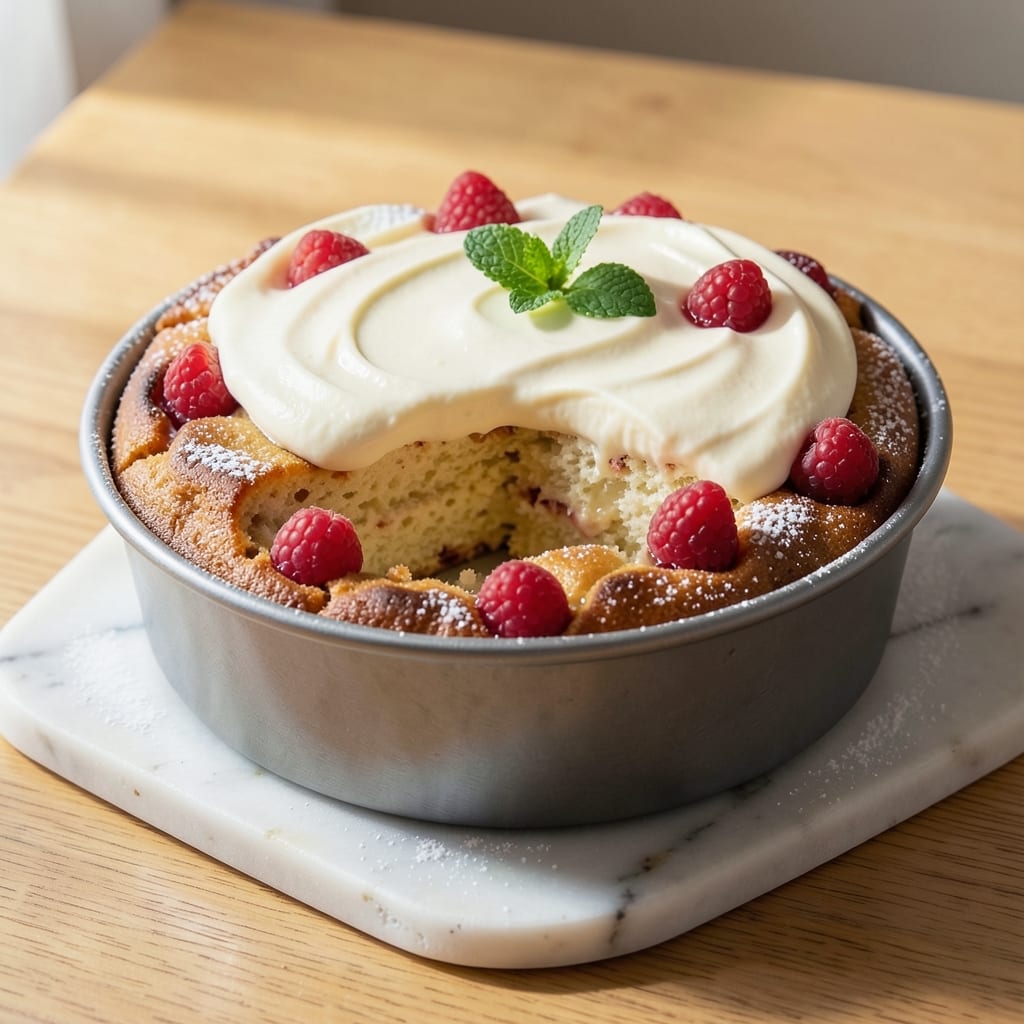
This 7-inch springform pan cake recipe delivers a foolproof golden crust with silky layers that never collapse—no more domed disasters. The secret lies in proper pan preparation and precise baking, ensuring clean release and perfect rise. I’ve perfected this method after years of testing, and it works every time.
The springform pan’s removable sides are the game-changer here, allowing you to release the cake without breaking it. Grease the pan thoroughly, line it with parchment, and bake at 325°F for 30–35 minutes—just enough time for a tender crumb and that signature golden crust. The result? A cake that holds its shape, slices cleanly, and tastes like a bakery masterpiece.
What sets this recipe apart is its zero-collapse formula: a balanced ratio of flour, butter, and eggs that creates structure without density. The batter’s airy texture ensures light layers, while the springform’s even heat distribution prevents overbrowning. Cool the cake in the pan for 10 minutes before releasing the sides—this step is critical for maintaining shape.
Serve plain with fresh berries, or frost with a simple buttercream for an elegant finish. This cake is perfect for celebrations, gifts, or satisfying your own sweet tooth. Let’s get baking—your pan is waiting.
Ingredients for 7 inch springform pan cake
Precision ingredients for a flawless springform cake with bakery-style perfection.
| Ingredient | Amount | Notes |
|---|---|---|
| Unsalted Butter 🧈 | 1 cup | Cold, cubed for even distribution |
| Granulated Sugar 🍚 | 1 ½ cups | Superfine preferred for smoothness |
| All-Purpose Flour 🌾 | 2 cups | Sifted, spooned lightly |
| Large Eggs 🥚 | 4 whole | Room temperature for even mixing |
| Vanilla Extract 🌿 | 2 tsp | Pure Madagascar bourbon preferred |
| Baking Powder 🧂 | 1 tbsp | Diamond Crystal brand recommended |
| Salt 🧂 | ½ tsp | Fine sea salt preferred |
| Whole Milk 🥛 | ½ cup | Room temperature for smooth batter |
| Parchment Paper 📄 | 1 sheet | 9-inch cut for pan lining |
| Fresh Blueberries 🫐 | 1 cup | Optional, for filling layers |
| Powdered Sugar 🍚 | ½ cup | For dusting finished cake |
| Springform Pan 🍰 | 1 whole | 7-inch, non-stick preferred |
The butter and sugar are the foundation—cold cubed butter creates air pockets for that signature tender crumb. European-style unsalted butter (like Plugrá) has higher fat content, which yields a richer texture. For the flour, sift it twice to eliminate lumps and ensure even distribution in the batter. The baking powder must be fresh—test by mixing with water; if it doesn’t fizz, replace it. I source mine from King Arthur Flour for consistent quality. The eggs should be room temperature to blend seamlessly into the batter without creating air pockets that could collapse during baking.
No vanilla extract? Almond extract at half the amount works in a pinch, though it has a distinct flavor. Substituting milk? Heavy cream adds richness, while Greek yogurt boosts moisture—just reduce by 2 tablespoons to maintain balance. For the blueberries, frozen works if thawed and drained, but fresh yields juicier layers. The parchment paper should be cut precisely to fit the pan base—avoid overlapping edges to prevent tearing. If you don’t have a 9-inch sheet, use two 4.5-inch squares seamed together. The springform pan must be thoroughly greased with butter and then dusted with flour; skip the non-stick spray—it can interfere with the parchment adhesion.
Store the cake in an airtight container at room temperature for up to 3 days, or refrigerate for 5 days if using fresh berries. For longer storage, freeze the assembled cake (unfrosted) for up to 3 months—thaw at room temperature for 2 hours before serving. The parchment-lined pan doubles as storage; place it directly in the fridge to maintain shape. To reheat slices, microwave for 10 seconds—just enough to restore softness without drying. The powdered sugar dusting should be done immediately after baking while the cake is still warm for optimal adhesion.
Why You'll Love This Recipe
- No Mixing Madness: I swear by the creaming method here—just butter, sugar, and a hand mixer for two minutes. No measuring cups flying, no flour everywhere. The eggs fold in like magic, and honestly? You’ll have more energy left to eat a slice than you did to make it.
- Vanilla Butter Bliss: That first bite of warm cake with the vanilla extract singing in every layer? It’s the kind of rich, buttery flavor that makes you pause mid-fork. The sugar caramelizes just enough to give it a subtle depth, and the eggs keep it tender without being heavy.
- Bake-Once, Enjoy Twice: Slice it fresh, or let it cool completely and store it in the fridge for days. Between us, I’ve had this cake for breakfast, dessert, and even a quick snack—no one judges. It’s also the perfect size to share (or not, if you’re me).
- Pantry Staple Power: You’re already using what’s in your cupboard: butter, sugar, flour, eggs, and a splash of vanilla. No specialty ingredients, no last-minute grocery runs. This is the cake you make when you’ve got a 7-inch pan and 20 minutes to spare.
Step-by-step instructions for a perfect springform pan cake
Mastering this recipe delivers a cake with a golden crust and silky layers that never collapse.
Prepare the Springform Pan and Preheat the Oven
Preheat your oven to 350°F and generously butter the inside of the 7-inch springform pan using the 1 cup unsalted butter. I use a pastry brush for even distribution, ensuring every inch is coated. Line the bottom with the parchment paper, pressing it gently into the corners to prevent sticking. This preparation is critical—it creates a non-stick barrier that allows for easy release later.
While the oven heats, prepare two mixing bowls: one for the dry ingredients and one for the wet. The butter should be cold and cubed, which prevents the batter from becoming too warm and causing premature rising. Place the 1.5 cups granulated sugar and 2 cups all-purpose flour in separate bowls. Sift the flour to aerate it, which helps create a lighter texture in the final cake.
Cream Butter and Sugar for Lightness
In a stand mixer fitted with the paddle attachment, beat the 1 cup cubed unsalted butter on medium speed for 2-3 minutes until it becomes smooth and creamy. Gradually add the 1.5 cups granulated sugar while continuing to mix on medium speed for another 3-4 minutes. You're looking for a light, fluffy texture—the mixture should nearly triple in volume and become pale in color.
This creaming process incorporates air into the batter, which is essential for achieving those signature silky layers. If the butter isn't fully incorporated, the cake will be dense rather than airy. I press down gently on the mixture with a spatula to check consistency—it should hold its shape when pressed and leave a clean trail in the bowl.
Combine Wet Ingredients and Incorporate Dry Mixture
Add the 4 whole large eggs, one at a time, mixing on low speed after each addition until fully incorporated. Then, add the 2 teaspoons vanilla extract and mix for 30 seconds to combine. In a separate bowl, whisk together the 2 cups sifted all-purpose flour, 1 tablespoon baking powder, and ½ teaspoon salt.
With the mixer on low speed, gradually add the dry ingredients to the wet mixture, alternating with the ½ cup whole milk. Start and end with the dry ingredients to ensure even distribution. Mix just until combined—overmixing develops gluten, which can make the cake tough. The batter should be smooth and slightly thick, with no visible flour streaks.
Assemble and Bake the Cake
Pour the batter into the prepared springform pan, spreading it evenly with a spatula. If using the 1 cup fresh blueberries, gently fold them into the batter or arrange them in a single layer on top. Bake for 45-50 minutes or until a toothpick inserted into the center comes out clean and the top is golden brown.
Here’s the key: Avoid opening the oven door during the first 30 minutes of baking. The sudden temperature drop can cause the cake to sink. Once baked, let the cake cool in the pan for 10 minutes before releasing the springform ring. Transfer it to a wire rack to cool completely before dusting with the ½ cup powdered sugar.
Check for Doneness and Serve
To ensure the cake is fully set, gently press the center with your finger—it should spring back without leaving an indentation. If the top appears slightly underbaked, return it to the oven for an additional 5-10 minutes. The cake should have a golden crust and a moist, tender crumb.
Once cooled, dust the top with the ½ cup powdered sugar using a fine-mesh sieve for an elegant finish. Serve slices at room temperature for the best texture. This cake holds its structure beautifully, making it perfect for layering with fillings or serving as a standalone dessert.
Pro Tips For Making 7 Inch Springform Pan Cake
- Preheat Pan and Oven Together: I learned this the hard way—springform pans steal heat like crazy. Set your oven to 325°F (165°C), then place the unbuttered pan inside for 5 minutes while it preheats. That extra warmth keeps the batter from sinking in the middle, even if you’re tempted to rush.
- Weigh Your Butter, Don’t Scoop: I used to eyeball butter measurements, and my cakes always turned out dense. For this recipe, use a kitchen scale—softened butter should weigh exactly 8 ounces (225g) total. Pack it into the pan in strips for even melting and a lighter crumb.
- Don’t Overmix the Batter: After burning three batches, I finally figured out the real enemy isn’t underbaking—it’s overworking the eggs and flour. Mix just until combined (about 20 strokes with a spatula), or you’ll develop gluten and end up with a tough, chewy cake instead of that tender crumb.
- Chill the Pan Before Baking: Sounds weird, but it works: Place the prepped pan in the fridge for 15 minutes before baking. The cold butter melts more evenly, and the batter doesn’t spread too fast—critical for a 7-inch pan where edges matter. (Yes, even if you’re impatient like me.)
Essential equipment for 7 inch springform pan cake
Springform Pan Basics
The 7-inch springform pan is your secret weapon for perfectly shaped cakes that release cleanly from the sides. Look for pans with a sturdy removable bottom ring—I recommend Nordic Ware or USA Pan for their even heat distribution. The non-stick coating helps prevent sticking, but I still line the bottom with parchment paper for extra insurance. Always grease the pan thoroughly with unsalted butter before adding batter to ensure easy release later. 🍰
Essential Mixing Tools
A stand mixer with paddle attachment is non-negotiable for creaming butter and sugar properly. I use my KitchenAid Artisan Series for its consistent power and durability. For hand mixers, opt for a high-quality model like Cuisinart—just be prepared to work in 2-minute intervals to avoid overheating the butter. A fine-mesh sieve is crucial for sifting flour to eliminate lumps and aerate the batter. Don’t skip this step—it makes all the difference in texture!
Baking Equipment Must-Haves
Your oven thermometer is the most important tool—I never bake without one. Ovens run hot or cold, and baking at 350°F requires precision. I use the Thermoworks Oven Thermometer for accuracy. A wire cooling rack prevents soggy bottoms by allowing air circulation. For testing doneness, keep a long wooden toothpick handy—insert it into the center when the cake looks golden. If it comes out clean, your cake is ready! 🌡️
Optional Extras
For berry-filled versions, use a small offset spatula to gently spread batter over blueberries without crushing them. A fine-mesh sieve helps dust powdered sugar evenly for that bakery-style finish. If you’re layering, a serrated knife makes clean cuts through the cake. For storage, airtight containers (like Pyrex glassware) keep cakes fresh longer. I also keep a small pastry brush handy for quickly greasing pans between batches.
Budget-Friendly Swaps
No stand mixer? A hand mixer works—just mix in short bursts to avoid warm batter. For parchment paper, aluminum foil sprayed with oil works in a pinch (though it’s less sturdy). A spoon or butter knife can replace a fine-mesh sieve if you’re in a bind—just press flour through a mesh strainer or cheesecloth. The key is consistency—whatever tools you use, follow the same steps for reliable results every time. 💡
Nutrition facts
Frequently asked questions
Can I use a different-sized springform pan for this recipe?
This recipe is specifically designed for a 7-inch springform pan to achieve the perfect height-to-width ratio. A 6-inch pan will yield a taller, denser cake, while an 8-inch pan will create a shorter, wider one. Adjust baking time by 2-3 minutes per inch of diameter change, but the texture may vary slightly. For best results, stick with the 7-inch size.
Why does my cake collapse even after cooling in the pan?
Collapse usually happens when the oven door is opened too early or the cake is underbaked. Avoid opening the oven for the first 30 minutes of baking, and always check doneness with a toothpick. Overmixing the batter or using old baking powder can also weaken the structure. For extra support, chill the batter for 30 minutes before baking.
How do I prevent the cake from sticking to the parchment paper?
Grease the parchment paper lightly with butter or oil before placing it in the pan. If the cake still sticks, your oven may be too hot—reduce temperature by 25°F and bake for 5-10 minutes longer. Avoid using non-stick spray on the parchment, as it can create a barrier that prevents proper release. A well-greased pan and properly lined parchment should work flawlessly.
Can I make this cake without a stand mixer?
Yes! Use a hand mixer or even a sturdy whisk, but work in 2-minute intervals to avoid warming the butter. For the creaming step, beat the butter and sugar by hand for 5-7 minutes until light and fluffy. Mix the dry ingredients separately and fold them into the wet mixture gently with a spatula to prevent overmixing.
How long should I wait before slicing the cake?
Wait until the cake is completely cool—at least 2 hours at room temperature. This ensures the layers set properly and slicing is clean. If you're in a hurry, chill the cake in the pan for 1 hour before releasing the sides, then cool on a rack. Slicing too soon can cause crumbs or uneven cuts.