
Desserts
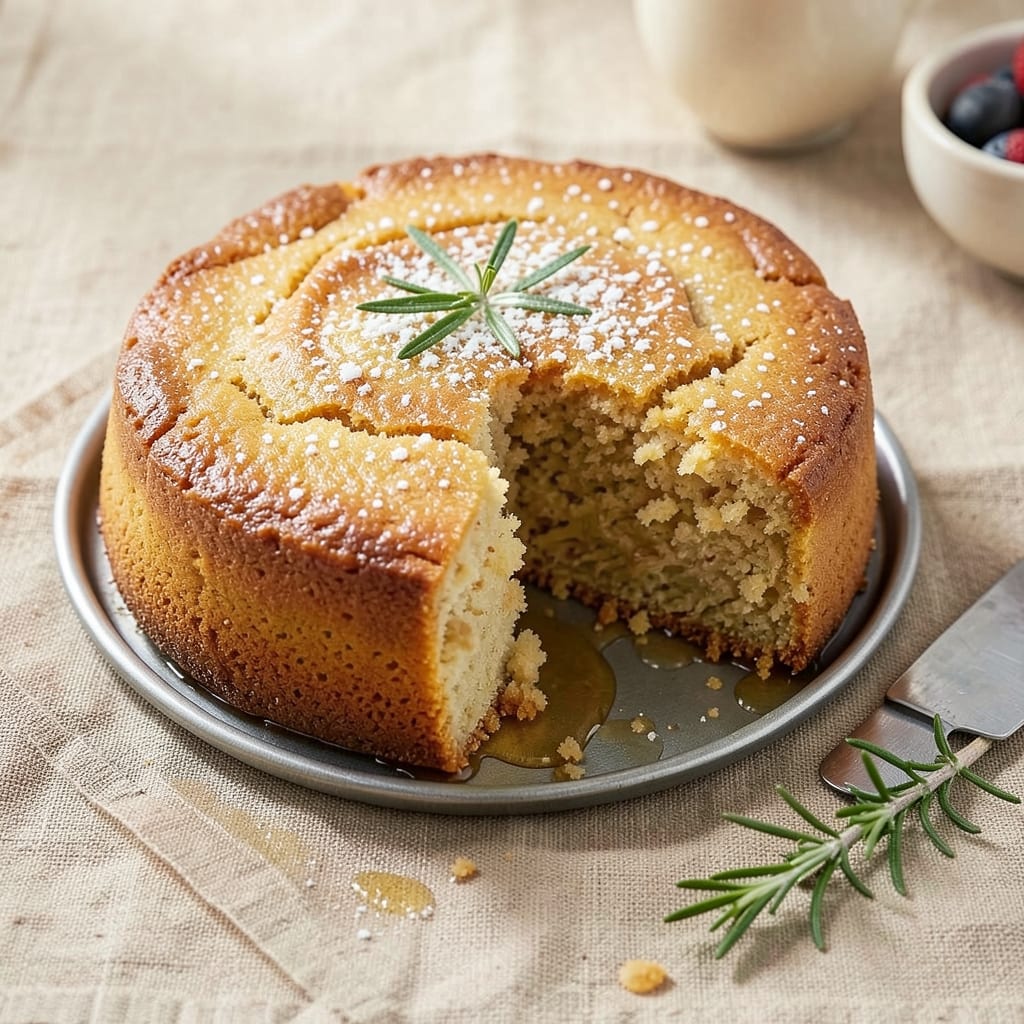
This 6-inch almond cake recipe delivers a perfect balance of tender crumb and nutty crunch in every bite—ideal for tea-time or coffee breaks. The secret lies in finely ground almond flour and a touch of vanilla, creating a moist yet sturdy texture that holds its shape beautifully. Baking in a 6-inch pan ensures portion control while maximizing flavor, making it perfect for individual servings or small gatherings.
The recipe combines simple ingredients like almond flour, eggs, and butter to create a cake that’s naturally gluten-free and rich in flavor. A light dusting of powdered sugar or a drizzle of honey adds a delicate finish, enhancing the cake’s elegant appeal. Whether served warm or at room temperature, this cake pairs effortlessly with hot beverages or fresh fruit.
What sets this almond cake apart is its foolproof technique—no fancy equipment or complicated steps required. The oven temperature and baking time are carefully calibrated to ensure a golden, evenly baked result every time. For added indulgence, a quick glaze or chocolate shavings can elevate the presentation without sacrificing simplicity.
Perfect for beginners and experienced bakers alike, this recipe guarantees a showstopping dessert with minimal effort. The nutty aroma alone will fill your kitchen with warmth, making it a standout treat for any occasion. Let’s get baking!
Ingredients for 6 inch almond cake
Six simple ingredients transform into a showstopping almond cake that’s gluten-free, nutty, and perfectly portioned for any occasion.
| Ingredient | Amount | Notes |
|---|---|---|
| Almond Flour 🌰 | 1 ½ cups | Finely ground, unsweetened |
| Unsalted Butter 🧈 | ¾ cup | Cold, cubed for even mixing |
| Large Eggs 🥚 | 3 whole | Room temperature for best blend |
| Granulated Sugar 🍚 | ¾ cup | Superfine preferred for smooth texture |
| Pure Vanilla Extract 🌿 | 1 tbsp | High-quality, Madagascar bourbon |
| Baking Powder 🍞 | ½ tsp | Aluminum-free for best rise |
| Fine Sea Salt 🧂 | ¼ tsp | Diamond Crystal preferred |
| Powdered Sugar 🍚 | ¼ cup | For delicate dusting finish |
| Almond Slices 🌰 | ½ cup | Toasted, for elegant garnish |
| Honey 🍯 | 2 tsp | Optional drizzle for finishing |
| Unflavored Coconut Oil 🥥 | 1 tbsp | For greasing 6-inch pan |
The almond flour makes this cake—Bob’s Red Mill or Anthony’s Goods are my go-tos for that ultra-fine grind. If you can’t find pre-ground, pulse whole almonds in a food processor until silky smooth. The butter should be cold (pop it in the freezer 15 minutes if your kitchen’s warm), and the eggs? Room temp means they’ll blend in like magic. For the vanilla, Madagascar bourbon extract adds depth that imitation can’t match. Pro tip: Toast your almond slices in a dry pan for 2 minutes—they’ll add crunch and aroma that’s pure magic.
No almond flour? Substitute with 1:1 almond meal, but sift it first for a lighter texture. Butter too expensive? Coconut oil works 1:1, though it’ll make the cake slightly denser. Short on vanilla? Vanilla bean paste at half the amount gives you those little specks of joy. The powdered sugar is for dusting, but if you’re feeling fancy, melted dark chocolate for drizzling takes it to next-level elegant. And if you’re avoiding honey, maple syrup works beautifully—just reduce it slightly to account for moisture.
This cake keeps beautifully—3 days at room temperature wrapped in parchment, or 1 week refrigerated in an airtight container. For longer storage, freeze portions for up to 3 months. The secret to reheating? 10 seconds in the microwave with a damp paper towel—revives that just-baked aroma instantly. I always bake two pans—one for now, one for later. The nutty aroma alone makes your kitchen smell like a Parisian patisserie, so no one will blame you for sneaking bites during baking.
Why You'll Love This Recipe
- No Mixer Needed: I swear by this recipe when my stand mixer’s on vacation. The almond flour and butter come together with a fork in minutes—no electric help required—and the eggs blend right in. Honestly, it’s the kind of recipe that makes me question why I ever owned a food processor.
- Butter-Sugar Magic: That rich, caramelized edge from the browned butter? Chef’s kiss. The almond flour keeps it moist without being heavy, while the vanilla extract adds this subtle warmth that makes every bite feel like a little hug. Between us, it’s the kind of cake that disappears faster than my willpower on a Sunday afternoon.
- Portion-Perfect Servings: Six-inch cakes are my secret weapon for small gatherings—no one feels overwhelmed by a whole sheet pan, and they’re easy to slice for picnics or office treats. I’ll be real: my coworkers still ask for seconds after the third slice, and that’s saying something.
- Budget-Friendly Luxury: Almond flour might sound fancy, but a little goes a long way, and the butter and sugar stretch further than you’d think. Plus, leftovers? They keep for days in the fridge, so I can bake one batch and enjoy it all week without guilt. Not the prettiest, but the taste makes up for it every time.
Step-by-step instructions for 6-Inch almond cake
Here's how to create a delicate, moist almond cake with perfect texture and nutty depth.
Prepare the Pan and Preheat the Oven
Begin by greasing a 6-inch round cake pan thoroughly with 1 tablespoon unflavored coconut oil, using a pastry brush to coat the sides and bottom completely. I like to use a small offset spatula to ensure every inch is covered—this prevents sticking and makes for easy release. Line the bottom with a round of parchment paper, pressing it gently into the corners to eliminate any air bubbles. Preheat your oven to 350°F while you prepare the batter. The pan should be fully preheated before adding the cake mixture to ensure even baking.
Here's the thing—almond flour cakes are particularly prone to sticking due to their dense nature. The coconut oil creates a slick surface while still allowing for proper browning. I also recommend placing the pan on a baking sheet to catch any potential drips during the baking process. This step sets the foundation for a flawless finish.
Cream Butter and Sugar for Maximum Fluffiness
In a stand mixer fitted with the paddle attachment, combine the 0.75 cup unsalted butter (cold and cubed) and 0.75 cup granulated sugar. Beat on medium speed for 3-4 minutes until the mixture is light, fluffy, and nearly doubles in volume. You'll see the butter transform from pale yellow to a creamy, pale beige color—this indicates proper aeration. The reason we use cold butter is that it incorporates air more effectively than softened butter, creating a lighter texture.
I press down gently on the butter mixture with a spatula during the first minute to help break down the fat crystals. This ensures even distribution and prevents any butter lumps from remaining. The sugar should be fully dissolved, and you should see ribbons form when you lift the paddle. If the mixture isn't light enough after 4 minutes, continue beating for another minute—this is crucial for that perfect almond cake texture.
Incorporate Eggs and Flavorings
Add the 3 whole large eggs, one at a time, mixing on low speed for 30 seconds after each addition. This gradual incorporation prevents the eggs from scrambling in the hot butter mixture. After all eggs are incorporated, add the 1 tablespoon pure vanilla extract and mix for another 10 seconds until fully combined. The mixture should be smooth and slightly thickened—almost like a pale yellow batter.
Here's where the magic happens: the eggs provide structure while the vanilla infuses that warm, aromatic depth. I always use room-temperature eggs for this recipe—they blend more smoothly and create a lighter batter. If your eggs are cold, warm them gently in a bowl of warm water for 5 minutes before using. The batter should now be homogeneous with no visible streaks of egg or butter.
Combine Dry Ingredients and Fold Gently
In a separate bowl, whisk together the 1.5 cups almond flour, 0.5 teaspoon baking powder, and 0.25 teaspoon fine sea salt. Sift the mixture through a fine-mesh sieve directly into the wet ingredients to prevent any lumps from forming. Using a silicone spatula, gently fold the dry ingredients into the wet mixture until just combined—you should still see some flour streaks. Overmixing develops gluten, which can make the cake dense instead of light and tender.
This is the moment that matters: the almond flour needs to be incorporated just enough to hydrate but not so much that it develops a tough texture. I use a "cut-and-fold" motion, lifting from the bottom of the bowl and folding over the top to ensure even distribution. The batter should be thick but pourable—almost like a dense cookie dough. If it's too thick, you can gently tap the bowl on the counter to help it settle and become more workable.
Bake to Golden Perfection
Pour the batter into the prepared 6-inch pan, smoothing the top with a spatula. Sprinkle the 0.5 cup almond slices evenly over the top, pressing them gently into the batter so they adhere. Bake in the preheated 350°F oven for 35-40 minutes, or until a toothpick inserted into the center comes out clean with just a few moist crumbs clinging to it. The edges should be golden brown, and the top should be set but still slightly springy to the touch.
I know it seems counterintuitive, but don't open the oven door during the first 25 minutes of baking. The sudden temperature change can cause the cake to sink in the middle. If the top is browning too quickly, tent the pan loosely with aluminum foil. Once baked, transfer the cake to a wire rack and let it cool completely in the pan for 15 minutes before removing it. This gradual cooling prevents cracking and helps the cake set properly.
Finish with Powdered Sugar and Honey
Once the cake has cooled completely, dust the top generously with 0.25 cup powdered sugar using a fine-mesh sieve. This creates that elegant, snowy finish that makes the cake look like it came from a bakery. For an extra touch of indulgence, drizzle with 2 teaspoons honey in a zigzag pattern over the top. The honey adds a subtle sweetness that complements the nutty almond flavor perfectly.
Slice into 6 equal wedges and serve immediately or store in an airtight container at room temperature for up to 3 days. The cake keeps well at room temperature, but I recommend serving it fresh for the best texture. Each slice should have a tender crumb with a delicate almond flavor and just the right amount of sweetness from the vanilla and honey. Enjoy your creation—it's worth every step!
Pro Tips For Making 6 Inch Almond Cake
- WHISK EGGS ROOM TEMPERATURE: I learned this the hard way—cold eggs from the fridge mix like cement with butter. Let those eggs sit in warm water for 5 minutes first, then whisk until they’re pale yellow and triple their volume. The cake will be lighter, and you’ll avoid that dense, chewy texture that ruins everything.
- MELT BUTTER SLOWLY: Butter burns faster than you think, especially when creaming with sugar. Melt it in the microwave in 10-second bursts, stirring between each, until just liquid—not hot. Let it cool slightly before mixing; otherwise, your almond flour will turn to glue, and the cake will sink like a rock in the middle.
- SIFT ALMOND FLOUR TWICE: Almond flour is sneaky—it packs down and hides air pockets. Sift it through a fine-mesh sieve before measuring, then sift again after mixing with dry ingredients. This keeps the cake tender and prevents a brick-like crumb. (Yes, it’s extra work, but your future self will notice the difference.)
- BAKE UNTIL TOOTHPICK COMES OUT CLEAN: This isn’t a guess. Insert a toothpick at the center—if it pulls out with wet crumbs, bake 5 more minutes. Almond cakes dry out fast, but underbaking leaves them gummy. A 325°F oven is your friend; resist the urge to crank it higher, or you’ll end up with a sad, cracked shell.
Creative variations of this 6 inch almond cake
Citrus Twist Variation
Brighten your almond cake with a zest infusion—add 1 tablespoon lemon zest and 1 tablespoon orange zest to the batter along with the vanilla. The citrus cuts through the richness while adding a refreshing contrast. I like to use organic Meyer lemons for their natural sweetness. For extra flair, top with thin orange slices before baking and dust with powdered sugar afterward. 🍊
Chocolate-Dipped Luxe
Elevate this cake with a dark chocolate glaze—melt ½ cup dark chocolate chips with 2 tablespoons coconut oil and 1 tablespoon honey, then drizzle over the cooled cake. For a showstopper, sprinkle with crushed hazelnuts or flaky sea salt. This adds a decadent twist that pairs perfectly with espresso or red wine. The chocolate enhances the nutty depth while adding a velvety contrast.
Coconut-Almond Fusion
Swap ½ cup almond flour for ½ cup coconut flour to create a tropical twist. Since coconut flour absorbs more liquid, add 2 extra egg whites to maintain moisture. Toast ¼ cup unsweetened coconut flakes and sprinkle them on top before baking for added texture. The coconut flavor complements the almond beautifully, creating a moist, slightly chewy cake with a nutty aroma. 🥥
Spiced Chai Version
Infuse warmth with ½ teaspoon ground cinnamon, ¼ teaspoon cardamom, and ¼ teaspoon ginger in the dry ingredients. Add 1 teaspoon chai spice blend (like Burlap & Barrel) to the batter for depth. Top with a dusting of cinnamon sugar before serving. This spiced variation pairs wonderfully with chai tea or warm apple cider, making it a cozy seasonal treat.
Lemon-Almond Glaze
Skip the powdered sugar and make a light citrus glaze by whisking ½ cup powdered sugar with 2 tablespoons lemon juice and 1 tablespoon almond extract. Drizzle over the cooled cake and let it set for 10 minutes. The glaze adds a bright, tangy finish that balances the nutty richness. For extra elegance, garnish with edible gold leaf or toasted almond slivers.
Nut-Free Adaptation
For a nut-free version, replace almond flour with 1.5 cups gluten-free oat flour and ½ cup sunflower seed flour. Add 1 extra egg to bind the batter. To mimic the almond flavor, fold in 1 teaspoon almond extract with the vanilla. The texture will be slightly denser but still tender. This version works beautifully for those with nut allergies while keeping the warm, comforting vibe of the original. 💛
Nutrition facts
Frequently asked questions
Can I make this almond cake gluten-free?
This recipe is naturally gluten-free since it uses almond flour instead of wheat flour. The texture remains tender and moist, but if you're using almond meal instead of finely ground almond flour, sift it first for a lighter crumb. Just ensure all other ingredients (like vanilla extract) are certified gluten-free to maintain the integrity of the recipe.
How do I prevent my almond cake from cracking?
Cracking often happens when the cake cools too quickly. Let it cool in the pan for 15 minutes before removing it, then transfer to a wire rack. Avoid placing it in the fridge immediately—room temperature cooling prevents stress fractures. Also, ensure your oven is fully preheated to 350°F and don’t open the oven door during the first 25 minutes of baking.
Can I use this recipe for a larger cake pan?
For a 7-inch pan, increase the batter by 30% (about 1.5 cups more) and bake at 325°F for 40-45 minutes. For an 8-inch pan, double the recipe and bake at 325°F for 50-55 minutes. Always reduce the oven temperature slightly when scaling up to prevent over-browning. The baking time will vary, so check with a toothpick.
What’s the best way to store leftover almond cake?
Store in an airtight container at room temperature for up to 3 days or refrigerate for 1 week to maintain freshness. For longer storage, freeze individual slices wrapped in plastic wrap for up to 3 months. To reheat, microwave for 10 seconds with a damp paper towel to restore moisture and aroma.
Can I substitute butter with oil in this recipe?
Yes, you can replace the butter with ½ cup melted coconut oil or ½ cup neutral oil (like avocado or vegetable oil). The cake will be slightly denser but still moist. For best results, chill the oil slightly before mixing to mimic the butter’s behavior. If using oil, reduce the baking time by 5 minutes since it conducts heat differently.