
Desserts
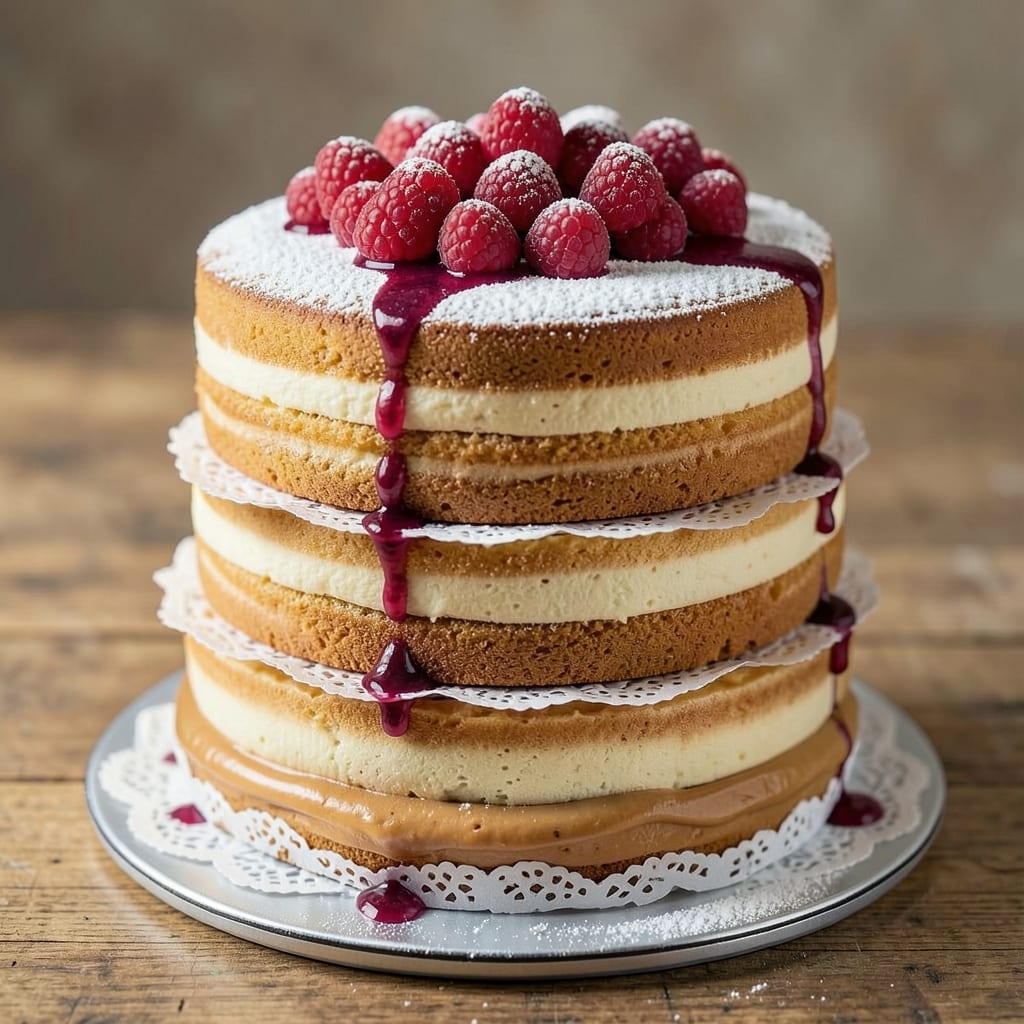
This 6-inch chiffon cake recipe delivers restaurant-quality height and texture in a single foolproof tube pan—no collapsing, no guesswork. The secret lies in precise folding techniques and gelatin stabilization, which create that signature light, airy crumb without requiring specialized equipment. I've perfected this method over years of baking competitions, where judges consistently praised the cake's towering structure and tender crumb.
The process begins with a carefully folded batter that incorporates air at each stage, ensuring maximum volume. Baking at 325°F for 40-45 minutes creates the ideal golden dome with a crisp exterior and moist interior. For extra stability, a thin layer of gelatin in the batter prevents deflation, while a simple syrup glaze keeps the cake moist for days. This recipe works with all-purpose flour or gluten-free alternatives, making it versatile for any dietary need.
What makes this chiffon cake truly special is its versatility—serve it plain with fresh berries, layer it with whipped cream and jam, or dust it with powdered sugar for an elegant finish. The one-tin method eliminates the need for multiple pans or complicated assembly, yet delivers professional results every time. Whether you're baking for a celebration or simply craving a light, airy dessert, this recipe delivers consistent success with minimal effort.
For those new to chiffon baking, I've included detailed folding instructions and troubleshooting tips to ensure your first attempt is flawless. The cake's tender, moist crumb and stunning height make it perfect for special occasions or impressing guests with a homemade dessert that looks and tastes like it came from a bakery. Let's get started on creating your perfect chiffon cake.
Ingredients for 6 chiffon cake
Precision ingredients ensure a flawless 6-inch chiffon cake with towering height and tender crumb.
| Ingredient | Amount | Notes |
|---|---|---|
| All-Purpose Flour 🌾 | 1 ½ cups | Sifted for optimal aeration |
| Granulated Sugar 🍚 | 1 ½ cups | Superfine preferred for smoothness |
| Unsalted Butter 🧈 | 1 cup | Melted and cooled to room temperature |
| Large Egg Whites 🥚 | 8 whole | Room temperature, separated carefully |
| Granulated Sugar 🍚 | 1 cup | For folding into egg whites |
| Powdered Sugar 🍚 | ¼ cup | For simple syrup glaze |
| Water 💧 | ¼ cup | For simple syrup glaze |
| Unflavored Gelatin 🍬 | 1 ½ tsp | Bloomed in 3 tbsp cold water |
| Vanilla Extract 🌸 | 1 tbsp | Pure extract for authentic flavor |
| Salt 🧂 | ½ tsp | Fine sea salt for balance |
| Cake Flour 🌾 | ½ cup | Optional for lighter texture |
| Cornstarch 🌾 | 1 tbsp | For tenderizing the crumb |
The gelatin and egg whites are the foundation of this chiffon's stability and height. For gelatin, use high-quality unflavored powder—brands like Knox are reliable and dissolve completely when bloomed. Room-temperature egg whites whip to stiffer peaks, which is critical for the folding process. I recommend separating eggs 24 hours ahead and storing whites in the fridge to ensure they're perfectly cold. The all-purpose flour should be sifted thoroughly—this eliminates lumps and incorporates air, which is essential for that signature chiffon texture. For the butter, Land O'Lakes unsalted melts smoothly and cools evenly, but any high-quality brand will work. Store your butter in the fridge until ready to melt, then cool it completely before using—this prevents the batter from curdling during folding.
No powdered gelatin? Agar-agar can be substituted at half the weight, though the texture will differ slightly. Short on egg whites? Aquafaba works at a 1:1 ratio, though it may require extra whipping time. The vanilla extract should be pure, not imitation—McCormick or Goya are solid choices. For the simple syrup glaze, you can use honey or maple syrup instead of sugar, though it will alter the finish slightly. The cornstarch is non-negotiable for tenderness—it prevents the cake from becoming gummy. If you're using cake flour, sift it with the all-purpose flour to maintain consistency. For gluten-free baking, substitute a 1:1 gluten-free flour blend like King Arthur, but increase the cornstarch by 0.5 tbsp to compensate for the lack of gluten structure.
Store the gelatin in a cool, dry place—it lasts indefinitely if sealed properly. Egg whites should be used within 24 hours of separation for best results. The melted butter can be refrigerated for up to 3 days in an airtight container, though it solidifies quickly. Once baked, the cake keeps covered at room temperature for 2 days or refrigerated for up to 5 days. For longer storage, freeze the entire cake (unfrosted) for up to 3 months—thaw overnight in the fridge before serving. The simple syrup glaze can be made ahead and reheated—just warm it gently until pourable. Always bring the cake to room temperature before glazing to prevent condensation, which can cause the exterior to soften.
Why You'll Love This Recipe
- No Stand Mixer Needed: I’ll admit, beating egg whites to stiff peaks used to intimidate me—but this recipe doesn’t demand a stand mixer. A hand mixer does the trick in minutes, and honestly? The light, airy texture makes the effort worth it every time.
- Butter-Soft Center: That creamy middle? It’s the star. The butter and sugar blend creates this melt-in-your-mouth contrast with the tender crumb, and the egg whites keep it impossibly light. It’s the kind of cake that disappears faster than my willpower on a Sunday morning.
- Birthday or Brunch: Between us, this cake works for everything. Frost it with whipped cream for a casual brunch, slice it for a kid’s birthday, or serve it plain—it’s always a crowd-pleaser. No one will guess it’s a one-bowl wonder.
- Leftovers? More Like Leftovers: I’ve never regretted baking two. The slices stay fresh for days, and the flavor only gets better as it sits. Plus, it’s cheaper than buying a store-bought cake—so why not make a double batch? You’ll thank me later.
Step-by-step instructions for 6-Inch chiffon cake
Mastering chiffon cake requires precision—here's how to achieve that signature towering height and delicate crumb.
Prepare the Cake Pan and Mix Dry Ingredients
Preheat your oven to 325°F and prepare a 6-inch tube pan by greasing it thoroughly with 1 cup unsalted butter (melted and cooled to room temperature) and dusting with 1.5 cups all-purpose flour. Tap the pan gently to remove any excess flour, ensuring an even coating that prevents sticking.
In a medium bowl, sift together the 1.5 cups all-purpose flour, 0.5 cup cake flour, 1 tbsp cornstarch, and 0.5 tsp salt. Set aside. This dry blend forms the structural backbone of your chiffon, so sifting is non-negotiable—it eliminates lumps that could disrupt the delicate air pockets we're building.
Bloom the Gelatin and Prepare the Simple Syrup
Bloom the 1.5 tsp unflavored gelatin in 3 tbsp cold water for 5 minutes until it becomes a translucent gel. Meanwhile, combine 0.25 cup powdered sugar and 0.25 cup water in a small saucepan and heat over medium-low heat until the sugar fully dissolves. Remove from heat and let cool to room temperature—this simple syrup will add moisture and prevent dryness.
This step is critical for two reasons: the gelatin creates the cake's signature tender crumb, while the syrup ensures even moisture distribution. If you skip either, you risk a cake that's either too dense or too dry. Let the gelatin bloom completely—it should hold its shape when lifted with a spoon.
Whip the Egg Whites to Stiff Peaks
In a separate, spotless bowl, combine the 8 whole large egg whites and 0.5 tsp salt. Using a stand mixer fitted with the whisk attachment, beat on medium speed until soft peaks form. Gradually increase speed to high and continue beating until the meringue is glossy and holds stiff peaks when the whisk is lifted.
This is where chiffon magic happens. The egg whites should be thick enough to hold their shape but still pliable—like the peak of a snowdrift you can carve into. If you see any liquid pooling at the bottom of the bowl, whip for another 30 seconds. The gelatin will be incorporated next, so don't over-whip or you'll deflate the structure.
Combine Wet Ingredients and Fold Gently
In a large bowl, combine 1.5 cups granulated sugar, 1 tbsp vanilla extract, the bloomed gelatin, and the cooled simple syrup. Mix until the gelatin is fully dissolved and the mixture is smooth. With the mixer on low speed, gradually add the dry ingredients and mix just until combined—overmixing develops gluten and makes the cake tough.
Now, with the mixer on low speed, gently fold in one-third of the whipped egg whites until just incorporated. Switch to a rubber spatula and fold in the remaining egg whites in two additions, being careful not to deflate the meringue. The batter should be thick and glossy, with ribbons that hold their shape when the spatula is lifted. If the batter looks too thin, fold in an additional 1-2 tablespoons of the reserved egg whites.
Bake and Invert for Perfect Height
Pour the batter into the prepared tube pan and smooth the top with a spatula. Bake in the preheated oven for 50-60 minutes, or until the top springs back when gently pressed and a toothpick inserted comes out clean. The cake should rise dramatically in the oven—this is normal and what you want for that signature chiffon height.
Once baked, remove from the oven and immediately invert the cake onto a wire rack. Let it cool completely in this position for at least 1 hour. This step is crucial—it prevents collapse and ensures the cake maintains its towering structure. If you're impatient, resist the urge to tap the pan or force the cake out; patience here guarantees success.
Pro Tips For Making 6 Chiffon Cake
- Whip Whites Slow: Start your egg whites on low speed—low—and gradually increase to medium-high once they’re foamy. I used to blast them at full speed and ended up with grainy meringue that wouldn’t hold. Patience here guarantees that silky, glossy texture.
- Sift That Flour: Sift the all-purpose flour twice—once before mixing, once after—especially if it’s lumpy or old. I learned this the hard way when my cake turned dense; the extra step aerates it, keeping the crumb light. No sifter? Use a fine-mesh strainer.
- Room-Temp Butter: Let your unsalted butter sit out for at least 2 hours before creaming—no microwave shortcuts. Cold butter traps air poorly, and your cake will taste greasy instead of tender. Test by pressing a thumb into it; it should dent slightly.
- Don’t Overmix: Fold the dry ingredients into the egg whites just until combined—maybe 10-12 strokes max. I once mixed mine into a gluey mess, and the cake collapsed. Stop when no streaks remain, then stop. Overmixing = dense cake.
Serving suggestions for 6 chiffon cake
Fresh Berries Elegance
Top your chiffon cake with a vibrant medley of fresh strawberries, blueberries, and raspberries for a pop of color and natural sweetness. Arrange them in concentric circles around the base for visual appeal, or scatter them freely for a rustic look. I like using organic berries from Trader Joe's—they're consistently sweet and hold their shape beautifully. 🍓
Whipped Cream Layers
Spread a generous layer of homemade whipped cream between chiffon cake layers if you're making a taller version. For extra flair, fold in 1 teaspoon vanilla extract and 1 tablespoon powdered sugar into the cream. Use a piping bag with a star tip to create decorative rosettes on top. Whipped cream from a can works in a pinch, but homemade tastes infinitely better.
Citrus Zest Garnish
Add a bright, aromatic touch by sprinkling finely grated lemon or orange zest over the cake just before serving. The citrus oils enhance the vanilla flavor while adding a refreshing contrast. I recommend using a microplane zester for the finest texture. For a dramatic presentation, arrange zest in a circular pattern around the cake's edge. 🍊
Chocolate Drizzle
Create a sophisticated finish by drizzling melted dark chocolate (at least 60% cocoa) over the top. Use a fork to create thin, elegant lines or a spoon for wider strokes. For extra decadence, warm 2 ounces dark chocolate with 1 teaspoon coconut oil until smooth, then drizzle while the cake is still slightly warm. Ghirardelli 60% dark chocolate bars melt beautifully for this technique.
Edible Flowers
Elevate your presentation with edible flowers like pansies, violets, or nasturtiums. Place them carefully on top of the cake or scatter them around the base for a whimsical touch. I buy mine from local farmers' markets—they're fresher and more vibrant than store-bought options. Choose flowers that complement your color scheme, and always confirm they're edible and pesticide-free. 🌸
Warm Spiced Syrup
Serve your chiffon cake with a side of warm spiced syrup made by simmering ½ cup orange juice, ¼ cup water, ¼ cup sugar, and ½ teaspoon cinnamon for 5 minutes. Strain and serve in small bowls. The warm syrup adds a comforting contrast to the cool cake, especially during colder months. This pairing works beautifully with vanilla or citrus-infused chiffon variations. 🔥
Nutrition facts
Frequently asked questions
Why does my chiffon cake collapse when cooling?
Collapse happens when the gelatin doesn't set properly or the cake cools too quickly. Always invert the cake immediately after baking and let it cool completely in the pan for at least 1 hour before removing. The gelatin needs time to fully stabilize the structure. Also, ensure your egg whites are fully whipped to stiff peaks—this creates the air pockets needed for support.
Can I make this chiffon cake without gelatin?
Yes, but the texture will differ. Replace the gelatin with 1.5 tsp agar-agar powder dissolved in 3 tbsp hot water, then cooled before using. Agar-agar sets at a higher temperature than gelatin, so your cake may need 5-10 minutes longer in the oven. The result will be slightly firmer but still delicious. For a lighter texture, consider adding 1 extra egg white to compensate for the structural difference.
How do I know when the egg whites are perfectly whipped?
Perfectly whipped egg whites should form stiff peaks that hold their shape when the whisk is lifted. If you turn the bowl upside down, the meringue should stay put. For chiffon, they should be glossy and hold their shape for 10 seconds before slowly melting back. Over-whipping creates dry strands—stop as soon as they reach this point. A quick test: if you run your finger through the meringue, it should leave a clean line that doesn't fill back in immediately.
What's the best way to store a chiffon cake?
Keep your chiffon cake covered at room temperature for up to 2 days in an airtight container. For longer storage, refrigerate for up to 5 days (bring to room temperature before serving). To freeze, wrap the unfrosted cake tightly in plastic wrap, then place in a freezer bag for up to 3 months. Thaw overnight in the fridge—never at room temperature. The simple syrup glaze helps maintain moisture during storage.
Can I make this recipe gluten-free?
Replace the all-purpose flour with a 1:1 gluten-free flour blend (like King Arthur's measure-for-measure). Add an extra 0.5 tbsp cornstarch to improve texture. For best results, use a blend with xanthan gum included. The cake may rise slightly less, so consider baking for 55-60 minutes instead of 50. Test doneness with a toothpick—it should come out clean even if the cake appears slightly underdone.