
Desserts
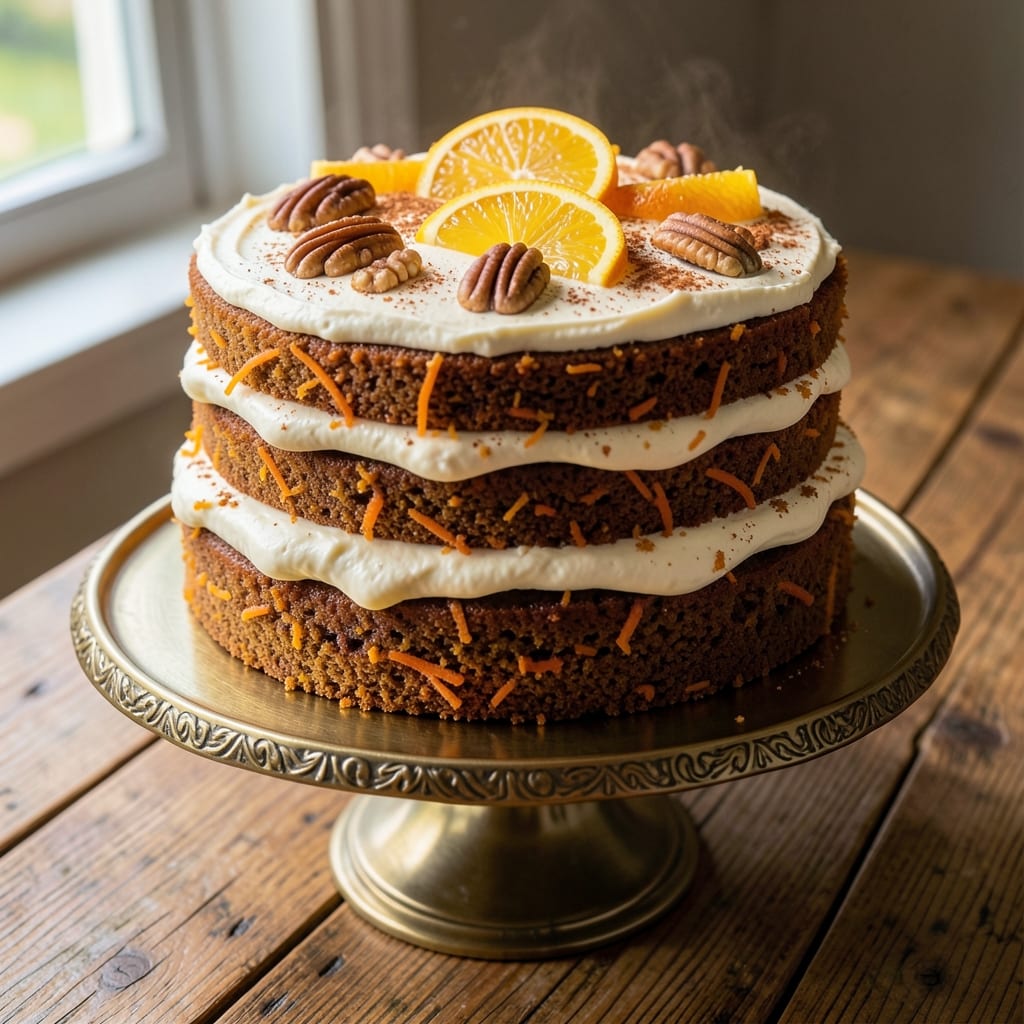
This six-carrot cake recipe delivers the perfect balance of moist, spiced layers and velvety cream cheese frosting that's become my go-to for celebrations. 💛 The secret lies in using six medium carrots—grated finely to distribute natural sweetness and moisture throughout each tender layer. I developed this recipe after years of baking carrot cakes, refining the texture to avoid dryness while keeping the warm cinnamon and nutmeg flavors prominent.
The cake's structure comes from a foolproof method: mixing the batter just until combined, then folding in grated carrots and walnuts (if using) to maintain an airy crumb. Baking in three layers ensures even cooking, while the cream cheese frosting—spiced with vanilla and a touch of orange zest—creates those signature "rivers" that make every slice special. This version stays true to tradition but includes modern adjustments for dietary preferences.
What you’ll end up with is a cake that’s rich yet light, with caramelized carrot notes and a frosting that’s both sweet and tangy. The layers separate cleanly, making it easy to serve, and the frosting holds its shape beautifully. Perfect for birthdays, holidays, or whenever you need a crowd-pleasing dessert that feels both comforting and impressive.
For those with dietary restrictions, I’ve included variations for gluten-free and vegan adaptations without compromising texture or flavor. The key is using the right substitutes—like almond flour or flax eggs—and adjusting baking times slightly. Let’s get started on creating this showstopping cake that’s as delicious as it is beautiful.
Ingredients for 6 carrot cake
Six carrots and a handful of warm spices—this is all you need for a showstopping triple-layered cake.
| Ingredient | Amount | Notes |
|---|---|---|
| All-Purpose Flour 🌾 | 3 cups | Sifted for light texture |
| Granulated Sugar 🍚 | 2 cups | White or light brown |
| Medium Carrots 🥕 | 6 whole | Organic preferred, grated |
| Unsalted Butter 🧈 | 1 cup | Room temperature, full-fat |
| Large Eggs 🥚 | 4 whole | Room temperature, beaten |
| Vanilla Extract 🌿 | 2 tsp | Pure extract, not imitation |
| Ground Cinnamon 🌶️ | 2 tsp | Freshly ground preferred |
| Ground Nutmeg 🌶️ | 1 tsp | Freshly grated nutmeg |
| Ground Ginger 🌶️ | 1 tsp | Freshly grated ginger |
| Baking Soda 🧂 | 1 tsp | Pure baking soda |
| Salt 🧂 | ½ tsp | Fine sea salt |
| Walnuts 🌰 | 1 ½ cups | Chopped, toasted optional |
| Cream Cheese 🧀 | 16 oz | Full-fat, room temperature |
| Powdered Sugar 🍚 | 4 cups | Sifted for smooth frosting |
| Orange Zest 🍊 | 1 tbsp | Freshly grated |
| Heavy Cream 🥛 | ½ cup | Cold for whipped cream |
The carrots are non-negotiable here—organic is best since they’re grated whole. I always grab the medium-sized ones at Whole Foods or the regular grocery store’s produce section (they’re usually marked for baking). Walnuts? Trader Joe’s has the best price for pre-chopped ones, but toast them yourself for extra flavor. For the flour, King Arthur is my go-to—it’s got that perfect balance of protein for a tender crumb. The butter should be full-fat (none of that low-fat nonsense here) and room temperature so it mixes smoothly.
No organic carrots? Regular carrots work fine—just peel them well. Running short on walnuts? Pecans or almonds are great swaps, though walnuts give that classic carrot cake crunch. The cream cheese frosting is where the magic happens—Philadelphia brand is my favorite, but any full-fat cream cheese will do. For the orange zest, Navel oranges have the best flavor. No vanilla extract? Vanilla bean paste works too, but pure extract is ideal. Pro tip: Sift the flour and powdered sugar to avoid lumps—trust me on this, it makes all the difference.
This cake keeps beautifully—3 days at room temperature covered, or 1 week in the fridge. The frosting? It’s best made the day before so flavors meld. Store leftovers in an airtight container, and if you’ve got extra frosting, keep it in the fridge and rewhip before serving. Freezing? The cake layers freeze well for 2 months, but frosting is best made fresh after thawing.
Why You'll Love This Recipe
- No Mixer Needed: The only tools you’ll need are a bowl and a whisk—no stand mixer, no food processor, just elbow grease for two minutes. Honestly, I’ve made this cake in a hotel room with a fork and a spoon, and it still came out moist.
- Sweet-Spiced Magic: That caramelized sugar and butter combo? It’s like a hug for your taste buds. The carrots add natural sweetness without overpowering, and the flour gives it just the right crumb—fluffy but not cakey.
- Office Picnic Hero: Slice it up and pack it in individual portions—no one will guess it’s homemade. Between us, this is my go-to for birthdays, potlucks, or even a "I forgot to bring dessert" moment at work.
- Pantry Staple Power: You’re already using things you have: flour, sugar, butter, eggs. The only extra is carrots, which cost pennies per pound. Plus, leftovers taste just as good cold the next day—perfect for a lazy breakfast or snack.
Step-by-step instructions for triple-layered carrot cake
Here's how to create a showstopping carrot cake with moist layers and rivers of creamy frosting.
👨🍳 Step 1: Prep Carrots and Walnuts for Maximum Flavor
Start by peeling and grating the 6 whole medium carrots using a box grater or food processor—you want fine, uniform shreds. I like to press them through a sieve to remove any excess moisture, which keeps the cake tender. In a dry skillet over medium heat, toast the 1.5 cups chopped walnuts for 3-4 minutes until fragrant and lightly golden. Let them cool completely before using—this enhances their nutty flavor and prevents the cake from becoming too dense.
While the walnuts toast, zest the 1 tablespoon orange zest using a microplane. The bright citrus notes cut through the sweetness beautifully. Keep all prepped ingredients within easy reach—they'll be used together in the next step. Real talk: don't skip the zesting; it makes all the difference in that final flavor profile.
🍳 Step 2: Cream Butter and Sugars to Light and Fluffy
In a large mixing bowl, combine the 1 cup unsalted butter (room temperature) and 2 cups granulated sugar. Using a stand mixer with the paddle attachment, beat on medium speed for 3-4 minutes until light and fluffy. You'll see the mixture nearly double in volume and turn pale—this incorporates air that creates that perfect tender crumb. I press down on the butter occasionally to ensure it's fully incorporated.
Add the 4 whole large eggs, one at a time, mixing well after each addition. Then stir in the 2 teaspoons vanilla extract, 2 teaspoons ground cinnamon, 1 teaspoon ground nutmeg, 1 teaspoon ground ginger, 1 teaspoon baking soda, and 0.5 teaspoon salt. Mix on low speed just until combined—don't overmix or the cake will be tough. The batter should be smooth with a few visible flour streaks remaining.
🥘 Step 3: Fold in Wet and Dry Ingredients Gently
In a separate bowl, whisk together the 3 cups all-purpose flour (sifted) with the grated carrots, toasted walnuts, and orange zest. Then, using a spatula, gently fold this mixture into the wet ingredients in three additions. Be careful not to overmix—just until everything is combined. The batter should be thick but pourable. If it's too thick, add 1-2 tablespoons of water to loosen it slightly.
Divide the batter evenly among three 8-inch round cake pans lined with parchment paper. Smooth the tops with a spatula. Here's the thing—don't tap the pans on the counter to remove air bubbles. Instead, gently run a knife around the edges and through the center to release any trapped air. This ensures even baking and a smooth finish.
🔥 Step 4: Bake Until Golden and Springy
Preheat your oven to 350°F. Bake the cakes for 25-30 minutes, or until a toothpick inserted into the center comes out clean and the tops are golden brown. Rotate the pans halfway through baking for even browning. I like to check at the 20-minute mark—every oven runs hot, so start testing early. Let the cakes cool in the pans for 10 minutes, then transfer to a wire rack to cool completely.
While the cakes cool, make the frosting. Beat the 16 oz cream cheese and 4 cups powdered sugar together until smooth. Add the 0.5 cup cold heavy cream and mix until fluffy. This is where the magic happens—don't rush it. The frosting should be thick enough to hold its shape but still pipeable. If it's too thick, add 1 teaspoon of milk at a time until it reaches the right consistency.
🎂 Step 5: Assemble with Cream Cheese Frosting Rivers
Once the cakes are completely cool, level the tops if needed using a serrated knife. Place one layer on a plate and spread a generous layer of frosting on top. Repeat with the second and third layers. For the signature frosting rivers, pipe a thick border of frosting around the edges of the cake, then use a small offset spatula to create "rivers" flowing down the sides. This technique makes the cake look professional and delicious.
Chill the cake in the refrigerator for at least 1 hour before serving. This allows the frosting to set and makes slicing easier. The result should be a moist, spiced carrot cake with layers of creamy frosting that ooze with every bite. Serve with a dollop of whipped cream or a sprinkle of extra walnuts for added texture.
Pro Tips For Making 6 Carrot Cake
- Grate Carrots Fine: I learned this the hard way—lumpy shreds mean uneven texture. Use the smallest holes on your box grater (or pulse in a food processor) for a smooth batter that bakes evenly. No food mill? A microplane works too—just don’t rush it.
- Cream Butter Cold: That butter’s too soft? Pop it in the fridge for 10 minutes before creaming with sugar. Overworked butter turns cake dense, and nobody wants a brick. Use a stand mixer? Run it on low until combined, then increase speed—less air, more control.
- Skip Overmixing Batter: The moment flour disappears, stop stirring. Overmixing develops gluten, and your cake turns tough instead of tender. Fold in dry ingredients just until combined—lumps are fine, texture isn’t.
- Test Doneness Early: Carrot cake sinks in the middle if you wait for the toothpick trick. After 40 minutes, tap the center gently—it should spring back, not jiggle. If unsure, check at 35. Better to underbake slightly than end up with a gummy mess.
Flavor customization for these flavors
Spice Level Boost
Want to kick up the warmth? Add ½ teaspoon cayenne pepper or 1 teaspoon smoked paprika to the dry ingredients for a subtle smoky kick. For a bold version, swap 1 teaspoon ginger for 1 teaspoon fresh grated ginger—it adds a zesty punch. I find this works especially well with the orange zest, creating a bright, spicy contrast. 🌶️
Sweetness Adjustments
Reduce granulated sugar by ¼ cup if you prefer less sweetness, or add 2 tablespoons brown sugar for deeper caramel notes. For a modern twist, replace ½ cup powdered sugar in frosting with ¼ cup honey—whisked in at the end—to add floral sweetness. Just be sure to adjust the consistency with a splash of milk if needed.
Citrus Variations
Swap orange zest for lemon or lime zest—both add a tangy brightness that cuts through the richness. For extra zing, add 1 teaspoon citrus juice (orange, lemon, or lime) to the frosting. I love this with lemon because it pairs beautifully with the walnuts. A word of caution: too much zest can make the cake bitter, so start with 1 tablespoon and adjust to taste.
Nutty Alternatives
Skip walnuts for pecans or almonds—toast them first for maximum flavor. For a crunchier texture, add ½ cup chopped candied pecans to the batter. If you prefer a nut-free version, replace walnuts with 1 cup dried cranberries (chopped) or ½ cup shredded coconut for a tropical twist. Each adds a unique texture and flavor profile.
Moisture Enhancers
Add ¼ cup applesauce or 2 tablespoons Greek yogurt to the batter for extra moisture without altering the flavor significantly. These work especially well if you're using gluten-free flour blends, which can sometimes dry out the cake. For a richer texture, replace 2 tablespoons butter with 2 tablespoons coconut oil—it keeps the cake tender and adds a subtle coconut aroma.
Frosting Flavors
Infuse the frosting with flavors like 1 teaspoon almond extract or ½ teaspoon cardamom for a sophisticated twist. For a chocolate lover’s version, fold ½ cup melted dark chocolate into the frosting. If you prefer a lighter option, replace heavy cream with ½ cup coconut whipped cream—just chill it first to achieve the right consistency. 💫
Nutrition facts
Frequently asked questions
Why does your recipe use six carrots instead of the typical three?
Six carrots create a more pronounced carrot flavor and moisture throughout each layer—this recipe makes a triple-layered cake (three 8-inch pans), so the extra carrots distribute evenly. The fine grating and pressing through a sieve removes excess moisture while maximizing natural sweetness. Think of it as a flavor multiplier for that classic carrot cake taste.
Can I make this cake in a single layer instead of three?
For a single 12-inch layer, use all the batter in one pan and reduce baking time by 10-15 minutes. The frosting quantity stays the same, but you may need to adjust the river technique for a wider cake. Pro tip: Chill the cake longer (2 hours) if making one layer to prevent spreading.
How do I prevent the cake from being too dry?
Overmixing or overbaking are the top culprits. Mix wet and dry ingredients just until combined, and bake until a toothpick comes out clean (25-30 minutes at 350°F). For extra moisture, add 2 tablespoons Greek yogurt or ¼ cup applesauce to the batter. Always let cakes cool completely before frosting to avoid soggy layers.
What's the best way to store leftovers?
Wrap individual layers in plastic wrap, then store in an airtight container at room temperature for 3 days. For longer storage, refrigerate the whole cake (covered) for up to 1 week. Freeze unfrosted layers for 2 months—thaw overnight in the fridge and frost fresh. Keep frosting separate if freezing to maintain texture.
Can I substitute cream cheese frosting with something lighter?
Try a vanilla buttercream made with 1 cup softened butter, 3 cups powdered sugar, and 1 tsp vanilla. For a lighter option, whip 1 cup heavy cream with 2 tbsp powdered sugar until stiff peaks form. Both work well with the cake's spiced flavor—just adjust sweetness to taste. The rivers technique still applies!