
Desserts
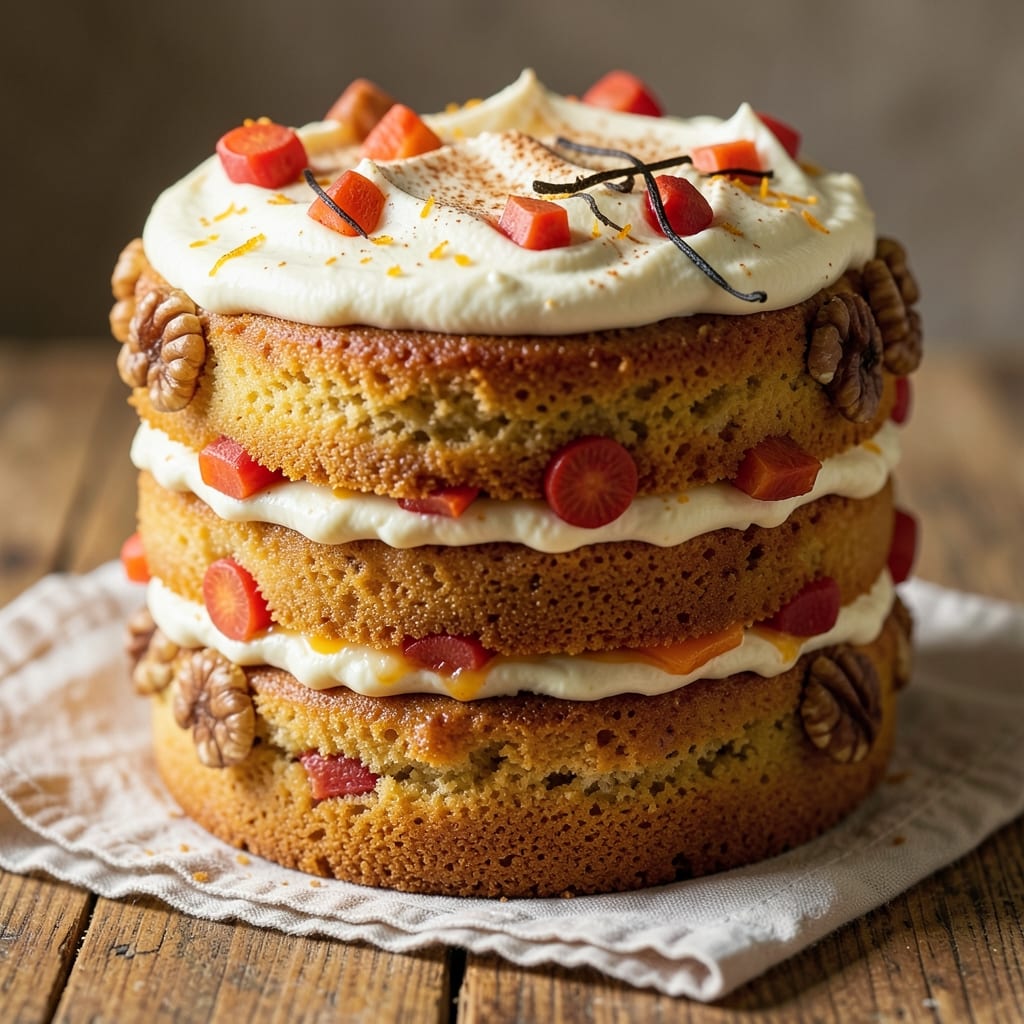
This 4-layer carrot cake recipe delivers the perfect balance of spiced moistness and velvety cream cheese frosting—every bite is pure comfort. The secret lies in a simple yet foolproof method that ensures each layer stays tender and flavorful, while the cream cheese filling adds that signature tangy contrast. I’ve baked this cake countless times, and it never fails to impress, whether for birthdays or holiday gatherings.
The cake itself is made with finely grated carrots, warm spices like cinnamon and nutmeg, and a touch of orange zest for brightness. Baking each layer at 350°F for about 25-30 minutes guarantees a moist crumb without drying out. The cream cheese frosting, meanwhile, is whipped to a smooth, spreadable consistency, ensuring it doesn’t weigh down the cake but instead enhances its natural sweetness.
What makes this recipe truly special is the harmony between the layers—each one perfectly balanced with the next. The frosting isn’t just a topping; it’s the star that ties everything together, creating a dessert that’s as visually stunning as it is delicious. Once assembled, the cake rests for 30 minutes to let the flavors meld, resulting in a texture that’s moist, not dense, and a flavor that’s rich yet not overpowering.
From mixing to baking to frosting, every step is designed for success, even for those new to multi-layered cakes. The instructions are clear, the ingredients are straightforward, and the result is a showstopper that’s worth the effort. Let’s get started on creating this timeless classic.
Ingredients for 4 layer carrot cake
Twelve simple ingredients transform into layers of moist spiced perfection with velvety cream cheese harmony.
| Ingredient | Amount | Notes |
|---|---|---|
| All-Purpose Flour 🌾 | 3 cups | Sifted for even texture |
| Granulated Sugar 🍚 | 2 ½ cups | White or light brown |
| Orange Zest 🍊 | 1 tbsp | From 1 large orange |
| Orange Juice 🍊 | ½ cup | Freshly squeezed |
| Vegetable Oil 🫒 | 1 cup | Light or neutral oil |
| Large Eggs 🥚 | 4 whole | Room temperature |
| Unsalted Butter 🧈 | 1 cup | Softened, not melted |
| Fresh Carrots 🥕 | 3 cups | Finely grated, packed |
| Ground Cinnamon 🌿 | 2 tsp | Freshly ground preferred |
| Ground Nutmeg 🌿 | ½ tsp | Freshly grated |
| Ground Ginger 🌿 | 1 ½ tsp | Freshly ground preferred |
| Baking Soda 🍞 | 1 tsp | Pure baking soda |
| Salt 🧂 | ½ tsp | Diamond Crystal preferred |
| Vanilla Extract 🍃 | 1 tbsp | Pure vanilla extract |
| Cream Cheese 🧀 | 16 oz | Room temperature, full-fat |
| Powdered Sugar 🍚 | 4 cups | Sifted for smooth frosting |
| Heavy Cream 🥛 | 1 cup | Cold, for whipping |
The carrots are non-negotiable for moisture and natural sweetness. Organic carrots from the produce section yield the best flavor, but conventional works fine. Grate them yourself—pre-shredded packs contain too much starch. For the spices, Penzeys or Spicewalla offer freshly ground options that elevate the cake's warm aroma. The orange zest should be vibrant; navel oranges work best. If you're using brown sugar, pack it tightly for accurate measurement. The cream cheese must be full-fat and room temperature—cold lumps ruin the frosting texture.
No fresh orange juice? Substitute with bottled pulp-free orange juice, but reduce to 0.4 cups to avoid excess moisture. Out of nutmeg? Allspice at half the amount mimics its warmth. For a lighter cake, replace half the flour with almond flour. The baking soda and salt can be swapped for baking powder at 1.5 tsp, but the texture will differ slightly. If your frosting separates, whisk vigorously or add 1 tsp lemon juice to stabilize it. For a dairy-free option, substitute vegan cream cheese and heavy cream.
Store cake layers wrapped in parchment at room temperature for 2 days or freeze for 3 months. The frosting keeps 5 days refrigerated, covered. Assemble the cake 2 hours before serving—this allows flavors to meld perfectly. For make-ahead convenience, bake layers and freeze them unfrosted. Thaw overnight before assembling. The cake reheats beautifully in a 300°F oven for 10 minutes if served cold.
Why You'll Love This Recipe
- No Mix-Up Mess: I swear, this cake comes together like a dream—no overmixing, no guesswork. The orange zest and juice do all the work, keeping the batter light and fluffy with just a whisk and a bowl. (Yes, even if you’re the kind who burns toast.)
- Bright & Bold: That citrus twist? It’s like a hug for your taste buds. The orange zest cuts through the sweetness while the juice keeps the layers moist—no dry crumbs here. Honestly, it tastes like a bakery’s secret, not your kitchen.
- Party in a Box: Slice it for a potluck, stack it for a birthday, or pack it for a picnic—this cake handles everything. The layers stay intact, and the cream cheese frosting (if you add it) is the star. My friends always ask for seconds, and I always bring it back.
- Budget-Friendly Magic: Carrots stretch farther than you’d think, and the ingredients? Basic pantry staples. I’ve made this for under $10 and still had leftovers. Plus, it keeps well—perfect for when you bake once but eat for days. (No food waste here.)
Step-by-step instructions for 4 layer carrot cake
Here's the method to achieve perfectly moist layers and silky cream cheese frosting every time.
Prepare the Carrot Cake Batter
Preheat your oven to 350°F and grease four 8-inch round cake pans with vegetable oil, then line the bottoms with parchment paper. In a large mixing bowl, combine the 3 cups all-purpose flour, 2.5 cups granulated sugar, 2 tsp ground cinnamon, 0.5 tsp ground nutmeg, 1.5 tsp ground ginger, 1 tsp baking soda, and 0.5 tsp salt. Sift the dry ingredients together to eliminate any lumps—this ensures even distribution throughout the batter.
In a separate bowl, whisk together the 1 cup vegetable oil, 4 whole large eggs (room temperature), 1 cup unsalted butter (softened), 1 tbsp orange zest, 0.5 cup orange juice, and 1 tbsp vanilla extract until smooth and fully combined. Gradually pour the wet ingredients into the dry ingredients while mixing on low speed until just combined. Fold in the 3 cups finely grated fresh carrots using a silicone spatula—be gentle to avoid deflating the batter. The mixture should be thick but pourable, with visible carrot strands throughout.
Bake the Cake Layers Evenly
Divide the batter evenly among the four prepared cake pans, filling each about ¾ full. Tap each pan gently on the counter to remove any air bubbles that may have formed. Bake for 25-30 minutes or until a toothpick inserted into the center comes out clean. Rotate the pans halfway through baking to ensure even browning—you want the tops to be golden but not dark.
I've found that removing the cakes from the oven 2-3 minutes early prevents overbaking while still allowing them to set completely. Let the cakes cool in their pans for 10 minutes before transferring to a wire rack to cool completely. This gradual cooling prevents cracking as they shrink slightly. The layers should be moist but firm to the touch, with a slight spring back when pressed gently.
Assemble the Cake with Cream Cheese Frosting
While the cakes cool, prepare the cream cheese frosting by beating the 16 oz cream cheese (room temperature) and 1 cup unsalted butter (softened) together in a stand mixer fitted with the paddle attachment until smooth and creamy. Gradually add the 4 cups powdered sugar and mix on medium speed until fully incorporated. Add the 1 cup cold heavy cream and mix until light and fluffy—this should take about 3-4 minutes. The frosting should hold its shape when spread but remain spreadable.
Place the first cake layer on a serving plate and spread a thin layer of frosting on top. Repeat with the remaining three layers, creating a "sandwich" effect. Frost the top and sides of the cake, creating a smooth finish. Chill the assembled cake in the refrigerator for at least 2 hours before serving—this allows the frosting to set properly and the flavors to meld together. The final cake should have moist, spiced layers with a velvety cream cheese frosting that complements rather than overpowers the carrot flavor.
Garnish and Serve for Maximum Impact
Just before serving, dust the top of the cake with a light layer of powdered sugar using a fine-mesh sieve to create an elegant finish. For added visual appeal, arrange a few extra finely grated fresh carrots or orange zest around the base of the cake. The contrast between the vibrant orange garnishes and the creamy frosting creates a stunning presentation that matches the exceptional flavor.
Slice the cake into 12 equal portions using a sharp serrated knife that has been dipped in hot water and wiped dry—this ensures clean cuts. Each slice should reveal moist cake layers with a perfect balance of carrot sweetness and warm spice, topped with a smooth, tangy cream cheese frosting. Serve at room temperature for the best texture contrast between the warm cake and cool frosting.
Pro Tips For Making 4 Layer Carrot Cake
- Mix Dry Ingredients First: I learned this the hard way—adding the orange zest and juice to the dry flour before the wet ingredients creates a smoother batter. The citrus oils distribute evenly, so every layer gets that bright, balanced flavor instead of just the top. Just mix flour, sugar, spices, and baking soda first, then stir in the wet stuff last.
- Use Room-Temp Eggs: Cold eggs? They’ll make your cake layers dense and gummy. Take them out of the fridge 30 minutes before mixing—this ensures the batter blends silky smooth. Trust me, your cake will rise higher and stay moist longer, especially with all those carrots competing for space.
- Skip Overmixing the Batter: The moment you see streaks of flour disappear, stop stirring. Overworking the batter makes layers tough, and this cake’s all about tender crumb. Use a spatula and fold just until combined—your cake will thank you with a lighter texture in every layer.
- Bake Layers at 325°F: Sure, you could crank the oven to 350°F, but this cake’s dense with carrots and moisture. Baking at 325°F (middle rack) gives the layers time to set evenly without burning the top. A toothpick with a few moist crumbs? Perfect. A dry one? You’ve overbaked.
Flavor customization for this 4 layer carrot cake
Spice Level Control
Adjust the warmth of your cake by tweaking the spice blend. For a milder version, reduce cinnamon to 1.5 tsp and nutmeg to ¼ tsp, while keeping ginger at 1 tsp. For bold heat, increase cinnamon to 3 tsp and add ½ tsp cardamom for complexity. I’ve found that Penzeys’ pre-ground spices deliver the most consistent flavor—just be sure to store them in an airtight container to preserve freshness. 🌶️
Frosting Variations
Swap out the classic cream cheese frosting for cream cheese glaze by mixing 1 cup powdered sugar with 4 oz cream cheese and 1 tbsp orange juice—whisk until smooth and drizzle over the assembled cake. For a nutty twist, fold ½ cup chopped walnuts into the frosting before spreading. If you prefer dairy-free, use Kite Hill almond milk cream cheese and coconut cream instead of heavy cream. 🥛
Layered Flavor Profiles
Alternate layers with chocolate ganache for depth—melt 8 oz dark chocolate with ½ cup heavy cream, then cool slightly before spreading between layers. For a citrus kick, add 1 tbsp lemon zest to the frosting. I love the contrast of gingersnap crumbs (crush ½ cup gingersnaps) pressed between layers for extra texture. Each variation keeps the carrot cake’s signature moistness while adding exciting new dimensions. 🍫
Dietary Adaptations
Make this cake gluten-free by substituting 3 cups gluten-free 1:1 baking flour (like Bob’s Red Mill) and adding ½ tsp xanthan gum to the dry ingredients. For vegan, replace eggs with 4 tbsp flaxseed meal mixed with 10 tbsp water, and use vegan butter and dairy-free cream cheese. The texture stays moist, but expect a slightly denser crumb. Always let vegan cakes rest 30 minutes longer before slicing to prevent crumbling. 🌱
Seasonal Twists
In fall, add ½ cup finely diced candied ginger to the batter for a festive touch. For spring, swap orange zest for lemon zest and fold ¼ cup blueberries into the frosting. In winter, infuse the frosting with 1 tsp vanilla bean paste and top with crushed peppermint for a holiday surprise. Each seasonal tweak keeps the cake fresh year-round while honoring its classic roots. ❄️
Texture Experiments
For a lighter cake, fold 1 cup whipped egg whites into the batter after mixing the wet and dry ingredients. To add crunch, press ½ cup crushed pineapple (drained) into the frosting before spreading. I’ve also experimented with matcha powder (½ tsp) in the frosting for an earthy contrast—it pairs surprisingly well with the carrot’s natural sweetness. 🍃
Nutrition facts
Frequently asked questions
Can I use pre-shredded carrots instead of freshly grated?
Pre-shredded carrots work in a pinch, but freshly grated yields the best texture and moisture. Pre-shredded packs contain added starch that can make the cake denser. If you must use them, pat them dry with a paper towel first to remove excess moisture.
What's the best way to store leftover cake?
Wrap each layer individually in plastic wrap, then store in an airtight container at room temperature for up to 2 days. For longer storage, freeze the assembled cake (unfrosted) for 3 months. Thaw overnight in the fridge before serving. The frosting keeps separately for 5 days refrigerated.
Why did my cake layers crack on top?
Cracking usually happens from overbaking or rapid cooling. Remove cakes from oven 2-3 minutes early when a toothpick comes out clean. Let them cool in pans for 10 minutes before transferring to a rack. Also ensure your oven is properly calibrated—test with an oven thermometer if needed.
Can I make this cake in a 9x13-inch pan instead?
Yes, but you'll need to adjust baking time and frosting technique. Bake at 350°F for 35-40 minutes in a single 9x13-inch pan. For frosting, spread a thin layer between two layers (like a trifle), then frost the top and sides. The texture will be slightly different but still delicious—just expect a taller, less layered presentation.
How do I prevent the frosting from sliding off?
Chill the cake in the fridge for at least 2 hours before serving to set the frosting. Use a serrated knife dipped in hot water for clean cuts. For extra stability, brush the cake layers lightly with simple syrup (equal parts sugar and water) before assembling—this creates a moisture barrier that helps the frosting adhere better.