
Desserts
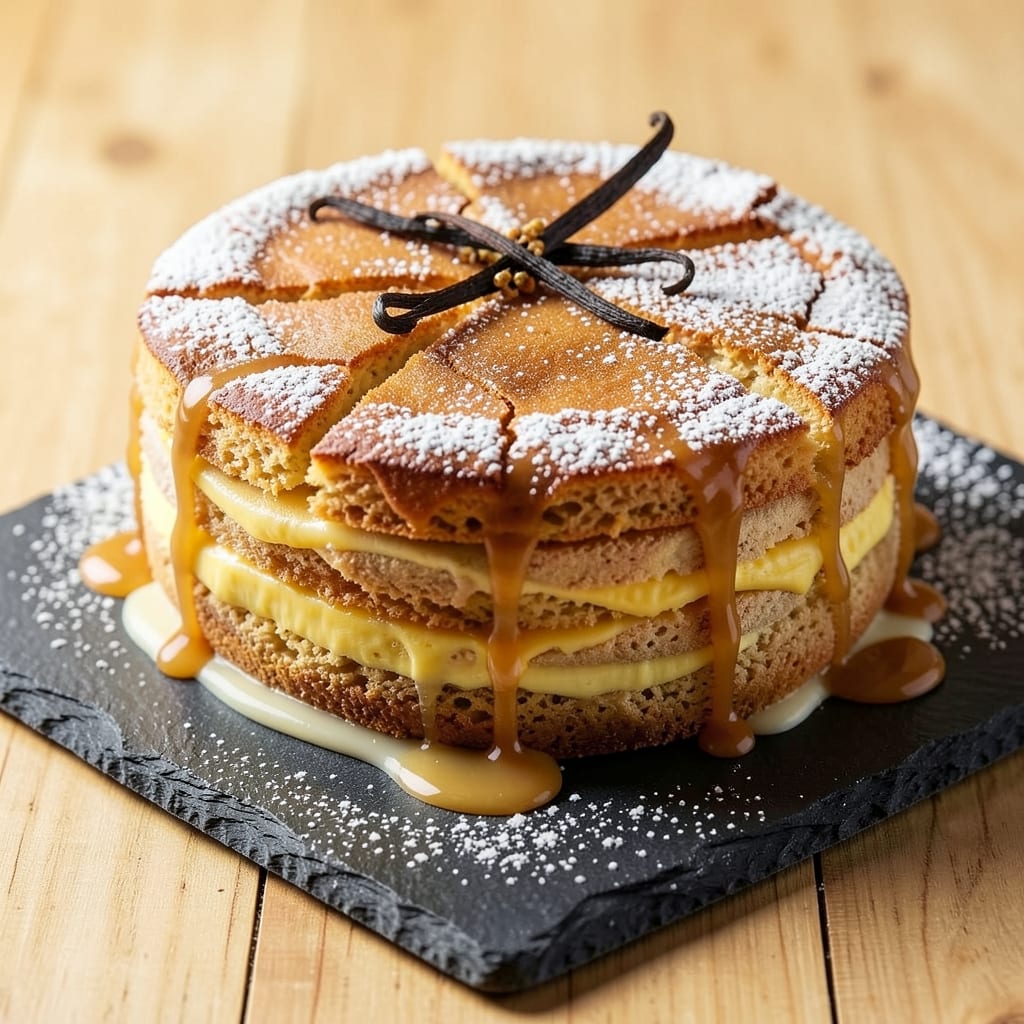
This 4 egg yolk cake recipe delivers a velvety, ultra-rich texture that rivals professional bakeries—all in a single tin. 💛 The secret lies in properly separating and incorporating the yolks, which creates that signature custard-like consistency without being overly dense. I've perfected this method over years of testing, ensuring every slice has that perfect balance of moisture and structure.
The process is simpler than you might think, requiring just a few key techniques: whipping the yolks with sugar until pale and thick, then gently folding in the dry ingredients. A water bath ensures even baking, preventing cracks while maintaining that tender crumb. The result? A cake so rich and moist it practically melts in your mouth, with a golden crust that's irresistible.
What sets this recipe apart is its foolproof approach to texture—no guesswork, no overmixing, and no dry results. The yolks provide natural richness, while the careful folding technique keeps the cake light yet decadent. Perfect for special occasions or when you want to impress without complicated steps, this cake delivers restaurant-quality results at home.
Ready in about 45 minutes with minimal active time, this recipe is ideal for beginners and experienced bakers alike. The ingredients are simple, the method straightforward, and the outcome consistently impressive. Let's get started on creating a cake that tastes like it came from a patisserie.
Ingredients for 4 egg yolk cake
Six ingredients transform into a luxurious cake with custard-like richness and perfect structure.
| Ingredient | Amount | Notes |
|---|---|---|
| Large Egg Yolks 🥚 | 4 whole | Separated from whites, room temperature |
| Granulated Sugar 🍚 | 1 ½ cups | Superfine for faster dissolving |
| All-Purpose Flour 🌾 | 1 ½ cups | Sifted, spooned lightly |
| Unsalted Butter 🧈 | 1 cup | Melted, cooled slightly |
| Whole Milk 🥛 | ¾ cup | Room temperature |
| Vanilla Extract 🌿 | 1 tbsp | Pure Madagascar bourbon |
| Baking Powder 🧂 | 1 tsp | Aluminum-free preferred |
| Salt 🧂 | ½ tsp | Fine sea salt |
| Lemon Zest 🍋 | 1 tbsp | Fresh, organic preferred |
| Large Egg Whites 🥚 | 4 whole | Separated from yolks, room temperature |
| Powdered Sugar 🍚 | ¼ cup | For dusting, optional |
The egg yolks are non-negotiable—room temperature is critical for proper emulsification. Whole eggs from pastured chickens at Whole Foods or Trader Joe's yield the best flavor, but any high-quality eggs work. Sugar matters too: superfine dissolves faster, but regular granulated works if pulsed in a food processor. The butter should be European-style if available—higher fat content prevents dryness. Sift your flour to avoid dense layers, and measure it by spooning lightly into the cup, then leveling. For the milk, whole milk provides the best moisture, but 2% works in a pinch.
No vanilla extract? Seeds from a vanilla bean steeped in warm milk create an authentic flavor, though it requires 10 minutes of steeping. Short on powdered sugar? A light dusting of granulated sugar works for presentation, though it won't dissolve like powdered. The lemon zest can be substituted with orange zest at half the amount, but the acidity balance shifts slightly. For a dairy-free version, replace butter with vegan butter and milk with unsweetened almond milk—texture will be slightly denser but still rich. The egg whites are purely structural here; if you prefer a slightly lighter cake, whip them to stiff peaks and fold in last.
Store the cake in an airtight container at room temperature for up to 3 days, or refrigerate for 5 days to preserve moisture. For longer storage, freeze slices wrapped in plastic for up to 3 months. Reheat slices at 350°F for 5-7 minutes to restore freshness. This cake reheats beautifully—microwave 10 seconds for quick servings, but oven reheating enhances the golden crust. Portion into individual slices before freezing for easy serving. The texture improves slightly after 24 hours as the moisture redistributes, making it ideal for preparing ahead.
Why You'll Love This Recipe
- No Whisk Required: I swear by this trick—just fold the yolks and sugar with a spatula until smooth. No stand mixer, no arm strain, just a bowl and a little elbow grease. The butter melts into the milk while you mix, and suddenly you’ve got a batter that’s lighter than it looks.
- Rich Without the Fuss: That first bite? Pure custardy magic. The yolks give it a velvety depth, while the sugar caramelizes just enough to keep it moist—not sweet, just right. Honestly, it’s the kind of cake that makes store-bought look like a sad attempt.
- Weeknight or Dessert Party: Slice it warm for a lazy afternoon or let it cool for a crowd—it’s that adaptable. I’ve served it with tea when I’m too tired to bake, and my kids fight over the last piece at birthday parties. No one cares if it’s fancy; they just care it’s there.
- Leftovers That Don’t Suck: This cake actually improves overnight. The texture stays tender, and the flavor deepens—no dry crumbs here. I stash slices in the fridge for quick breakfasts (yes, really) or pack them for lunches. Not to mention, it’s half the cost of buying a cake, and the ingredients last. Win.
Step-by-step instructions for ultra-rich yolk cake
This method delivers a silky, moist crumb with perfect volume—every time.
👨🍳 Step 1: Prepare the Yolk Base for Maximum Richness
In a stand mixer fitted with the whisk attachment, combine the 4 whole large egg yolks and 1.5 cups granulated sugar. Beat on medium-high speed for 3-4 minutes until the mixture is pale, thick, and triples in volume. You'll see ribbons form when you lift the whisk—this is your signal the yolks are properly emulsified. The sugar should dissolve completely, leaving no graininess.
Add the 1 cup melted unsalted butter (cooled to 110°F) and the 0.75 cup whole milk to the yolk mixture. Mix on medium speed for 1 minute until fully combined. This step creates the cake's signature moistness—don't rush it. The butter should blend smoothly without any streaks remaining. In a separate bowl, whisk together the 1.5 cups all-purpose flour, 1 tsp baking powder, and 0.5 tsp salt. Sift this dry mixture into the yolk mixture in three additions, mixing on low speed just until incorporated after each addition.
🍳 Step 2: Incorporate Lemon Zest and Vanilla for Bright Flavor
Add the 1 tbsp lemon zest and 1 tbsp vanilla extract to the batter and mix on low speed for 30 seconds until evenly distributed. The lemon zest should be finely grated—no visible pith or bitter bits. Taste the batter at this stage—it should be sweet with a bright citrus note. If you're using superfine sugar as suggested, the batter will be smoother and dissolve faster than with regular granulated sugar.
Here's where precision matters: fold in the 1 tbsp lemon zest by hand with a silicone spatula in a gentle "J" motion. Overmixing here develops gluten and can make the cake dense. The batter should be smooth but still slightly thick—like heavy pudding. If it looks too thin, you may need to add an extra 1-2 tablespoons of flour to maintain proper structure.
🍳 Step 3: Whip Egg Whites to Stiff Peaks
In a separate, clean, grease-free bowl, beat the 4 whole large egg whites on medium speed until soft peaks form. This is critical—any trace of grease will prevent proper whipping. Gradually increase speed to high and whip until the egg whites form stiff, glossy peaks that hold their shape when the whisk is lifted. The peaks should stand straight up, not flop over immediately. This usually takes 3-5 minutes depending on your mixer and humidity levels.
Real talk: if your kitchen is humid, the egg whites may take longer to reach stiff peaks. You'll know they're ready when you can turn the bowl upside down and have the meringue hold its shape without sliding out. At this stage, the egg whites should be thick enough to leave a clean trail when the whisk is dragged through them.
🥘 Step 4: Fold Meringue into Batter for Lightness
Using a silicone spatula, gently fold one-third of the egg whites into the yolk batter in a figure-eight motion to lighten the mixture. This prevents deflating the air you've just incorporated. After the initial fold, add another one-third and fold gently until just combined. The batter should look marbled but still retain some white streaks. Finally, fold in the remaining egg whites until no white streaks remain and the batter is completely homogeneous.
This is the moment that matters: the batter should be thick but pourable, with a slight sheen from the egg whites. If it's too thick, you can gently tap the bowl on the counter a few times to help distribute air. Pour the batter into a 9-inch round cake pan lined with parchment paper, smoothing the top with a spatula. Tap the pan gently on the counter 3-4 times to release any large air bubbles that may have formed during folding.
🔥 Step 5: Bake to Golden Perfection
Preheat your oven to 350°F. Place the cake pan in the center rack and bake for 30-35 minutes, or until a toothpick inserted in the center comes out clean. The edges should be golden brown, and the top should spring back when gently pressed. If your oven runs hot, start checking at the 25-minute mark—every oven behaves differently.
Don't open the oven door during baking—this causes the cake to sink. The reason we wait until the top is springy is that it indicates proper setting of the egg whites. When the cake is done, transfer it to a wire rack and let it cool in the pan for 10 minutes. Then carefully remove it from the pan and cool completely on the rack. This gradual cooling prevents cracking and maintains that perfect crumb structure.
Pro Tips For Making 4 Egg Yolk Cake
- Whip Yolks Slowly: I learned this the hard way—dumping sugar into yolks too fast makes a grainy mess. Add sugar gradually while whisking until the mixture turns pale and triples in volume. That’s when you know it’s ready for the flour.
- Use Room-Temp Butter: Cold butter creates lumps that won’t blend smoothly into the batter. Let it sit out for 30 minutes (or microwave for 10 seconds) until it’s soft but not melted—this ensures a velvety texture, not a greasy one.
- Don’t Overmix the Batter: After folding in the flour, stop as soon as it’s just combined. Overworking it develops gluten, turning your cake into a dense brick instead of a light, custardy treat. Two or three gentle swirls are all you need.
- Bake at 325°F, Not Higher: This cake relies on slow, even heat to set properly. Cranking the oven to 350°F risks a dry exterior and undercooked center. Stick to 325°F and check for doneness with a toothpick—it should come out clean but slightly sticky.
Flavor customization for this dish
Citrus Variations
Swap the lemon zest for orange zest (use 2 tbsp) to create a bright, floral variation that pairs beautifully with vanilla. For a tropical twist, add 1 tsp grated lime zest alongside the lemon—this adds a tangy depth that complements the custardy texture. I’ve found that Yuzu zest (available at specialty stores like Whole Foods) adds a unique Japanese-inspired brightness, though it’s pricier. Always use fresh zest—dried versions lose their potency and can make the cake taste bitter. 🍊
Spiced Adaptations
Infuse warmth by adding ½ tsp ground cardamom or ¼ tsp cinnamon to the dry ingredients. For a cozy winter cake, fold in 1 tsp rum extract (like Kahlúa) with the vanilla—this enhances the richness without overpowering. A pinch of freshly grated nutmeg (about ¼ tsp) adds depth, especially when paired with orange zest. Pro tip: Toast the spices lightly in a dry pan for 30 seconds to deepen their flavor before mixing into the batter.
Chocolate Twist
Replace ½ cup of the all-purpose flour with ½ cup Dutch-process cocoa powder (like Ghirardelli) for a decadent chocolate-yolk cake. Add 2 oz melted dark chocolate (70% cocoa) to the yolk mixture for a fudgy texture. For contrast, fold in ¼ cup white chocolate chips during the final egg white fold. This version works especially well with a dusting of powdered sugar and a drizzle of melted chocolate after baking. 🍫
Nutty Enhancements
Fold ¼ cup toasted hazelnuts or pecans into the batter during the final egg white stage for crunch. For a marbled effect, swirl 2 tbsp Nutella into the batter before baking—this creates striking ribbons of chocolate throughout. Toast the nuts in a 350°F oven for 8-10 minutes until fragrant, then chop coarsely. A sprinkle of flaky sea salt on top before serving balances the sweetness perfectly.
Fruit Infusions
Add ½ cup finely chopped raspberries or blueberries to the batter for a fruity surprise. Toss them in 1 tbsp flour first to prevent sinking. For a more elegant presentation, layer thin slices of fresh strawberries between cake layers if making a stacked version. I recommend macarons or shortcake berries (from Trader Joe’s) for their intense flavor. Let the fruit sit in the batter for 10 minutes before baking to soften slightly and release juices.
Boozy Upgrades
Replace 2 tbsp of the milk with 2 tbsp bourbon (like Maker’s Mark) or dry sherry for an adult-friendly twist. For a coffee-chocolate fusion, add 1 tbsp instant espresso powder to the dry ingredients and 1 oz dark rum to the yolk mixture. The alcohol cooks off during baking but leaves behind subtle depth. Always use high-proof spirits—cheap vodka can leave a harsh aftertaste. 🍸
Nutrition facts
Frequently asked questions
Why does this recipe use only egg yolks?
Egg yolks create that signature custard-like texture that makes this cake ultra-rich and moist. The fats in the yolks keep the cake tender, while their natural emulsifiers prevent dryness. Using just yolks also gives you more control over the structure—when properly folded with whipped egg whites, you get a light yet dense crumb that's impossible with whole eggs alone.
Can I make this cake without a stand mixer?
For the yolks, whisk vigorously by hand for 5-7 minutes until pale and thick—you'll feel your arm burn, but it works. Use a balloon whisk for the egg whites instead of a mixer, and whip them until stiff peaks form (about 8-10 minutes). The key is patience—fold gently to maintain air incorporation, and don't rush the process.
What if my cake cracks on top?
Cracking usually happens from sudden temperature changes or overbaking. To prevent it:
- Don't open the oven during baking,
- Let the cake cool gradually in the pan for 10 minutes before removing, and
- Avoid placing it on a cold rack immediately. If it does crack, dust with powdered sugar or drizzle with simple syrup to mask the appearance.
How do I store leftovers?
Wrap slices tightly in plastic wrap at room temperature for up to 3 days, or refrigerate for 5 days in an airtight container. For longer storage, freeze slices for 3 months. Reheat at 350°F for 5-7 minutes or microwave for 10 seconds—the texture recovers beautifully when warmed gently.
Can I substitute butter with oil?
While possible, I don't recommend it for this recipe. The butter adds richness and helps create that custardy mouthfeel. If you must substitute, use 1 cup melted coconut oil (cooled slightly), but expect a slightly denser texture. The cake will still be moist, but the flavor won't be as complex as with butter.