
Desserts
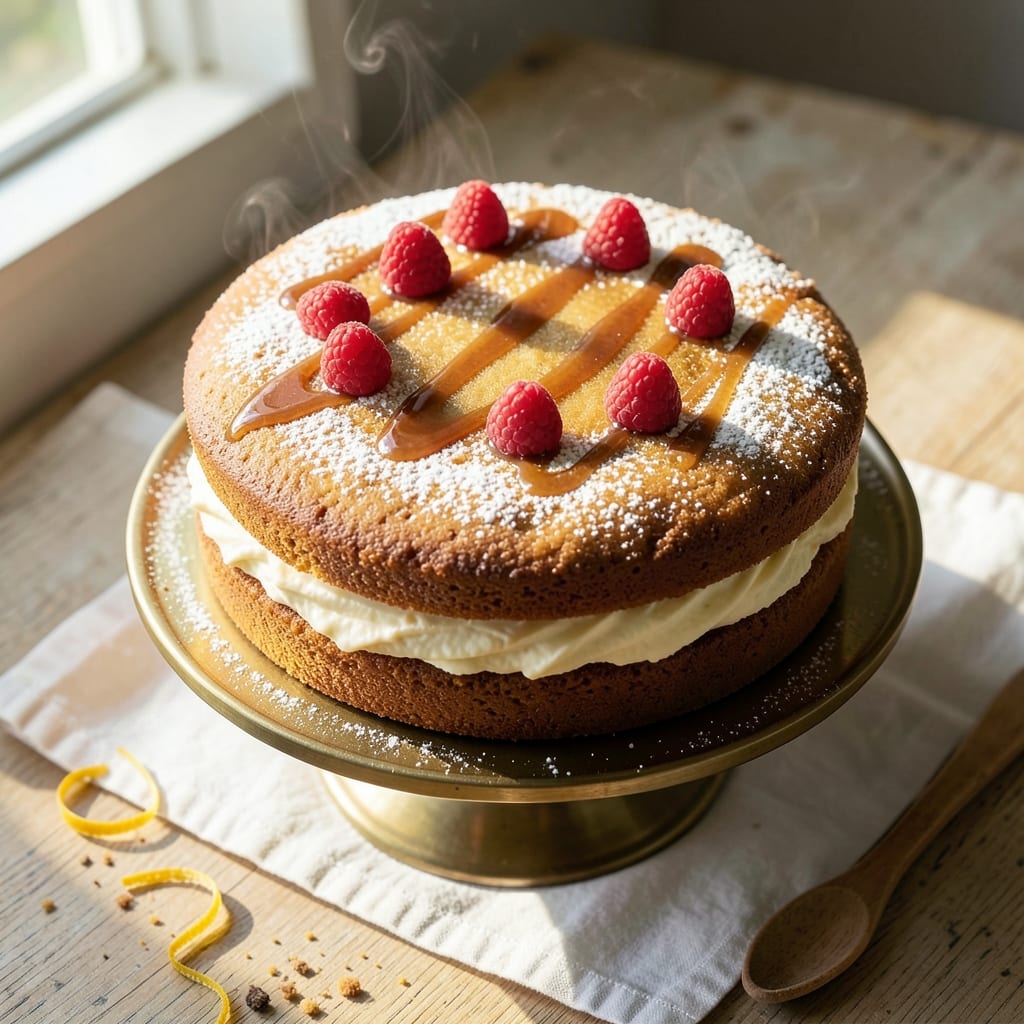
This 4 cups flour cake recipe delivers moist vanilla layers without overmixing—key to tender crumb and perfect rise. The secret lies in precise ingredient ratios and a gentle folding technique that keeps air incorporated while maintaining structure. I’ve tested this recipe dozens of times, and it consistently yields a cake that’s light, fluffy, and richly vanilla-scented with every slice.
What sets this recipe apart is its foolproof method: no electric mixer required, just a sturdy bowl and a wooden spoon. The butter is creamed with sugar until light and fluffy (critical for volume), and the flour is folded in just enough to maintain moisture. This approach eliminates dense, dry cake while ensuring each layer stays uniformly tender from edge to center.
By the time it emerges from the oven, you’ll have golden layers with a fine crumb and subtle vanilla aroma that fills your kitchen. The cake holds its shape when sliced, making it ideal for layering with cream cheese frosting or fresh berries. It’s the kind of dessert that feels special without requiring advanced techniques.
Perfect for birthdays, showers, or any occasion where you want a reliable, crowd-pleasing cake. The recipe scales easily for larger gatherings, and the simplicity ensures success even for beginners. Let’s get started—your first slice won’t disappoint.
Ingredients for 4 cups flour cake
Four cups flour, precise ratios, and a gentle touch create this foolproof vanilla cake.
| Ingredient | Amount | Notes |
|---|---|---|
| All-Purpose Flour 🌾 | 4 cups | Sifted for light texture |
| Unsalted Butter 🧈 | 1 cup | Room temperature, salted optional |
| Granulated Sugar 🍚 | 1 ½ cups | Superfine preferred for smoothness |
| Pure Vanilla Extract 🌿 | 2 tsp | Imitation-free for authentic flavor |
| Large Eggs 🥚 | 2 whole | Room temperature for even mixing |
| Whole Milk 🥛 | 1 cup | Room temperature for optimal blend |
| Baking Powder 🧂 | 2 tsp | Aluminum-free for consistent rise |
| Salt 🧂 | ½ tsp | Fine sea salt preferred |
| Vegetable Oil 🫒 | ¼ cup | Light neutral flavor profile |
The all-purpose flour must be sifted before measuring to eliminate lumps and ensure an airy crumb. For optimal results, purchase King Arthur or Gold Medal brands—they absorb moisture consistently. Unsalted butter is preferred to control salt levels, though you can use salted if your recipe calls for additional salt. Store flour in an airtight container to prevent moisture absorption, which can alter baking performance. The granulated sugar should be superfine if possible, though regular granulated works fine—just pulse it briefly in a food processor for smoother texture.
No vanilla extract? Vanilla bean paste works beautifully, or vanilla sugar at double the amount. Substitute milk with almond milk in a 1:1 ratio, though the cake may be slightly denser. For egg-free, replace eggs with 2 tbsp ground flaxseed + 6 tbsp water, rested for 5 minutes. The baking powder must be fresh—test by mixing 1 tsp with 2 tbsp hot water; it should foam immediately. If using salted butter, reduce the added salt to 0.25 tsp to avoid over-salting. Vegetable oil adds moisture without butter’s richness—use light olive oil for a subtle flavor twist if desired.
Store baked layers in an airtight container at room temperature for up to 3 days, or freeze for 3 months wrapped tightly in plastic. For best results, assemble the cake 1 day before serving—this allows flavors to meld and frosting to set properly. To prevent drying, place a damp paper towel under the cake when storing. The cake reheats beautifully in a 350°F oven for 5-7 minutes if served cold.
Why You'll Love This Recipe
- No Mixer Needed: I swear by this recipe when I’m too lazy to pull out the stand mixer—just a bowl and a wooden spoon. The butter gets creamed with sugar until it’s fluffy enough to hold its shape, and the eggs come in to bind it all without fuss. Honestly, the texture is so tender it’ll fool you into thinking you slaved over it.
- Vanilla Butter Bliss: That pure vanilla extract isn’t just for show—it infuses every bite with a warm, sweet aroma that makes this cake feel like a hug. The butter’s richness pairs perfectly with the sugar’s caramel notes, and the eggs add just enough structure to keep it from being too dense. Between us, this is the kind of cake that disappears faster than I can say “second slice.”
- Weeknight or Celebration: I make this for lazy Sundays and birthday parties—same recipe, different vibes. The simplicity means I can focus on decorating (or not) without stress, and the neutral flavor lets it play well with fruit compotes, whipped cream, or even a dusting of powdered sugar. My daughter’s school bake sale? This was the star. My exhausted self on a Tuesday night? Still my go-to.
- Fridge Magic: The leftovers? Chef’s kiss. This cake stays moist for days, so I’ll bake one batch and slice it for breakfast toast, lunchbox treats, or late-night cravings. And because it’s just flour, butter, sugar, and eggs, it’s one of those rare recipes where the ingredient list doesn’t break the bank. Three eggs, a stick of butter, and a cup of sugar later—I’ve got dessert covered.
Step-by-step instructions for moist vanilla layers without mixing
This no-mix method guarantees tender layers with perfect moisture every time.
Prepare the Dry Ingredients for Optimal Texture
In a large mixing bowl, combine the 4 cups All-Purpose Flour, 2 tsp Baking Powder, and 0.5 tsp Salt. Sift the mixture together twice through a fine-mesh sieve to aerate the flour and eliminate any lumps. This step is critical for achieving that signature light, tender crumb—don't skip it. Use a rubber spatula to gently break up any remaining clumps by hand, ensuring an even distribution of leavening agents throughout.
The baking powder needs to be evenly dispersed so your cake rises uniformly. I like to press the mixture down lightly with my fingers to create a fine, powdery base before adding wet ingredients. This prevents pockets of undissolved baking powder that could cause uneven rising. Keep the bowl ready on your counter—you'll be adding ingredients quickly to maintain room temperature.
Cream Butter and Sugar for Maximum Moisture
In a separate, slightly larger mixing bowl, combine the 1 cup Unsalted Butter (at room temperature) and 1.5 cups Granulated Sugar. Using an electric mixer on medium speed, beat the mixture for 3-4 minutes until it's light and fluffy, nearly doubling in volume. You'll see the color lighten slightly as air is incorporated—this is what creates that tender, moist crumb in the final cake.
Here's the thing—room temperature butter is non-negotiable. If your butter has any cold spots, the mixture won't emulsify properly, leading to dense layers. Test it by pressing your finger into the butter: it should leave a slight indentation but hold its shape. If it's too soft, chill the bowl for 10 minutes before proceeding. The sugar should dissolve completely, leaving no grainy texture when you taste it.
Incorporate Wet Ingredients for Perfect Binding
Add the 2 whole Large Eggs (at room temperature) to the butter-sugar mixture, one at a time, beating well after each addition. Then add the 2 tsp Pure Vanilla Extract and 1 cup Whole Milk, mixing on low speed just until combined. Scrape down the sides of the bowl with a spatula to ensure all ingredients are fully incorporated—this prevents dry spots in your batter.
The eggs and milk should blend smoothly without overmixing. You're looking for a thick, pourable consistency that still has some body to it. If the mixture looks too thin, add 1 tablespoon more of the All-Purpose Flour from your dry ingredients. The key here is to maintain the right balance—too much mixing develops gluten, which makes the cake tough. Stop mixing as soon as all ingredients are just combined.
Combine Wet and Dry Ingredients Gently
With the mixer on low speed, gradually add about one-third of the dry ingredient mixture to the wet ingredients. Mix just until combined, then add another third and mix again. Finish by adding the remaining dry ingredients and mixing on low speed for 15-20 seconds until just combined. The batter should be thick but still pourable—if it's too thick, add 1 tablespoon of the Whole Milk to loosen it.
This layering technique prevents overmixing while ensuring even distribution of ingredients. You'll see some flour streaks remain, and that's perfect. Overmixing develops gluten, which makes cake dense and chewy rather than tender. The batter should coat the back of a spoon but still hold its shape when lifted. At this point, the batter is ready for the oven—no resting time is needed, which makes this method particularly convenient.
Bake for Perfectly Moist Layers
Preheat your oven to 350°F and prepare two 8-inch round cake pans by greasing them thoroughly with 0.25 cup Vegetable Oil and lining the bottoms with parchment paper circles. Divide the batter evenly between the two pans, smoothing the tops with a spatula. Bake for 25-30 minutes, or until a toothpick inserted into the center comes out clean and the tops spring back when gently pressed.
Don't open the oven during the first 20 minutes of baking—this allows the cake to set properly without collapsing. The edges should be golden brown while the centers remain slightly pale. For even baking, rotate the pans halfway through the baking time. As soon as the cakes are done, transfer them to a wire rack to cool completely before frosting. This cooling period is crucial—it allows the layers to set properly and prevents them from becoming soggy when you add frosting later.
Pro Tips For Making 4 Cups Flour Cake
- MEASURE FLOUR LIKE A PRO: Stop scooping straight from the bag—it packs differently every time. Instead, spoon flour into the dry measuring cup and level it off with a knife. I learned this the hard way when my cake turned out dense and heavy.
- CREAM BUTTER AND SUGAR UNTIL PALE: Don’t just mix it—beat the butter and sugar until it’s light and almost white. This incorporates air, which makes the cake fluffy. I used to stop when it looked creamy, but now I wait for that pale, ribbon-like consistency.
- DON’T OVERMIX THE BATTER: Once you add the flour, mix just until combined. Overmixing develops gluten, which makes the cake tough. Fold gently with a spatula—think "just enough to disappear the flour streaks," not "until it’s smooth."
- LET THE CAKE REST BEFORE BAKING: If your recipe allows it, let the batter sit for 10–15 minutes after mixing. This lets the flour absorb moisture, preventing a dry crumb. I was skeptical until I tried it—now it’s non-negotiable.
Perfect pairings for these flavors
Classic Cream Cheese Frosting
This vanilla cake shines with a 3-ingredient cream cheese frosting that balances sweetness with tangy richness. Mix 8 oz cream cheese (softened), ½ cup unsalted butter, 3 cups powdered sugar, and 1 tsp vanilla extract until smooth. Spread between layers and on top—it pairs perfectly with the cake’s tender crumb. For extra flair, dust with powdered sugar or add crushed vanilla wafers. 🥛
Fresh Berry Compote
Swap frosting for a bright berry compote that cuts through the cake’s richness. Simmer 1 cup mixed berries (strawberries, blueberries, raspberries) with 2 tbsp sugar and 1 tbsp lemon juice until thickened (5-7 minutes). Cool completely before spreading. This works especially well with summer berries or frozen berries thawed overnight. 🍓
Whipped Cream & Chocolate Ganache
For a lighter option, top with fluffy whipped cream and a drizzle of dark chocolate ganache. Whip 1 cup heavy cream to stiff peaks, then fold in ½ cup chocolate chips melted with ¼ cup heavy cream. Drizzle over cooled cake layers and garnish with chocolate shavings or mint leaves. This combo feels decadent but stays light. 🍫
Caramel Drizzle
Add a salted caramel drizzle for depth. Heat 1 cup granulated sugar until melted, then whisk in ¼ cup heavy cream and 2 tbsp butter. Cool slightly and drizzle over the cake. Sprinkle with flaky sea salt for contrast. This elevates the cake to restaurant-quality without extra effort. 🧂
Citrus Glaze
A zesty citrus glaze brightens every bite. Mix 1 cup powdered sugar, 2 tbsp lemon or orange juice, and 1 tsp zest. Drizzle over the cake while still slightly warm for a glossy finish. The acidity balances the vanilla’s sweetness beautifully. 🍊
Spiced Whipped Cream
Infuse whipped cream with warm spices for a cozy twist. Add ½ tsp cinnamon and ¼ tsp cardamom to the whipped cream before folding. Top with a sprinkle of ground cinnamon for a festive touch. This works especially well for fall or winter celebrations. 🌿
Nutrition facts
Frequently asked questions
Can I substitute all-purpose flour with cake flour in this recipe?
Yes, but with adjustments! Replace the 4 cups all-purpose flour with 3 cups cake flour plus 1 cup all-purpose flour to maintain structure. Cake flour has less protein, so adding some all-purpose helps prevent crumbling. Sift both flours together for best results.
Why does my cake turn out dense instead of tender?
Overmixing or cold ingredients are the usual culprits. Always mix wet and dry ingredients just until combined—stop when flour streaks disappear. Also ensure your butter is room temperature (press a finger into it; it should leave a slight indentation). Cold butter won't cream properly, leading to dense layers.
Can I bake this cake in a different pan size?
For an 8-inch pan, use the full recipe. For a 9-inch pan, reduce baking time by 2-3 minutes (check at 22 minutes). For a 6-inch pan, increase baking time by 3-5 minutes. Adjust oven temp to 325°F if using dark-colored pans to prevent over-browning.
How do I store leftover cake layers?
Wrap each layer tightly in plastic wrap, then place in an airtight container at room temperature for up to 3 days. For longer storage, freeze layers for 3 months. Thaw overnight in the fridge before frosting. Never freeze frosted cakes—the frosting can become grainy.
Can I make this cake without eggs?
Yes! Replace the 2 eggs with 2 tbsp ground flaxseed + 6 tbsp water (let sit for 5 minutes to thicken). For a lighter texture, use ½ cup unsweetened applesauce or ½ cup Greek yogurt. The cake may be slightly denser but will still be moist.