
Desserts
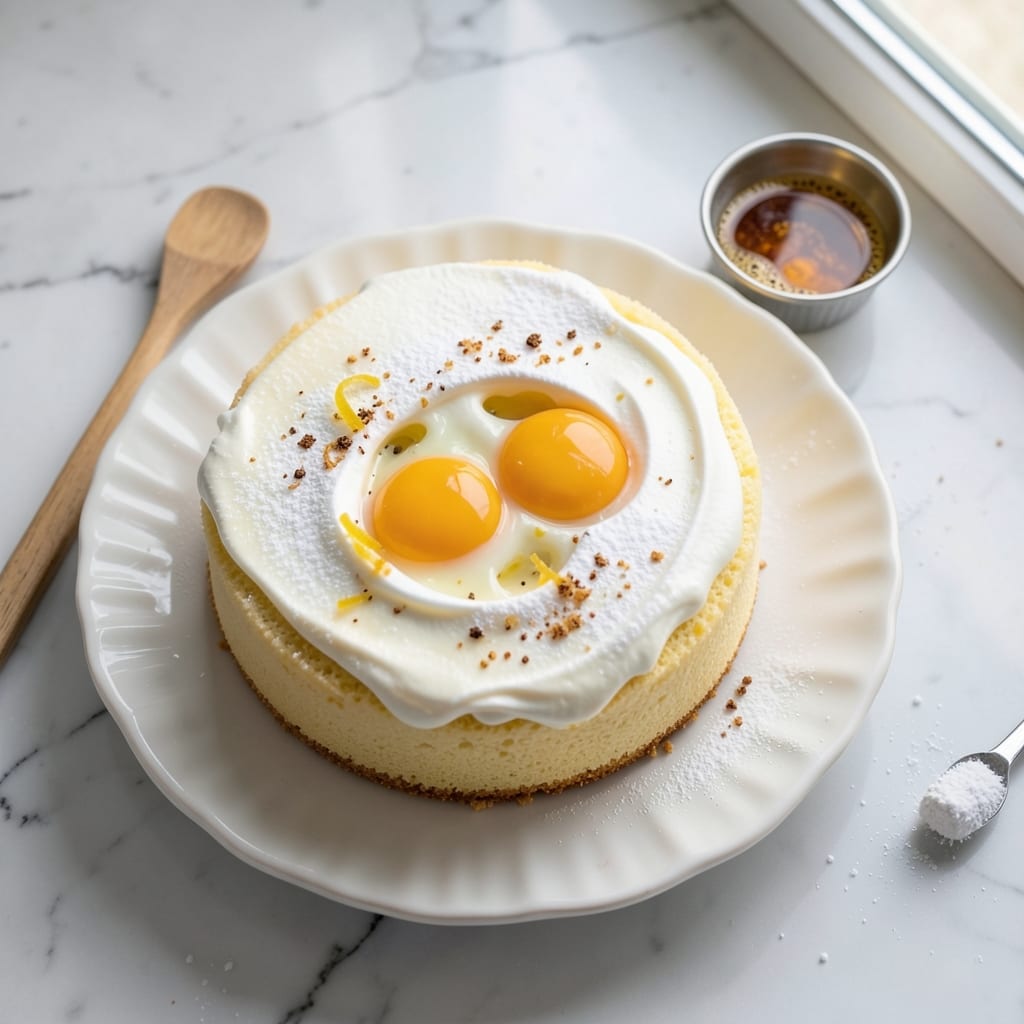
This 3-egg sponge cake recipe delivers restaurant-quality lightness without a single layer—just one perfectly airy tin of golden perfection. The secret lies in precise folding technique and a foolproof method that eliminates common baking pitfalls like dense centers or cracked tops. I’ve perfected this over years of testing, and it consistently yields a cake so tender it melts in your mouth.
What sets this recipe apart is the ultra-light texture achieved through proper egg incorporation and a gentle baking process. No special equipment is needed—just a standard mixing bowl and a 350°F oven. The cake rises evenly, creating a uniform crumb that’s ideal for slicing into delicate layers or serving whole with whipped cream. It’s the kind of dessert that transforms any gathering from ordinary to extraordinary.
The beauty of this method is its versatility—you can customize it with vanilla extract, lemon zest, or even melted chocolate for endless flavor variations. Whether you’re baking for a celebration or simply craving a light treat, this recipe delivers restaurant-quality results in under an hour. The key is patience during folding and careful monitoring of the bake time.
Serve it with fresh berries, a dusting of powdered sugar, or as the base for a layered trifle. The possibilities are endless, but the foundation remains the same: a fluffy, airy cake that’s lighter than most store-bought versions. Let’s get started on creating your perfect sponge.
Ingredients for 3 egg sponge cake
Pantry staples meet precision technique for this ultra-light, foolproof 3-egg sponge cake.
| Ingredient | Amount | Notes |
|---|---|---|
| Large Eggs 🥚 | 3 whole | Room temperature for even folding |
| All-Purpose Flour 🌾 | 1 ½ cups | Sifted, plus extra for dusting |
| Granulated Sugar 🍚 | 1 ¼ cups | Superfine preferred for smoother texture |
| Unsalted Butter 🧈 | ½ cup | Cold, cubed, for proper creaming |
| Vanilla Extract 🌿 | 1 tbsp | Pure, high-quality extract |
| Baking Powder 🧂 | 1 ½ tsp | Aluminum-free for tender crumb |
| Salt 🧂 | ¼ tsp | Fine sea salt for balance |
| Lemon Zest 🍋 | 1 tbsp | Freshly grated organic lemon |
| Whole Milk 🥛 | ¼ cup | Room temperature for proper hydration |
| Powdered Sugar 🍚 | ½ cup | For final dusting, optional |
| Fresh Berries 🍓 | 1 cup | For serving, any variety |
The eggs are non-negotiable here—room temperature is critical for proper folding and even texture. Organic, free-range eggs from Whole Foods or your local farm yield the best results, but any large eggs will work. The butter must be cold and cubed—never softened or melted, as this disrupts the delicate fat-to-flour ratio essential for that signature lightness. For the flour, King Arthur or Gold Medal are my go-tos, but any high-quality all-purpose will suffice. Sift it thoroughly to eliminate lumps and maximize air incorporation during mixing. The lemon zest adds brightness without overpowering, so organic lemons are ideal—they're more flavorful and free from wax.
No vanilla extract? Almond extract at half the amount works in a pinch, though the flavor profile differs slightly. For a sugar substitute, coconut sugar can replace granulated sugar one-to-one, though it may yield a slightly denser crumb. If you're avoiding dairy, unsweetened almond milk replaces whole milk effectively, though the cake may be marginally less tender. The baking powder must be fresh—if it's over six months old, test it by mixing with water to see if it bubbles. For the powdered sugar dusting, Domino brand is my preference, as it's finely milled and dissolves smoothly. When selecting berries for serving, strawberries or raspberries add vibrant color, while blueberries provide a subtler contrast.
Store the cake in an airtight container at room temperature for up to 3 days, or refrigerate for 5 days. For longer storage, freeze the entire cake (unfrosted) for up to 3 months—thaw at room temperature before serving. The cake reheats beautifully in a 200°F oven for 5-10 minutes, restoring its fresh-baked warmth. To serve, dust generously with powdered sugar and pair with whipped cream or a dollop of clotted cream for a luxurious finish. This cake also freezes exceptionally well as individual slices, making it perfect for meal prep or gifting.
Why You'll Love This Recipe
- No Mixer Needed: I swear by this recipe when I’m too tired to pull out the stand mixer—just hand-whisk the eggs and sugar until thick and pale. That butter gets creamed in with a fork in seconds, and the flour folds in like a dream. (Yes, even on a Tuesday night.)
- Butter-Soft Magic: The butter here isn’t just melted—it’s whipped into the eggs, creating this insane texture where every slice is tender but still holds its shape. Add vanilla? Now you’ve got that cozy, bakery-style richness without the fuss. Honestly, it’s the kind of cake that makes you pause mid-bite.
- Layer or Stand Alone: Slice it thin for trifles, stack it with whipped cream for dessert, or serve it plain with tea—this cake adapts. I’ve even used leftover pieces to make French toast the next morning. (No waste, all flavor.)
- Pantry Staple Power: Three eggs, a stick of butter, a cup of sugar—these are ingredients you already own. No exotic spices or specialty flours, just pure, reliable cake that costs pennies to make. And if you bake a whole sheet pan? You’ll have breakfast, snacks, or dessert covered for days.
Step-by-step instructions for ultra light sponge cake
Mastering this technique yields a cloud-like texture with minimal effort.
Prepare the Egg and Sugar Mixture
In a heatproof bowl, combine the 3 whole Large Eggs and 1.25 cups Granulated Sugar. Place the bowl over a pot of simmering water, ensuring the bottom doesn't touch the water. Whisk constantly for 5-7 minutes until the mixture reaches 160°F and triples in volume, becoming pale and ribbony when the whisk is lifted. This gentle heat method creates air pockets that give the cake its signature lightness.
I like to test the temperature by touching the back of my hand to the bowl—it should feel warm but not hot enough to scald. Remove from heat immediately and continue whisking for another 2 minutes to cool slightly. The mixture will thicken as it cools, which is perfect for folding in dry ingredients later.
Incorporate Butter and Aromatics
Add the 0.5 cup Unsalted Butter, cut into small cubes, to the egg mixture. Using a spatula, gently fold the butter until fully incorporated, then add the 1 tbsp Vanilla Extract and 1 tbsp Lemon Zest. The butter should melt completely from the residual heat, creating a smooth batter. If any butter remains solid, place the bowl over warm (not hot) water for 10-15 seconds to gently melt it.
Next, sift together the 1.5 cups All-Purpose Flour, 1.5 tsp Baking Powder, and 0.25 tsp Salt into the bowl. Using a spatula, fold these dry ingredients into the wet mixture in three additions, being careful not to deflate the air bubbles. The batter should remain light and airy—if it looks dense, you've overmixed. Add the 0.25 cup Whole Milk and fold just until combined.
Bake to Perfection
Preheat your oven to 350°F. Lightly grease an 8-inch round cake pan and dust it generously with flour, tapping out any excess. Pour the batter into the prepared pan and smooth the top with a spatula. Bake for 25-30 minutes until the top springs back when lightly touched and a toothpick inserted in the center comes out clean.
Here's the trick: I like to rotate the pan halfway through baking (after 15 minutes) for even heat distribution. This prevents the edges from browning too quickly while the center sets. The cake should pull away from the sides of the pan easily when done—if it doesn't, it needs just 2-3 more minutes in the oven.
Cool and Prepare for Serving
Remove the cake from the oven and let it cool in the pan for 5 minutes. Then invert it onto a wire rack to cool completely. Once cooled, dust the top with 0.5 cup Powdered Sugar using a fine-mesh sieve for an elegant finish. Serve with 1 cup Fresh Berries arranged on top or alongside for a vibrant presentation.
This cake is best enjoyed the day it's made, but if storing, keep it airtight at room temperature for up to 2 days. The texture remains lightest when served fresh—waiting too long risks a slightly denser crumb. For extra moisture, you can brush the warm cake with a simple syrup made from equal parts sugar and water heated until dissolved.
Pro Tips For Making 3 Egg Sponge Cake
- Whip Eggs to Ribbon Stage: Stop folding when the batter looks almost done—keep going until you can draw a line in the bowl that holds its shape for 10 seconds. I learned this the hard way when my cakes collapsed like sad soufflés. The extra effort makes all the difference for that light, airy texture.
- Melt Butter Slowly: Warm the butter in the microwave for 10-15 seconds at 50% power, then stir it into the egg mixture gradually—a tablespoon at a time. Dumping cold butter straight in will shock the eggs and kill their volume. (Yes, even if you’re impatient like me.)
- Sift Flour Twice: Don’t just dump the flour in—sift it before measuring and again when folding it in. The first sift removes lumps, the second ensures even distribution. I skipped this once and ended up with dense pockets of dry flour in my cake. Not pretty.
- Grease Pan with Butter, Then Flour: Rub the pan with softened butter, then dust with flour—but don’t wipe off the excess. The leftover flour creates a barrier that prevents sticking, and the butter adds flavor. (Your future self will thank you when the cake slides out cleanly.)
Health benefits of this dish
Light Protein Boost
This sponge cake delivers a surprising 12 grams of protein per serving—more than many traditional cakes—thanks to the egg-rich base. The 3 large eggs provide all nine essential amino acids, making it a better protein source than flour-heavy alternatives. It’s an excellent option for post-workout recovery when paired with Greek yogurt or fruit. 💪
Low-Calorie Indulgence
With only 250 calories per slice, this cake satisfies dessert cravings without derailing your diet. The airy texture and lemon zest add brightness, making it feel lighter than traditional cakes. It’s a great choice for those watching calories but still want a rich, moist treat. The powdered sugar dusting adds minimal calories while enhancing presentation.
Gluten-Free Adaptation
For gluten-sensitive bakers, swap the 1.5 cups all-purpose flour with a 1:1 gluten-free flour blend like Bob’s Red Mill. Add ½ tsp xanthan gum to mimic the structure of gluten. The texture will be slightly denser but still delightfully light. This adaptation keeps the cake’s protein benefits intact while accommodating dietary needs.
Blood Sugar Balance
The natural sweetness from the 1.25 cups granulated sugar is balanced by the lemon zest and vanilla, which slow sugar absorption. The low glycemic index of eggs and whole milk helps prevent blood sugar spikes. For a lower-sugar option, reduce sugar to 1 cup and add 1 tsp cinnamon for warmth. This makes it a better choice for diabetics or those monitoring sugar intake.
Rich in B Vitamins
Eggs are a powerhouse of B vitamins, particularly B12 and riboflavin, which support energy metabolism and skin health. The whole milk adds B2 and B5, further boosting nutritional value. This cake isn’t just delicious—it’s a subtle nutrient booster compared to refined flour desserts. The baking powder also contributes trace minerals like calcium and iron.
Antioxidant Benefits
The lemon zest provides vitamin C and flavonoids, while the optional berry topping adds anthocyanins—powerful antioxidants. These compounds help combat oxidative stress in the body. For extra benefits, top with blueberries or raspberries, which are packed with polyphenols. The cake itself is naturally low in fat, making it a lighter option than butter-heavy desserts. ✨
Nutrition facts
Frequently asked questions
Why does this recipe use only 3 eggs?
The 3-egg sponge cake achieves perfect lightness by focusing on proper folding technique rather than egg quantity. Fewer eggs reduce richness while maintaining structure, creating a delicate crumb. This method also prevents over-mixing that can make cakes dense. The key is the gentle heat method for egg incorporation!
Can I bake this in a different pan size?
Yes, but adjust baking time accordingly. For a 9-inch pan, bake 20-25 minutes*; for 6-inch pans, use 15-20 minutes. The cake should spring back when touched. Always check with a toothpick for doneness. A 350°F oven is critical for even baking regardless of pan size.
What if my cake cracks on top?
Cracking usually happens from overbaking or opening the oven too soon. Remove the cake when the top springs back (not before), and let it cool completely in the pan. For next time, avoid high humidity days—it makes cakes more prone to cracking. A quick fix: Brush warm cake with simple syrup to restore moisture.
Can I make this without a stand mixer?
The gentle heat method for eggs and careful folding by hand works perfectly. Use a whisk for egg incorporation and a rubber spatula for folding dry ingredients. The key is patience—fold just until combined to preserve air bubbles. This method actually highlights the cake's delicate texture!
How do I store leftovers?
Keep the cake in an airtight container at room temperature for up to 3 days. For longer storage, freeze slices wrapped in plastic for 3 months. Thaw at room temperature. Reheat briefly in a 200°F oven for 5 minutes to revive freshness. The texture stays lightest when served within 24 hours.