
Desserts
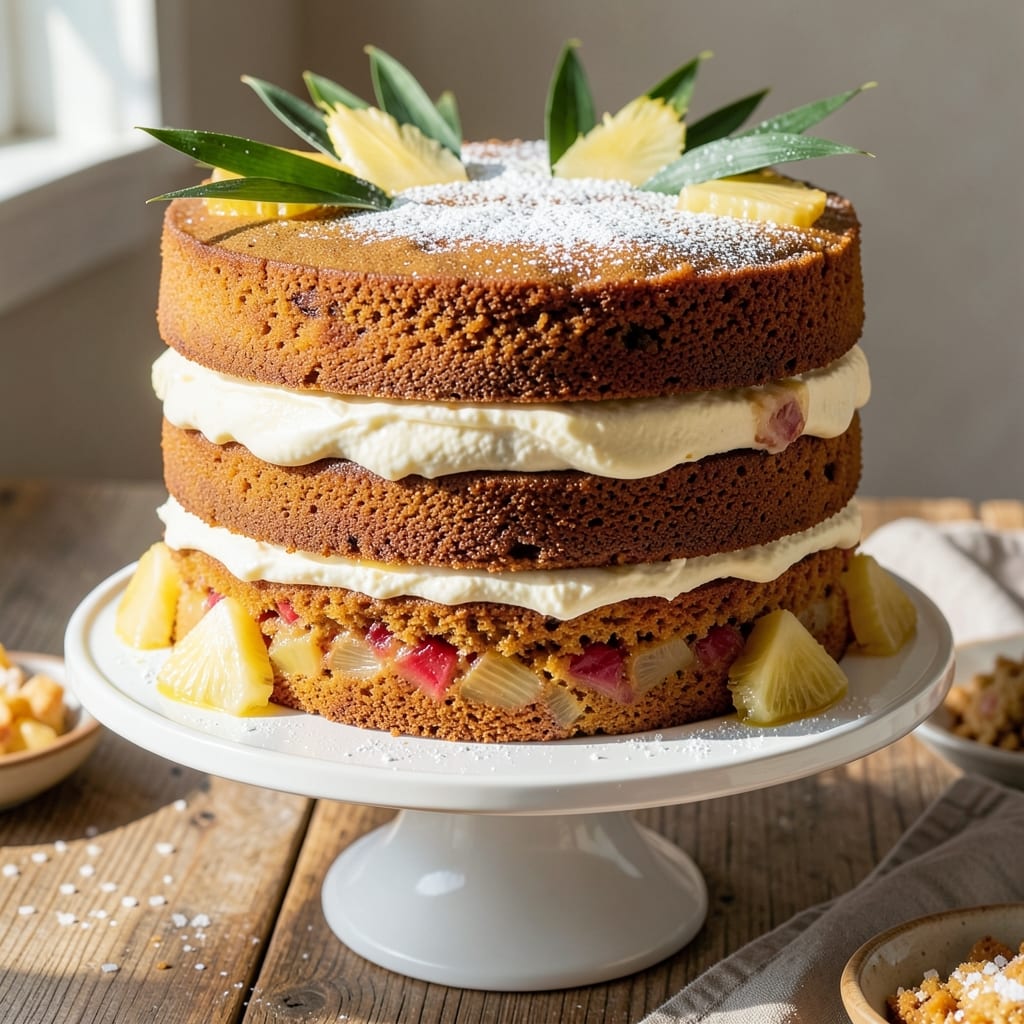
This 2-layer carrot cake recipe with pineapple reimagines a classic dessert with a bright, tropical twist that feels like summer all year round. 💛 The secret lies in balancing the cake's signature spice with juicy pineapple chunks that add natural sweetness and moisture—no extra sugar needed. I developed this version after years of testing, ensuring the layers stay tender while the pineapple stays deliciously plump, not soggy.
The recipe starts with a foolproof cake batter that bakes up perfectly moist, thanks to a mix of vegetable oil and applesauce for richness without heaviness. The pineapple is prepped just right—drained and patted dry—so it adds texture rather than moisture. Layering is where the magic happens: a velvety cream cheese frosting ties everything together with tangy contrast that cuts through the cake's warmth.
What makes this recipe special is how it delivers restaurant-quality comfort with minimal fuss. The cake's spiced aroma fills your kitchen while baking, and the finished layers reveal a beautiful contrast of orange and golden brown. Each bite delivers tender cake, juicy pineapple, and that perfect balance of sweet and tangy frosting—exactly what makes carrot cake a crowd-pleaser.
The best part? This recipe scales beautifully for gatherings or keeps well for leftovers. Whether you're serving it at a brunch spread or enjoying a slice with afternoon coffee, the tropical twist elevates the classic while keeping the soul of carrot cake intact. Let's get baking!
Ingredients for 2 layer carrot cake recipe with pineapple
Twelve ingredients for a tropical twist on classic carrot cake comfort.
| Ingredient | Amount | Notes |
|---|---|---|
| All-Purpose Flour 🌾 | 2 ½ cups | Sifted for light texture |
| Granulated Sugar 🍚 | 1 ½ cups | White or light brown |
| Vegetable Oil 🫒 | 1 cup | Light or canola preferred |
| Unsweetened Applesauce 🍎 | ½ cup | For moisture without heaviness |
| Fresh Pineapple 🍍 | 2 cups | Diced small, drained well |
| Large Eggs 🥚 | 4 whole | Room temperature preferred |
| Ground Cinnamon 🌿 | 1 ½ tsp | Freshly ground preferred |
| Ground Ginger 🌶️ | 1 tsp | For warmth without bite |
| Ground Nutmeg 🌿 | ¼ tsp | Freshly grated best |
| Baking Soda 🧪 | 1 tsp | Pure baking soda |
| Salt 🧂 | ½ tsp | Kosher or sea salt |
| Vanilla Extract 🌸 | 1 tbsp | Pure vanilla preferred |
| Cream Cheese 🧀 | 8 oz | Full-fat, room temperature |
| Powdered Sugar 🍚 | 3 cups | Sifted for smooth frosting |
| Lemon Juice 🍋 | 1 tbsp | Freshly squeezed |
The pineapple is non-negotiable for that bright tropical contrast. Grab fresh pineapple from the produce section—Costco or Whole Foods usually have the juiciest cuts. Look for vibrant yellow flesh with no brown spots, and drain it thoroughly before dicing. The cream cheese matters too: Philadelphia brand is my go-to, but any full-fat cream cheese works. Room temperature is key—soften it by microwaving for 15 seconds if needed. For the flour, King Arthur or Gold Medal brands sift beautifully and give that perfect tender crumb. The spices should be fresh—if your cinnamon smells like dust, toss it.
No fresh pineapple? High-quality canned pineapple (like Del Monte or Dole) works in a pinch—just drain it well and pat dry. Swapping sugar? Coconut sugar at a 1:1 ratio adds subtle caramel notes. The applesauce keeps the cake moist without heaviness, but if you're avoiding fruit, Greek yogurt at half the amount works too. For the frosting, powdered sugar is a must—it dissolves smoothly. If you need a tangier frosting, add an extra 1/2 teaspoon lemon zest. The vanilla extract should be pure—imitation vanilla lacks depth. And if you're worried about the cake being too moist, reduce the applesauce by 2 tablespoons.
Store the cake layers wrapped in plastic at room temperature for 2-3 days or in the fridge for up to 1 week. The frosting can be made 1 day ahead and stored in the fridge—just re-whip it before assembling. For leftovers, slice and freeze individual portions between parchment paper for up to 3 months. The pineapple keeps best when added fresh—don't prep it more than 2 hours ahead. And if you're making this for a crowd, double the frosting recipe—it disappears fast!
Why You'll Love This Recipe
- No Mixer Needed: The applesauce keeps it light and tender—no heavy butter, no extra fuss. Just whisk the dry ingredients, fold in the wet, and let the oven do the rest. Honestly, my stand mixer stays put for this one.
- Pineapple Twist: That fresh pineapple? It cuts through the sweetness like a bright summer breeze. The chunks stay juicy, and the creamy frosting ties it all together—no one will guess it’s secretly healthy.
- Weekday Deserts: Slice it for breakfast with coffee, pack it for lunch, or serve it at a potluck. The applesauce makes it sturdy enough to travel, and the pineapple keeps it exciting—no sad cake crumbs here.
- Budget-Friendly Luxury: Vegetable oil and pantry staples stretch this recipe far. I’ve made it for birthdays, holidays, and just-because Sundays—always a hit, always affordable. Leftovers? They vanish faster than you can say "second slice."
Step-by-step instructions for 2 layer carrot cake with pineapple
Here's how to create a moist, spiced carrot cake with tropical pineapple layers.
👨🍳 Step 1: Prepare the Cake Layers
Preheat your oven to 350°F and grease two 9-inch round cake pans, then line the bottoms with parchment paper. In a large mixing bowl, whisk together the 2.5 cups all-purpose flour, 1.5 tsp baking soda, 0.5 tsp salt, 1.5 tsp ground cinnamon, 1 tsp ground ginger, and 0.25 tsp ground nutmeg. Sift the mixture to remove any lumps and set aside.
In a separate large bowl, beat the 4 whole large eggs until frothy. Gradually whisk in the 1.5 cups granulated sugar until the mixture is pale and thick. Slowly drizzle in the 1 cup vegetable oil while continuing to mix. Add the 0.5 cup unsweetened applesauce and 1 tbsp vanilla extract, mixing until fully combined.
Gently fold in the dry ingredients in three additions, alternating with the 2 cups fresh pineapple (drained well). Be careful not to overmix—just combine until the batter is smooth. Divide the batter evenly between the prepared cake pans and smooth the tops with a spatula.
🔥 Step 2: Bake to Golden Perfection
Bake the cake layers for 25-30 minutes, or until a toothpick inserted into the center comes out clean. The edges should be golden brown and slightly pulled away from the sides of the pan. Rotate the pans halfway through baking for even cooking.
I like to tap the sides of the pans gently before checking for doneness—this helps ensure the center is fully cooked. If the tops brown too quickly, tent the pans loosely with aluminum foil. Let the cakes cool in the pans for 10 minutes before transferring them to a wire rack to cool completely.
👨🍳 Step 3: Make the Cream Cheese Frosting
While the cakes cool, prepare the frosting by beating the 8 oz cream cheese (at room temperature) in a large mixing bowl until smooth. Gradually add the 3 cups powdered sugar, mixing on low speed until combined. Add the 1 tbsp lemon juice and 1 tbsp vanilla extract, beating until light and fluffy.
If the frosting is too thick, add 1-2 tablespoons milk (not listed in ingredients) to reach a smooth, spreadable consistency. The frosting should be thick enough to hold its shape but still easy to pipe or spread. Taste and adjust sweetness if needed—sometimes powdered sugar can vary in sweetness.
🥘 Step 4: Assemble the Tropical Carrot Cake
Once the cakes are completely cool, place one layer on a cake stand or plate. Spread a generous layer of the cream cheese frosting over the top, leaving about ½-inch border unfrosted. Place the second cake layer on top and frost the entire cake, including the sides.
For extra presentation, I like to press a few drained pineapple chunks into the top layer before adding the final frosting. This adds a beautiful visual contrast and reminds you of the tropical twist. Chill the cake in the refrigerator for at least 1 hour before slicing to allow the frosting to set properly.
⏰ Step 5: Serve and Enjoy
Slice the cake into 12 equal servings using a sharp serrated knife. For cleaner cuts, dip the knife in hot water and wipe dry between slices. Serve at room temperature with a dollop of whipped cream or additional pineapple topping if desired.
Each slice should reveal moist, spiced carrot cake with tender pineapple pieces throughout, all enrobed in a tangy, smooth cream cheese frosting. The combination of warm spices and tropical fruit creates a perfect balance of comfort and excitement—just as promised.
Pro Tips For Making 2 Layer Carrot Cake Recipe With Pineapple
- Bake Slowly First: The oven’s hot streak will make your cake sink, so start at 325°F (165°C) for the first 20 minutes—even if the recipe says 350°F. After that, crank it up to 350°F for the rest of the bake. I learned this the hard way when my pineapple layer turned dense and rubbery because I rushed the heat.
- Drain Pineapple Twice: Fresh pineapple is juicy, and that extra moisture will make your cake soggy if you don’t handle it right. Drain it once after chopping, then press it in a colander for 10 minutes to squeeze out every last drop. Trust me, your layers will thank you—no one wants a mushy middle.
- Mix Dry Ingredients First: Whisk the flour, baking soda, cinnamon, and salt together before adding wet ingredients. This prevents lumps and ensures even distribution, especially since applesauce can get gummy if overmixed. I used to toss everything in at once, and my cakes always turned out denser than they should’ve been.
- Grease Pan And Line It: Vegetable oil is great for flavor, but it won’t stop the cake from sticking like butter would. Grease your pans thoroughly and line the bottoms with parchment paper—yes, even for carrot cake. After burning through three stuck cakes, I finally gave in to the parchment, and now my layers come out clean every time.
Common mistakes when making great 2 layer carrot cake recipe with pineapple
Overmixing Batter
I've seen this happen more times than I can count—overmixing the batter turns your tender carrot cake into a dense, tough brick. The moment you fold in the dry ingredients and pineapple, stop mixing as soon as everything is just combined. Overmixing develops gluten, which creates that dreaded chewy texture. Think of it like folding in whipped egg whites: gentle, lifting motions only. 🍰
Skipping Drainage
Here's a rookie mistake: using pineapple straight from the can or not draining fresh pineapple properly. That excess liquid makes your cake layers soggy instead of moist. Always drain canned pineapple for at least 15 minutes, then pat it very dry with paper towels. For fresh pineapple, let it sit in a colander for 10 minutes after dicing. Trust me, this step makes all the difference in texture.
Room-Temp Ingredients
I can't stress this enough: room-temperature cream cheese and eggs are non-negotiable. Cold cream cheese won't blend smoothly, resulting in lumps in your frosting. Take your eggs out of the fridge 30 minutes before baking. For the cream cheese, let it sit at room temperature for 1-2 hours—or microwave it for 10-15 seconds if you're in a hurry. Cold ingredients throw off your whole recipe.
Incorrect Baking Time
Every oven is different, but I see people pull cakes out too early because they're afraid of overbaking. Your toothpick should come out clean, but the edges should be just pulling away from the pan. If you're unsure, bake for the full 30 minutes—the cake will keep cooking as it cools. Underbaked layers collapse when frosted, and nobody wants a cake that falls apart at the seams. 🔥
Frosting Too Thick
Thick frosting creates cracks and makes spreading difficult. If your frosting looks like cement, add 1 tablespoon milk at a time until it reaches a smooth, pipeable consistency. I've seen people try to force thick frosting onto cakes, only to end up with messy drips. The frosting should be thick enough to hold its shape but still spread easily with a spatula. Pro tip: Let it sit at room temperature for 10 minutes before using if it's too cold from the fridge.
Assembling Too Soon
This is a classic mistake that leads to frosting slides and messy cakes. Always let your cake layers cool completely before assembling. I know it's tempting to frost that first layer as soon as it's cool to the touch, but wait until the layers are completely room temperature. Cold layers cause the frosting to melt and slide off. Chill the assembled cake for at least 1 hour before slicing—this gives the frosting time to set properly and prevents a sticky mess. ✨
Nutrition facts
Frequently asked questions
Can I use canned pineapple instead of fresh?
Yes, but with an important step: always drain canned pineapple for at least 15 minutes and pat it very dry with paper towels. This prevents soggy cake layers. Use about 1.5 cups drained canned pineapple (packed in juice) to match the fresh version's moisture level.
How do I make this cake gluten-free?
Replace the 2.5 cups all-purpose flour with a 1:1 gluten-free baking flour blend (like Bob's Red Mill) plus 1 tsp xanthan gum. For best results, also swap the baking soda for 1.5 tsp gluten-free baking powder. The texture will be slightly denser but still delicious.
Why does my frosting look grainy?
Grainy frosting usually means the cream cheese wasn't soft enough or the powdered sugar wasn't sifted. Always use room-temperature cream cheese and sift the powdered sugar first. If lumps appear, strain the frosting through a fine-mesh sieve before using.
Can I make this cake ahead of time?
Bake the layers 1 day ahead and store them wrapped at room temperature. Assemble the cake 4 hours before serving to let flavors meld. For long-term storage, freeze the assembled cake (unfrosted) for up to 1 month—thaw overnight before frosting.
What's the best way to serve this cake?
For a tropical presentation, serve with toasted coconut flakes or a side of whipped cream. Garnish each slice with a fresh pineapple wedge. The cream cheese frosting pairs beautifully with hot tea or coffee, balancing its tangy sweetness.