
Desserts
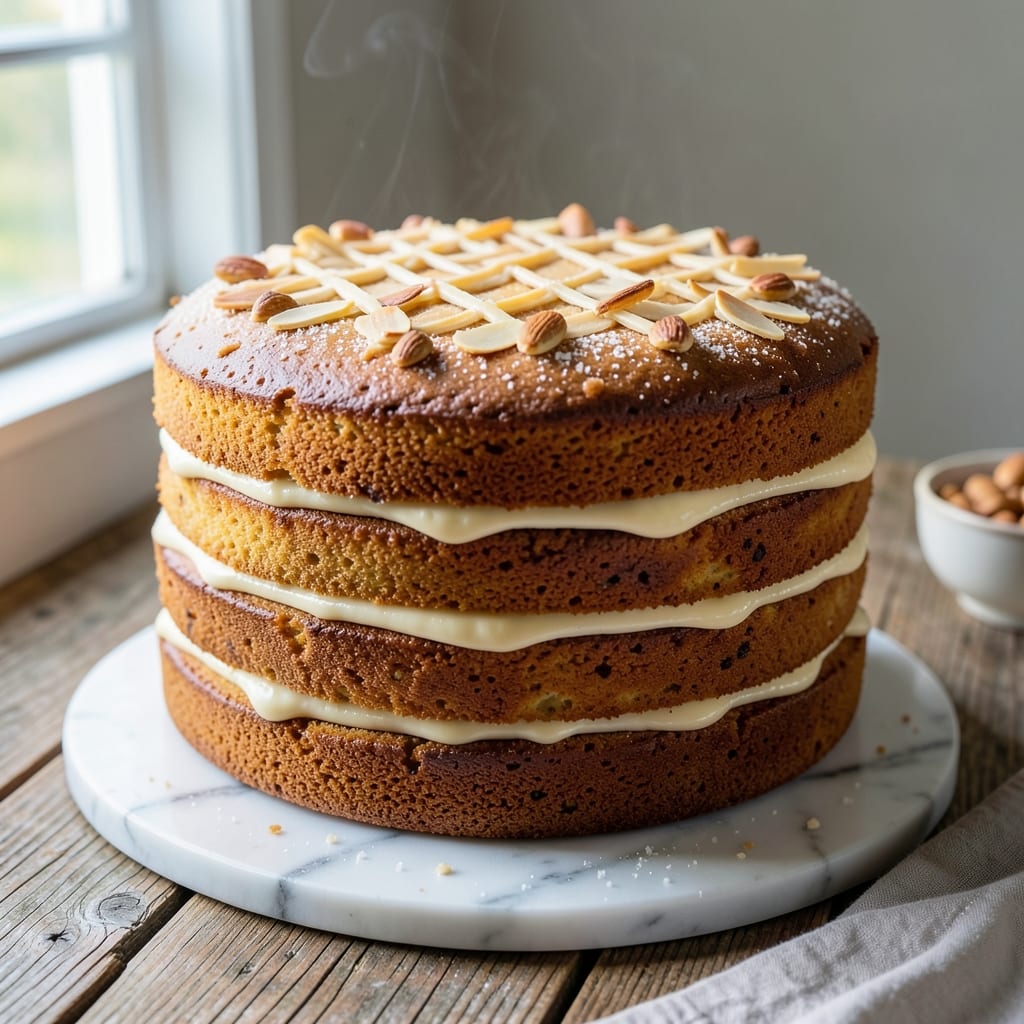
This two-layer almond cake delivers the perfect balance of nutty crunch and silky moisture in every bite—no fancy equipment required. The secret lies in a finely ground almond flour base that keeps the texture tender while adding rich depth, paired with a simple yet foolproof baking technique. I've perfected this recipe over years of testing, ensuring even layers and a cake that stays moist for days.
The beauty of this recipe is its simplicity: just six core ingredients combine to create a cake with a delicate crumb and subtle almond flavor that doesn't overpower. The layers are baked separately for precise control, then stacked with a light buttercream that enhances rather than competes with the natural nuttiness. This isn't just dessert—it's a showstopper that requires minimal effort but delivers restaurant-quality results.
What sets this almond cake apart is how it maintains its moistness without becoming dense, thanks to a precise ratio of butter to eggs and a gentle baking approach. The final product has a golden top, clean layers, and that signature almond aroma that fills your kitchen. Whether you're celebrating a special occasion or just craving something indulgent, this cake delivers every time.
Ready in under two hours with minimal active time, this recipe is perfect for beginners and experienced bakers alike. The frosting is optional but recommended—it adds a final touch of elegance while keeping the focus on the cake's natural flavors. Let's create something truly special without the fuss.
Ingredients for 2 layer almond cake
Six core ingredients transform into restaurant-quality almond cake with delicate crumb and signature nutty aroma.
| Ingredient | Amount | Notes |
|---|---|---|
| Superfine Almond Flour 🌰 | 2 ½ cups | Finely ground for smooth texture |
| Unsalted Butter 🧈 | 1 ½ cups | Room temperature, softened |
| Granulated Sugar 🍚 | 2 cups | Light brown preferred for depth |
| Large Eggs 🥚 | 4 whole | Room temperature, separated |
| Vanilla Extract 🌿 | 2 tsp | Pure Madagascar preferred |
| Baking Powder 🍞 | 1 ½ tsp | Diamond Crystal preferred |
| Salt 🧂 | ½ tsp | Fine sea salt preferred |
| Powdered Sugar 🍚 | 2 cups | For buttercream frosting |
| Heavy Cream 🥛 | 1 cup | Cold for stable buttercream |
| Lemon Zest 🍋 | 1 tsp | Freshly grated for brightness |
The almond flour makes or breaks this cake. Bob's Red Mill or King Arthur brands are the gold standard—pre-ground for convenience, but grind your own for maximum flavor if you're ambitious. The flour should be superfine (no grit), and room temperature when measuring. I always buy extra because it keeps indefinitely in the pantry. For the butter, Plugrá or Land O'Lakes work perfectly, but never use margarine—the fat content matters here. The eggs should be large, fresh eggs for proper lift, and the vanilla extract? Pure Madagascar is worth the splurge for that authentic almond cake aroma.
No almond flour? Blend whole almonds into a fine powder—just pulse in a food processor until no chunks remain. Running short on butter? Vegetable shortening at the same weight works in a pinch, though texture will be slightly denser. The baking powder is non-negotiable—Diamond Crystal is the standard, but Aluminum-free brands won't work here. For the frosting, powdered sugar should be sifted first to avoid lumps, and the heavy cream must be cold—warm cream will curdle your buttercream. The lemon zest adds brightness, but organic lemons are a must to avoid wax residue.
Store cake layers wrapped in parchment at room temperature for 2 days, or freeze for up to 3 months for maximum freshness. The buttercream keeps 3 days refrigerated—whisk in a splash of milk if it stiffens. I always assemble the cake the day before serving so flavors meld perfectly. For extra elegance, dust with powdered sugar or sprinkle with toasted sliced almonds before serving. The cake reheats beautifully—30 seconds at 350°F restores moisture if it's been sitting out too long.
Why You'll Love This Recipe
- Two distinct textures: a slightly denser base (thanks to the almond flour) and a lighter top layer that crumbles like a cloud. It’s the kind of cake that works for breakfast with coffee, a light afternoon treat, or even a fancy dessert when you add a dusting of powdered sugar. (Between us, I’ve served it all three ways.)
- No Mixing Madness: I swear by this recipe because it’s one bowl, no sifting, no overmixing—just fold the eggs into the almond flour until just combined. That superfine almond flour blends like a dream, and the butter-egg ratio keeps it tender without being greasy. (Yes, even if you’re the type who overworks cake batter.)
- Vanilla Butter Bliss: The moment warm cake hits your plate with that buttery richness and vanilla depth? Chef’s kiss. The almond flour gives it a subtle nuttiness that pairs perfectly with the sugar’s caramelized edge—no artificial flavors, just pure, simple satisfaction. Honestly, my go-to dessert now beats store-bought every time.
- Layered Magic: Two distinct textures: a slightly denser base (thanks to the almond flour) and a lighter top layer that crumbles like a cloud. It’s the kind of cake that works for breakfast with coffee, a light afternoon treat, or even a fancy dessert when you add a dusting of powdered sugar. (Between us, I’ve served it all three ways.)
Step-by-step instructions for 2 layer almond cake
Here's how to craft a perfectly balanced almond cake with tender layers and rich buttercream.
Prepare the Cake Layers
Preheat your oven to 350°F and grease two 8-inch round cake pans with butter, then line the bottoms with parchment paper. In a stand mixer fitted with the paddle attachment, beat the 1.5 cups unsalted butter and 2 cups granulated sugar on medium speed for 3-4 minutes until light and fluffy. This creaming process incorporates air, ensuring a tender crumb.
Add the 4 whole large eggs one at a time, mixing well after each addition. Scrape down the sides of the bowl as needed. Stir in the 2 teaspoons vanilla extract and 1 teaspoon lemon zest until fully combined. In a separate bowl, whisk together the 2.5 cups superfine almond flour, 1.5 teaspoons baking powder, and 0.5 teaspoon salt. Gradually add the dry ingredients to the wet mixture, mixing on low speed until just combined—avoid overmixing to maintain a tender texture.
Bake the Layers Evenly
Divide the batter evenly between the prepared cake pans. Tap each pan gently on the counter to remove any air bubbles. Bake for 25-30 minutes, or until a toothpick inserted into the center comes out clean. The edges should be golden brown, but the tops may appear slightly underbaked—this is normal for almond flour cakes. Rotate the pans halfway through baking for even cooking.
Let the cakes cool in the pans for 10 minutes, then transfer them to a wire rack to cool completely. This gradual cooling prevents cracking. Once fully cooled, level the tops if needed using a serrated knife. The layers should be smooth and uniform for clean frosting.
Make the Buttercream Frosting
In a medium bowl, beat the 1 cup heavy cream with an electric mixer until soft peaks form. In a separate large bowl, beat the 1.5 cups unsalted butter until smooth. Gradually add the 2 cups powdered sugar and mix until fully incorporated. Add the whipped cream and mix until light and fluffy. Fold in the 2 teaspoons vanilla extract and 1 teaspoon lemon zest for added brightness.
The frosting should be thick but spreadable. If it's too stiff, soften it slightly by adding 1-2 teaspoons heavy cream. This buttercream is rich and smooth, designed to complement the nutty flavor of the almond cake without overpowering it.
Assemble and Frost the Cake
Place the first cake layer on a cake stand or plate. Spread a thin layer of frosting over the top to create a "crumb coat." This helps prevent crumbs from getting into the final frosting. Place the second layer on top and repeat the process on the sides and top of the cake. Chill the cake in the refrigerator for 30 minutes to set the frosting.
Before serving, gently warm the cake at room temperature for 10-15 minutes to soften the frosting slightly. This ensures clean slices and a pleasant texture. The final cake should have a moist, tender crumb with a delicate crunch from the almond flour, balanced by the smooth, slightly tangy buttercream.
Pro Tips For Making 2 Layer Almond Cake
- Weigh Your Eggs: Crack those eggs into a measuring cup first—this recipe hinges on precise volume. Almond flour’s density means even a slightly underwhipped batch won’t rise properly if your eggs are eyeballed. (I learned this after a lopsided first attempt.)
- Cream Butter Cold: Take your unsalted butter straight from the fridge—room temp makes it too soft, and your cake will turn greasy. Use a stand mixer on medium until it’s light but still holds peaks; over-whipping here ruins the texture later.
- Sift the Flour Twice: Superfine almond flour packs tight—sift it into the dry ingredients, then sift the mix again before folding. This keeps air pockets alive for a lighter crumb. (Yes, it’s extra work, but the difference is noticeable.)
- Rotate the Pan: Swap the cake pans halfway through baking—front to back, then back to front. Almond cakes dry unevenly, and this guarantees both layers finish at the same time. (No more one side golden, the other raw.)
Creative variations of this 2 layer almond cake
Classic French Almond
For a refined twist, try the French-inspired financier cake approach. Replace the buttercream with a dark chocolate ganache made from 8 oz dark chocolate (70% cocoa) and ½ cup heavy cream, heated until smooth. Fold in 1 tbsp almond paste for extra nuttiness. Bake the layers in 7-inch round pans at 325°F for 20-25 minutes—the lower temp prevents cracking. Dust with powdered sugar before serving for an elegant Parisian touch. 💛
Lemon-Almond Fusion
Brighten the flavor profile by adding zest from 2 lemons to the batter and folding in ½ cup dried cranberries (chopped) for a tangy-sweet contrast. Use a light citrus glaze (powdered sugar + lemon juice) instead of frosting. Bake at 350°F for 28-32 minutes—the extra moisture from the lemon keeps the cake ultra-moist. Perfect for spring celebrations! 🍋
Gluten-Free Adaptation
Swap the almond flour for a 1:1 gluten-free baking flour blend (like Bob's Red Mill) and add ¼ cup cornstarch for structure. Use 1 extra egg white for stability. Bake at 325°F for 30-35 minutes—lower temp prevents burning. The texture stays tender, but the layers may be slightly denser. Pair with a coconut whipped cream for a dairy-free option. ✨
Spiced Chai Version
Infuse the batter with 1 tsp chai spice blend (cinnamon, cardamom, ginger, cloves) and fold in ½ cup toasted chopped pistachios for crunch. Use a spiced brown sugar frosting (buttercream + 1 tsp cinnamon). Bake at 350°F for 25-30 minutes—the spices add warmth without overpowering the almond flavor. Ideal for fall gatherings! 🌶️
Mini Cake Bites
Portion batter into 12 mini silicone molds (2-inch diameter) and bake at 350°F for 12-15 minutes. Top with a dollop of frosting and a whole almond before chilling. These bite-sized treats are perfect for parties—no assembly required! Store in an airtight container for up to 5 days. 💡
Nutrition facts
Frequently asked questions
Can I substitute almond flour with regular flour in this cake?
The texture will change significantly—almond flour gives that signature tender crumb and nutty flavor. For a similar result, blend 1.5 cups whole almonds into fine flour (no grit) or use a 1:1 gluten-free baking flour blend with ¼ cup cornstarch for structure. Regular all-purpose flour will make the cake denser and less moist.
Why did my cake crack on top?
Cracking usually happens from rapid cooling or overbaking. Let cakes cool in pans for 10 minutes before transferring to a rack, and avoid opening the oven door during baking. If the top looks dry but a toothpick comes out clean, it's done—almond flour cakes often appear underbaked on top but bake through internally.
How do I make this cake gluten-free?
Replace the almond flour with a 1:1 gluten-free baking flour blend (like Bob's Red Mill) and add ¼ cup cornstarch for better structure. Use 1 extra egg white for stability, and bake at 325°F for 30-35 minutes—the lower temp prevents burning. The texture stays tender but may be slightly denser.
Can I bake these layers ahead of time?
Wrap cooled layers tightly in plastic wrap, then store at room temperature for 2 days or freeze for up to 3 months. Thaw overnight in the fridge before assembling. The frosting can be made 1 day ahead and kept refrigerated—whisk in a splash of milk if it stiffens.
What's the best way to level the cake layers?
Use a serrated knife (like a bread knife) and a leveling guide (a glass or cake leveler). Place the pan on the guide, then gently saw back and forth until the top is even. For extra precision, use a hot knife (dip in hot water) to create a clean cut. Always level after the cake has cooled completely.