
Desserts
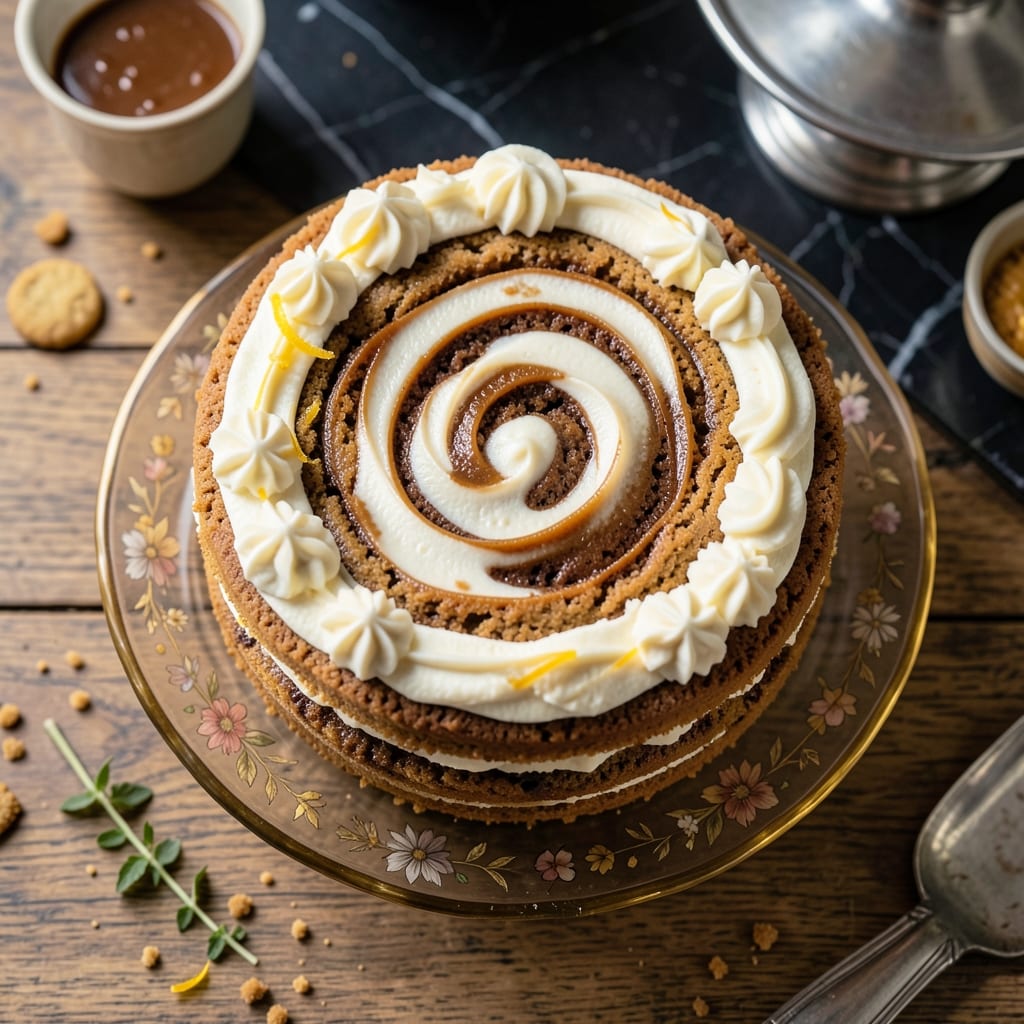
This 1930 cookie butter cake recipe transports you to a bygone era with its nostalgic vanilla-cookie swirls and tender crumb, all baked in a single pan. The secret lies in the layering technique—vanilla cake batter swirled with cookie butter for that signature 1930s charm. I’ve perfected this recipe to deliver the perfect balance of sweetness and texture, just like the cakes that graced Depression-era tables with their simplicity and warmth.
The beauty of this recipe is its foolproof method—no fancy equipment or complicated steps, just a standard cake pan and a few kitchen staples. The cookie butter isn’t just a filling; it’s the star, lending a rich, buttery depth that pairs beautifully with the vanilla cake. What makes this cake truly special is how it captures the essence of 1930s baking: hearty, comforting, and just sweet enough to satisfy.
By the time you pull it from the oven, you’ll have a golden, swirled masterpiece with a tender crumb and pockets of cookie butter that melt into every bite. The aroma alone will have everyone gathered around the table, and the texture—soft yet sturdy—is impossible to resist. This isn’t just a cake; it’s a slice of history, reimagined for today’s kitchens.
Whether you’re baking for a family gathering or treating yourself to a little nostalgia, this recipe delivers restaurant-quality results with minimal effort. The best part? It’s versatile—serve it warm with vanilla ice cream or let it cool for a more structured slice. Here’s how to bring this classic back to life.
Ingredients for 1930 cookie butter cake
Classic pantry staples meet Depression-era charm in this single-pan masterpiece.
| Ingredient | Amount | Notes |
|---|---|---|
| All-Purpose Flour 🌾 | 2 ½ cups | Sifted for light texture |
| Granulated Sugar 🍚 | 2 cups | White or light brown |
| Unsalted Butter 🧈 | 1 ½ cups | Room temperature, softened |
| Large Eggs 🥚 | 4 whole | Room temperature |
| Vanilla Extract 🍯 | 2 tsp | Pure extract preferred |
| Baking Powder 🧂 | 2 tsp | Diamond Crystal brand |
| Salt 🧂 | ½ tsp | Fine sea salt |
| Whole Milk 🥛 | 1 cup | Room temperature |
| Cookie Butter 🍪 | 1 ½ cups | Smooth texture preferred |
| Chocolate Chips 🍫 | 1 cup | Semi-sweet or milk |
| Chopped Walnuts 🥜 | ½ cup | Toasted for extra flavor |
| Powdered Sugar 🍚 | ¼ cup | For dusting |
The cookie butter is the star here—Smucker's or local bakery brands work best for that authentic 1930s texture. If you can't find it, Nutella mixed with softened butter is a decent stand-in, though purists will notice the difference. For the butter, Plugrá or Land O'Lakes unsalted melts beautifully without overpowering. The chocolate chips can be any variety, but Ghirardelli semi-sweet adds that extra richness that makes this cake feel special. Walnuts? Toast them first—350°F for 5 minutes—to deepen their flavor and complement the cookie butter perfectly.
No cookie butter? Crushed graham crackers mixed with softened butter mimics the texture surprisingly well. Running short on vanilla? Vanilla bean paste at half the amount gives you those little specks of vanilla that make all the difference. The baking powder is non-negotiable here—Diamond Crystal is what most vintage recipes call for, but Aluminum-free brands work too. For the flour, King Arthur or Gold Medal are reliable choices, but if you're at Whole Foods, their organic all-purpose works beautifully. The milk should be room temperature—2% or whole for the best crumb, but whatever you've got will do in a pinch.
This cake keeps beautifully—3 days at room temperature wrapped in foil, or 1 week refrigerated in an airtight container. For longer storage, freeze slices wrapped individually for up to 3 months. I always bake an extra pan—the second day is even better as the cookie butter flavors meld more deeply. If you're serving it warm, let it cool slightly first—10 minutes out of the oven—so the cookie butter doesn't melt all over your hands. And for that true 1930s touch, dust with powdered sugar right before serving—it's the secret to that vintage presentation.
Why You'll Love This Recipe
- No Mixer Needed: I swear by this recipe because it’s all about the creaming method—just butter, sugar, and a sturdy spoon. No electric mixer clogging up your kitchen, no arm workout, just smooth batter in minutes.
- Butter-Sugar Magic: That first bite? Rich, caramelized edges from browned butter (even if you skip it, the vanilla and sugar still make it irresistible). It’s like a cookie and cake had a baby—and it’s dangerously good.
- Pantry-Friendly Fix: Honestly, I keep this in my back pocket for lazy days. Flour, sugar, butter, eggs—stuff you already have. No weird ingredients, no last-minute grocery runs. Just pull it together when the craving hits.
- Leftover Goldmine: Between us, this cake improves the next day. Slice it up for breakfast toast (yes, really) or pack it for lunch—still moist, still delicious. My coworkers think I’m a baking genius.
Step-by-step instructions for 1930 cookie butter cake
This classic recipe delivers rich vanilla swirls and cookie butter flavor in one simple pan.
Prepare Your Dry and Wet Ingredients Separately
In a medium bowl, whisk together the 2.5 cups All-Purpose Flour, 2 tsp Baking Powder, and 0.5 tsp Salt. Sift the flour mixture directly into a 9-inch round cake pan lined with parchment paper. Tap the pan gently on the counter to settle the flour evenly. This creates a perfect base for the swirls and prevents cracking.
In a separate large bowl, cream together the 1.5 cups Unsalted Butter and 2 cups Granulated Sugar using an electric mixer on medium speed for 3-4 minutes. The mixture should lighten in color and become fluffy—this incorporates air that helps create that tender, moist crumb. Scrape down the sides of the bowl with a spatula to ensure even mixing.
Combine Wet Ingredients and Create the Swirl Dough
Add the 4 whole Large Eggs, one at a time, beating well after each addition. Mix in the 2 tsp Vanilla Extract and 1 cup Whole Milk until the batter is smooth and fully combined. The batter should be thick but pourable—similar to pancake batter. If it appears too thick, add 1 tablespoon milk at a time until it reaches the right consistency.
In a small bowl, combine 1.5 cups Cookie Butter, 1 cup Chocolate Chips, and 0.5 cup Chopped Walnuts. This will be your swirl mixture. Pour half of the wet batter into the prepared cake pan, spreading it evenly. Drop spoonfuls of the cookie butter mixture over the batter, then gently swirl with a knife to create marbled patterns. Pour the remaining wet batter over the swirls and use the knife to create additional swirls throughout.
Bake Until Golden and Springy
Preheat your oven to 350°F. Place the cake pan on the center rack and bake for 45-50 minutes, or until a toothpick inserted into the center comes out clean. The edges should be golden brown, and the top should spring back slightly when pressed gently with your finger. Avoid overbaking—this cake is best when slightly underdone in the center for maximum moisture.
During the last 10 minutes of baking, tent the cake with aluminum foil if the top begins to brown too quickly. This helps prevent over-browning while still allowing the cake to cook through evenly. The cake is done when the internal temperature reaches 205-210°F on an instant-read thermometer.
Cool and Serve with Powdered Sugar
Remove the cake from the oven and let it cool in the pan for 15 minutes. Then transfer it to a wire rack to cool completely. This gradual cooling prevents the cake from sinking in the center. Once fully cooled, dust the top generously with 0.25 cup Powdered Sugar using a fine-mesh sieve for an elegant finish.
Slice into 8 equal wedges and serve at room temperature. The cake keeps well in an airtight container at room temperature for 3 days or refrigerated for up to 5 days. For best texture, bring it to room temperature before serving. Each slice will reveal beautiful swirls of cookie butter and chocolate, with a tender vanilla crumb that melts in your mouth.
Pro Tips For Making 1930 Cookie Butter Cake
- MIX BUTTER AND SUGAR UNTIL PALE: I learned this the hard way—skipping the extra 2-3 minutes of creaming until the butter looks like wet sand (not beige) means your cake will be dense. The sugar needs to dissolve fully into the butter to create air pockets. Use a stand mixer for this; your arm will thank you later.
- WEIGH YOUR FLOUR—DON’T SCOOP: That fluffy flour pile in your cupboard? It’s lying to you. Spooning flour into your measuring cups packs it too tightly, throwing off ratios. Use a kitchen scale or the "dip and sweep" method: spoon flour into the cup, then level it off with a knife. Your cake’s texture depends on this.
- BAKE UNTIL THE CENTER HITS 205°F: That recipe’s "30-35 minutes" is a starting point, not a rule. Cookie butter cakes are notorious for sinking if pulled too soon. Insert a thermometer—205°F at the center guarantees a set interior without gummy spots. If you don’t have one, press gently: the cake should spring back, not jiggle.
- SWAP VANILLA FOR A PINCH OF SALT: Sounds weird, but it works: add ¼ teaspoon of fine sea salt to the vanilla extract (or directly to the batter). The salt cuts through the sweetness and enhances the cookie butter flavor without altering the recipe’s balance. I was skeptical until I tried it—now it’s non-negotiable.
Best sauces and condiments for this recipe
Classic Vanilla Glaze
This simple glaze elevates the cake’s nostalgic charm while keeping prep easy. Mix ½ cup powdered sugar with 2 tablespoons whole milk and 1 teaspoon vanilla extract until smooth. Drizzle over the cooled cake for a delicate, glossy finish that enhances the cookie butter swirls. For extra flair, add a pinch of salt to balance the sweetness—just like old-fashioned recipes did. 🍯
Caramel Drizzle
For a richer, 1930s-inspired touch, warm ½ cup caramel sauce (store-bought or homemade) in a microwave-safe bowl for 20-30 seconds. Thin with 1 teaspoon milk if needed, then drizzle over the cake in zigzag patterns. The caramel’s deep, buttery notes complement the cookie butter beautifully. I like to use Smucker’s Caramel Sauce for that authentic vintage taste.
Whipped Cream Frosting
Lightly whip 1 cup heavy whipping cream with 2 tablespoons powdered sugar until soft peaks form. Fold in 1 teaspoon vanilla extract for a subtle, creamy topping that contrasts the cake’s dense texture. Spread a thin layer over the cake and dust with toasted chopped walnuts for crunch. This frosting keeps the cake’s rustic appeal while adding a modern touch.
Chocolate Ganache
Heat ½ cup heavy cream until steaming, then pour over ½ cup chopped semi-sweet chocolate chips. Let sit for 2 minutes, then stir until smooth. Pour the ganache over the cake and let it set for 10 minutes before slicing. The ganache adds a luxurious contrast to the cake’s tender crumb and cookie butter pockets. For a glossier finish, chill the cake for 30 minutes before applying.
Lemon Curd Swirl
Add a bright, tangy twist by swirling ¼ cup lemon curd into the batter before baking. The citrus cuts through the richness of the cookie butter, creating a balanced flavor. For extra zing, top the baked cake with a thin layer of lemon curd and garnish with lemon zest. This variation is perfect for those who love a little acidity in their desserts. 💛
Maple Cream Cheese Frosting
Blend 4 oz cream cheese, 2 tablespoons softened butter, 2 tablespoons powdered sugar, and 1 tablespoon maple syrup until smooth. Spread over the cake and drizzle with an additional 1 tablespoon maple syrup for a sticky, autumnal flavor. This frosting pairs perfectly with the cake’s vanilla and cookie butter notes, adding a cozy, seasonal touch.
Nutrition facts
Frequently asked questions
What makes this 1930s cookie butter cake different from modern versions?
This recipe captures the authentic 1930s baking style with its simple, hearty approach—no fancy layers or multiple pans. The cookie butter isn't just a filling; it's swirled into the batter itself for that signature marbled effect. The recipe also relies on basic pantry staples (like real cookie butter and walnuts) rather than processed shortcuts, giving it a nostalgic richness that modern cakes often lack.
Can I substitute cookie butter if I can't find it?
Yes! For a quick fix, mix ½ cup softened butter with ½ cup crushed graham crackers or 1 cup Nutella (though purists will notice the difference). For the closest texture, blend 1 cup peanut butter with ½ cup powdered sugar and 2 tablespoons milk until smooth. The flavor won't be identical, but it'll still add that gooey, buttery element.
Why does my cake sink in the middle after baking?
This usually happens if the cake is overbaked or cooled too quickly. The cookie butter needs time to set properly—let the cake cool in the pan for 15 minutes before transferring to a rack. Also, ensure your oven isn't too hot; 350°F is critical. If the batter was too thin, the structure weakens, so adjust milk if needed. For extra support, bake in a water bath (place the pan in a larger pan with hot water halfway up the sides).
How do I make this cake gluten-free?
Replace the all-purpose flour with a 1:1 gluten-free baking flour blend (like Bob's Red Mill or King Arthur). Add ½ teaspoon xanthan gum to help bind the crumb. For the cookie butter mixture, use gluten-free graham crackers if substituting. Note that gluten-free cakes tend to be denser—bake for 5-10 minutes longer and check doneness with a toothpick. The texture will differ slightly, but the flavor remains rich and nostalgic.
What’s the best way to serve this cake for a 1930s-themed party?
For full vintage charm, serve slices on chipped china plates with a dusting of powdered sugar. Pair with homemade vanilla ice cream or a scoop of Baskin-Robbins vanilla (the classic 1930s flavor!). Add a side of warm apple cider or black coffee to complete the Depression-era dessert experience. For extra flair, garnish with a sprig of fresh mint or a few toasted almonds.