
Desserts
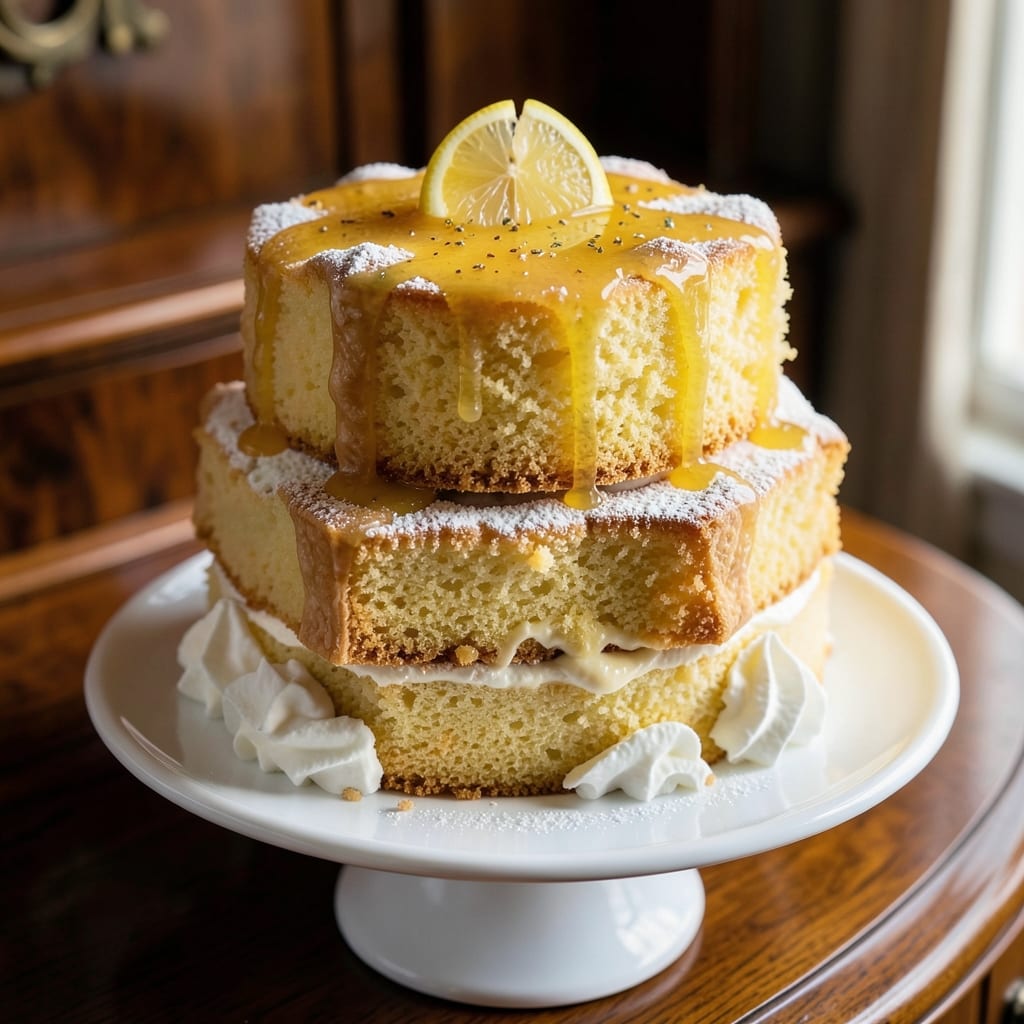
The 1920 Famous Ritz Carlton lemon pound cake brings old-world elegance to your kitchen with its signature buttery crust and vibrant citrus layers—all baked in one timeless tin. 💛 This recipe captures the refined charm of the original, where rich butter meets bright lemon in every moist, tender bite. The secret lies in precise measurements and gentle folding, ensuring a cake that's both impressive and foolproof for home bakers.
What sets this classic apart is its dual-textured magic: a golden, crackly crust that gives way to a velvety lemon-infused crumb, all achieved without layering. The recipe relies on high-quality butter, fresh citrus zest, and a touch of vanilla for depth—just as the Ritz Carlton would have served. Baking at 325°F for 50-60 minutes guarantees a perfectly domed top with a crack that reveals the luscious interior.
Once out of the oven, the cake develops an intoxicating aroma that fills your home, while its tender yet sturdy crumb holds up beautifully when sliced. Serve it warm with a dusting of powdered sugar or a dollop of lemon curd for an authentic touch. This isn't just dessert—it's a piece of culinary history you can recreate with confidence.
The beauty of this recipe is its versatility: enjoy it as-is for a classic experience, or add a swirl of almond paste for texture. Leftovers keep well for days, making it perfect for gatherings or a special treat. Let's bring the Ritz Carlton's legacy to your table—one buttery, lemony slice at a time.
Ingredients for 1920 famous ritz carlton lemon pound cake
Buttery crust meets zesty lemon in this iconic Ritz Carlton cake—just eight essential ingredients for old-world elegance.
| Ingredient | Amount | Notes |
|---|---|---|
| Unsalted Butter 🧈 | 1 cup | Cold, cubed for crust texture |
| All-Purpose Flour 🌾 | 2 ½ cups | Sifted, plus extra for pan |
| Granulated Sugar 🍚 | 2 cups | Superfine preferred for smoothness |
| Fresh Lemon Zest 🍋 | 2 tbsp | Only the yellow part, finely grated |
| Fresh Lemon Juice 🍋 | ½ cup | From 2-3 large lemons |
| Large Eggs 🥚 | 4 whole | Room temperature for even baking |
| Pure Vanilla Extract 🌿 | 1 tbsp | High-quality for authentic flavor |
| Baking Powder 🍞 | 1 tsp | Freshly opened for lift |
| Salt 🧂 | ½ tsp | Fine sea salt preferred |
| Powdered Sugar 🍚 | ¼ cup | For dusting, optional |
| Lemon Curd 🍋 | ½ cup | Store-bought or homemade |
| Almond Paste 🥜 | ½ cup | For optional swirl, optional |
| Heavy Cream 🥛 | ½ cup | For optional filling, optional |
The butter is non-negotiable here. Plugrá or Land O'Lakes work perfectly, but nothing beats European-style unsalted butter like President or Échiré for that signature richness. Grab the coldest butter from your fridge—it needs to stay cubed for that signature crust texture. The flour should be sifted (I use King Arthur for consistency), and if you're feeling fancy, a 10-inch springform pan from Nordic Ware ensures that perfect dome shape. For the lemon, organic Meyer lemons from Whole Foods have that extra depth of flavor, but regular lemons work too—just make sure they're fresh and juicy.
No superfine sugar? Pulse regular granulated sugar in a food processor for 30 seconds—it'll do the trick. Short on lemon zest? Double the juice and halve the zest, but trust me, that bright citrus flavor comes from the zest. The vanilla matters here—Heinz or Nielsen-Massey are reliable, but if you've got a bottle of Madagascar Bourbon, use it. No baking powder? Baking soda plus cream of tartar at half the amount works in a pinch. And if you're adding the almond paste swirl? Wilton brand is the easiest to work with—it's pre-made and keeps well in the fridge.
This cake develops its best flavor after baking—let it cool completely in the pan for at least 2 hours before unmolding. Store wrapped tightly in plastic at room temperature for 3 days, or freeze for up to 3 months for that fresh-baked taste anytime. The lemon curd filling? Keep it refrigerated and add it just before serving—it stays fresh for 1 week. I always make a double batch because it disappears faster than the cake itself. And if you're feeling extra, a quick dusting of powdered sugar right before serving adds that final touch of elegance.
Why You'll Love This Recipe
- No-Fuss Mixing: I swear by this recipe’s simplicity—just cream butter and sugar, then fold in dry ingredients. No eggs to whisk, no complicated steps, just a few minutes of gentle stirring. Honestly, the hardest part is waiting for it to bake.
- Zesty Magic: That bright lemon zest and juice? It’s the star here. The cake stays tender but never cloying, with a citrus punch that lingers without overpowering. I’ll be real: I’ve tried store-bought lemon cakes, and this one actually tastes like real lemon.
- Brunch or Dessert: Serve it warm with tea for a light brunch, or slice it cold for a showstopping dessert. Between us, it’s the go-to for my Sunday morning coffee crew—and the leftovers disappear faster than I can say “second helping.”
- Budget-Friendly Luxury: Rich butter and sugar make it feel special, but the ingredients cost less than half of what a bakery version would. Plus, it keeps for days, so I bake one batch and stretch it through the week. My wallet and my taste buds thank me.
Step-by-step instructions for the Ritz Carlton lemon pound cake
This legendary cake combines a buttery crust with moist lemon layers—here's how to nail it perfectly.
👨🍳 Step 1: Prepare the Crust and Lemon Filling
First, make the crust by combining the 1 cup cold unsalted butter (cubed) with 2.5 cups sifted all-purpose flour in a food processor. Pulse until the mixture resembles coarse crumbs with pea-sized butter pieces. Press this firmly into a 9-inch round cake pan and bake at 350°F for 10 minutes. This creates that signature buttery crust that sets this cake apart.
While the crust bakes, whisk together the 2 cups granulated sugar, 4 whole large eggs at room temperature, 1 tbsp pure vanilla extract, 2 tbsp fresh lemon zest, and 0.5 cup fresh lemon juice in a large bowl until smooth and pale. This lemon mixture is the heart of the cake—make sure it's completely combined so every bite bursts with flavor.
🍳 Step 2: Mix the Cake Batter
In a separate bowl, sift together the 2.5 cups all-purpose flour, 1 tsp baking powder, and 0.5 tsp salt. Gently fold this dry mixture into the lemon-egg mixture until just combined—don't overmix or the cake will be dense. The batter should be thick but pourable. Here's the thing—this is where the magic happens. The citrus flavor needs to be bright, so don't skimp on the lemon zest and juice.
For the filling, mix 0.5 cup lemon curd with 0.5 cup heavy cream until smooth. If using, roll out 0.5 cup almond paste into a thin sheet for swirls. Keep these components separate until ready to assemble.
🥘 Step 3: Layer and Bake the Cake
Pour half of the cake batter over the pre-baked crust, spreading it evenly. Drizzle half of the lemon curd mixture over the batter. If using almond paste, create a decorative swirl pattern. Add the remaining batter, then the rest of the lemon curd mixture. Sprinkle 0.25 cup powdered sugar evenly over the top for that classic Ritz Carlton touch.
Bake at 350°F for 50-60 minutes, or until a toothpick inserted comes out clean. The cake should be golden on top with slightly domed edges. I know it seems like too much time, but trust me—this ensures a perfectly moist interior. Don't open the oven door early or the cake may sink.
⏰ Step 4: Cool and Serve
Let the cake cool in the pan for 15 minutes, then transfer to a wire rack to cool completely. This gradual cooling prevents cracking. Once fully cooled, dust the top with an additional sprinkle of powdered sugar for that signature presentation. The cake will keep well at room temperature for 2-3 days, though it's best enjoyed fresh.
Slice into wedges and serve with a dollop of whipped cream or a scoop of vanilla ice cream. The contrast of the buttery crust, moist lemon layers, and creamy filling makes this cake unforgettable. Each bite delivers that perfect balance of sweetness and zesty citrus that makes this recipe legendary.
Pro Tips For Making 1920 Famous Ritz Carlton Lemon Pound Cake
- Cream Butter Slowly: The Ritz-Carlton version relies on a light, tender crumb, so don’t rush the butter. Mix it into the sugar at medium speed until it’s pale and fluffy—about 3-4 minutes—then add eggs one at a time. I learned this the hard way: rushing this step leads to a dense, greasy cake, no matter how good the butter.
- Sift the Flour Twice: This isn’t just about aeration—it’s about avoiding lumps in the batter. Sift the flour before adding it to the wet ingredients, then sift it again while folding it in. The Ritz-Carlton recipe is finicky about texture, and unsifted flour will make the cake tougher. (Yes, it’s extra work, but your future self will notice.)
- Don’t Overmix the Lemon: Fresh lemon zest and juice are the soul of this cake, but too much mixing turns the batter gray and bitter. Fold them in just until combined—no more than 10 strokes. I was skeptical until I tried it: the cake stays bright, the flavor stays sharp, and you won’t end up with a sad, dull sponge.
- Test for Doneness Early: This cake rises fast and can go from perfect to dry in minutes. Start checking with a toothpick at 50 minutes (if baking at 325°F). If it comes out clean but the edges are still slightly soft, that’s ideal—cover with foil and let it set 10 minutes. Overbaking is the #1 way to ruin this recipe, and the Ritz version forgives nothing.
Essential equipment for this recipe
Must-Have Pan
You’ll need a 9-inch round cake pan with a removable bottom—I swear by a Nordic Ware Natural Aluminum Springform Pan for that perfect dome shape. The springform design makes it easier to release the cake after baking, and the aluminum conducts heat evenly. If you don’t have a springform, a standard round cake pan with a nonstick coating works too, but grease it well with butter and flour to prevent sticking. 💛
Food Processor
A food processor is essential for creating the buttery crust. Pulse the cold butter and flour until you get pea-sized butter pieces—this ensures that signature crackly texture. If you don’t have one, you can mix the butter and flour by hand with your fingers, but it’s a bit more labor-intensive. I’ve tried this method, and while it works, the texture isn’t quite as consistent as what you get from a food processor.
Mixing Bowls
Use two large mixing bowls—one for the crust and another for the cake batter. I prefer stainless steel bowls because they’re durable and easy to clean, but glass bowls work too. Just make sure they’re big enough to hold all the ingredients without spilling. A medium-sized bowl for the lemon curd mixture is also handy if you’re adding that optional filling. 🍋
Whisk and Spatula
A balloon whisk is perfect for combining the eggs, sugar, and lemon mixture until it’s smooth and pale. For folding in the dry ingredients, a rubber spatula works best—it helps you gently incorporate the flour without overmixing. I like to use a heat-resistant silicone spatula because it’s easy to clean and won’t scratch your bowls.
Measuring Tools
Precision is key here, so invest in a good set of measuring cups and spoons. For the butter, I recommend using the packed method—press the butter into the measuring cup to get the right amount. A microplane is also a game-changer for zesting the lemons—it’s faster and more consistent than a grater. Don’t skip the zest; it’s what gives this cake its bright, citrusy flavor. 🧈
Cooling Rack
Let the cake cool completely on a wire cooling rack to prevent sogginess. I love a large, round rack that fits the cake pan perfectly. If you’re in a hurry, you can transfer the cake to a rack after just 15 minutes in the pan, but don’t rush it—gradual cooling keeps the texture perfect. A rack also helps air circulate, so the cake doesn’t steam and become gummy.
Nutrition facts
Frequently asked questions
Why does the Ritz Carlton lemon pound cake have a crust?
The iconic buttery crust is what makes this cake legendary! It creates a satisfying textural contrast against the moist lemon layers, adding depth to each bite. The crust forms during the initial 10-minute bake before the cake batter goes on top, giving it that signature crackly texture that's been a Ritz Carlton signature since the 1920s.
Can I make this cake without a food processor?
Yes, but the texture may differ slightly. Use your fingers to work the cold butter into the flour until you get pea-sized pieces—just be patient! The food processor creates that perfect even distribution that gives the crust its signature crackliness. If you don't have one, try rubbing the butter into the flour with your fingertips until it resembles coarse crumbs.
How do I get the perfect dome shape?
Use a springform pan and avoid overfilling it—fill the pan only 2/3 full with batter. The dome forms naturally as the cake bakes, especially at 350°F. Don't open the oven door during baking, and let the cake cool completely in the pan for 15 minutes before unmolding. This gradual cooling prevents sinking and helps maintain that beautiful shape.
Can I substitute Meyer lemons with regular lemons?
Regular lemons work perfectly fine. Meyer lemons have a slightly sweeter, less acidic flavor, but the bright citrus punch comes from both the zest and juice. If using regular lemons, make sure they're very fresh—older lemons have less juice and zest. The key is to use 2 tablespoons zest and ½ cup juice from 2-3 large lemons for that authentic Ritz Carlton tang.
How should I store leftovers?
Wrap the cake tightly in plastic wrap and store at room temperature for up to 3 days. For longer storage, freeze slices individually wrapped for up to 3 months. The cake actually develops more flavor as it sits, making it perfect for making ahead. To serve frozen cake, let it thaw at room temperature for 30 minutes before slicing for clean cuts.