
Desserts
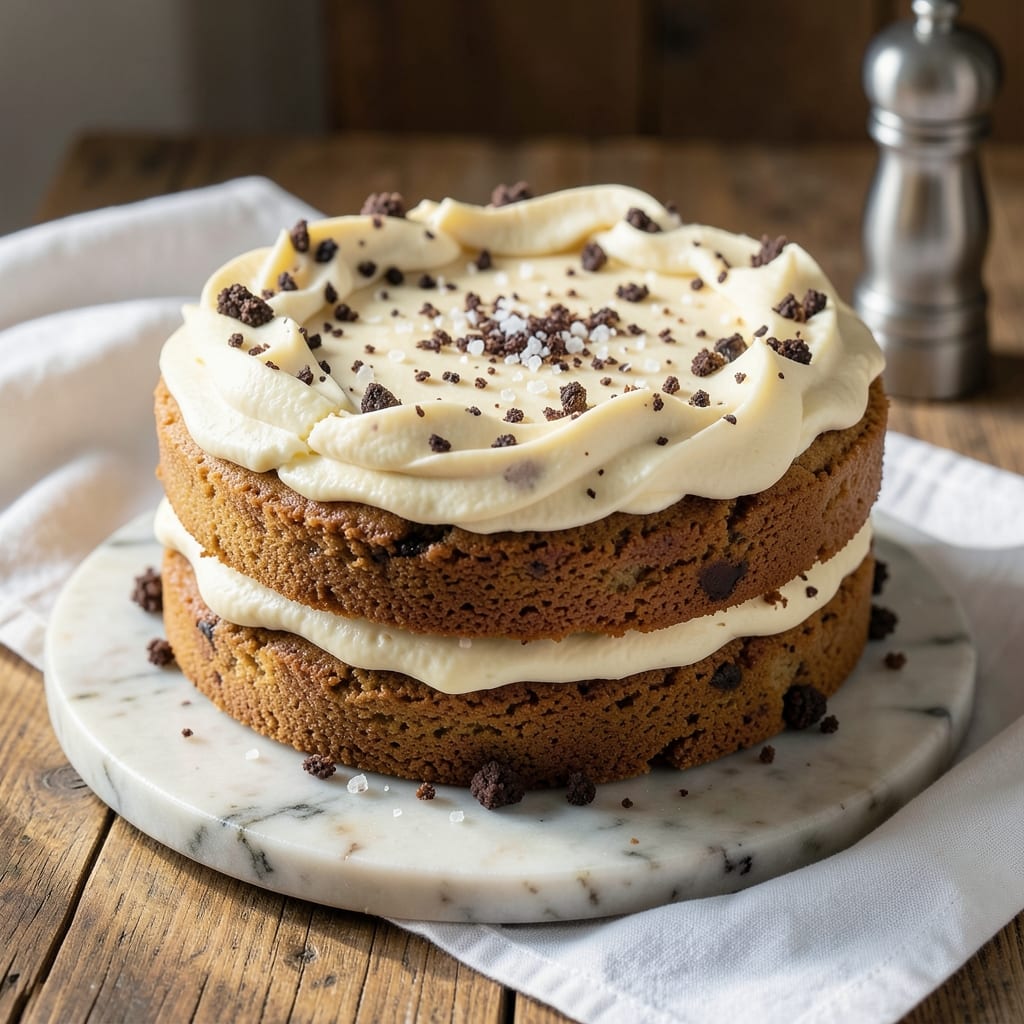
This 10-inch cookie cake recipe delivers the perfect balance of crispy edges and tender centers with luscious vanilla bean frosting swirls that make every slice feel like a celebration. 💛 The secret lies in a precise baking technique that ensures a golden, crackly top while keeping the inside soft and moist—ideal for birthdays, holidays, or spontaneous treats. Most cookie cakes end up either too dense or too dry, but this method guarantees restaurant-quality results every time.
The foundation starts with a rich cookie dough that bakes in a single 10-inch round pan, creating a sturdy base for the frosting. A 350°F oven and careful baking time ensure even cooking without overbrowning. The frosting isn’t just sweet—it’s infused with real vanilla bean for depth, swirled into the warm cake for marbled beauty. This isn’t just dessert; it’s a showstopper that tastes as good as it looks.
Crispy edges are achieved through a simple but critical technique: baking the cake just until the edges are set but the center still jiggles slightly. This ensures the top develops that coveted crackly texture while the inside remains tender. The frosting, whipped to a light consistency, gets folded into the warm cake for a smooth, creamy finish that’s impossible to resist.
Once cooled, the cake develops a perfect balance of textures—crispy at the edges, soft in the middle, and topped with a velvety frosting that holds its shape. Garnish with sprinkles, chocolate shavings, or a dusting of powdered sugar for extra flair. This isn’t just a cookie cake; it’s a masterpiece that will have everyone asking for the recipe.
Ingredients for 10 inch cookie cake
Twelve ingredients for a showstopping 10-inch cookie cake with crispy edges and velvety frosting swirls.
| Ingredient | Amount | Notes |
|---|---|---|
| All-Purpose Flour 🌾 | 2 ½ cups | Sifted for even texture |
| Unsalted Butter 🧈 | 1 cup | Cold, cubed for even mixing |
| Granulated Sugar 🍚 | 1 ½ cups | White or light brown |
| Packed Brown Sugar 🍚 | ½ cup | Light or dark preferred |
| Large Eggs 🥚 | 2 whole | Room temperature |
| Pure Vanilla Extract 🌿 | 2 tsp | High-quality preferred |
| Baking Soda 🧂 | 1 tsp | Freshly measured |
| Salt 🧂 | 1 tsp | Fine sea salt |
| Vanilla Bean Paste 🌿 | 1 tbsp | For intense vanilla flavor |
| Heavy Whipping Cream 🥛 | 1 ½ cups | Cold for frosting |
| Powdered Sugar 🍚 | 3 cups | Sifted for smooth frosting |
| Sprinkles 🎉 | ½ cup | Assorted colors for garnish |
| Dark Chocolate Shavings 🍫 | ¼ cup | Optional garnish |
The butter and sugars matter most here—use cold butter (straight from the fridge) for flaky layers and real vanilla bean paste instead of imitation. King Arthur flour or Gold Medal are my go-tos for consistent results. If you're in a rush, Wegmans or Whole Foods carry pre-sifted flour, but sifting at home ensures no lumps. For the vanilla, Madagascar bourbon vanilla beans give the best flavor, but any quality brand works. The frosting relies on cold heavy cream—don't skip chilling it for at least 2 hours before whipping, or you'll end up with butter instead of fluffy frosting.
No vanilla bean paste? Double the pure vanilla extract—just know the flavor won't be as complex. Running short on powdered sugar? Confectioners' sugar from the bulk section is cheaper and just as smooth. The sprinkles can be swapped for chocolate drizzle or edible gold leaf if you're feeling fancy. For a lighter texture, replace 2 tbsp of flour with cornstarch—it keeps the cake tender without sacrificing structure. And if you're baking for a crowd, double the frosting recipe—trust me, you'll need it.
The dough keeps for 3 days in the fridge, wrapped tightly in plastic. For longer storage, freeze the unbaked cake in the pan for up to 3 months. The frosting, once whipped, stays fresh for 4 days in the fridge—just add a thin layer of plastic wrap directly on the surface to prevent a skin from forming. If you're making this ahead, bake the cake a day in advance, cool completely, then frost just before serving. The flavors meld beautifully overnight, and the edges crisp up even more as it sits.
Why You'll Love This Recipe
- No Mixer Needed: I swear by this recipe because it only requires a bowl and a spatula. Cream that butter and sugar by hand—it’s oddly satisfying—and fold in the dry ingredients until just combined. No electric mess, no extra tools.
- Buttery Sweet Magic: That combo of brown and granulated sugar? It’s what makes this cookie cake irresistible. The brown sugar adds depth while the butter keeps every bite rich and moist—like a hug from your favorite bakery, but way cheaper.
- Party in a Pan: Serve it warm with ice cream for a crowd or slice it chilled for a dessert table showstopper. Honestly, I’ve used it for birthdays, potlucks, and even as a "breakfast cake" with whipped cream—works every time.
- Leftovers That Win: This cake actually improves the next day. The flavors meld, and the texture stays perfect for days. I’ll be real: I’ve reheated slices in the oven for 10 seconds and pretended they were fresh. No one ever knows.
Step-by-step instructions for vanilla bean cookie cake
Here's how to bake a showstopping 10-inch cookie cake with that signature crispy edge and swirled vanilla frosting.
🍳 Step 1: Cream Butter and Sugars for Maximum Fluff
In a stand mixer fitted with the paddle attachment, beat the cold, cubed unsalted butter on medium speed for 2 minutes until smooth and creamy. This cold butter creates pockets of air that give the cake its signature texture. Gradually add the 1.5 cups granulated sugar and 0.5 cup packed brown sugar, mixing on medium-high speed for another 3-4 minutes until the mixture is light and fluffy.
You'll know it's ready when the mixture nearly doubles in volume and becomes pale in color. Here's the thing—I like to scrape down the sides of the bowl with a silicone spatula every 30 seconds to ensure even mixing. This prevents pockets of unmixed butter that can lead to dense spots in your cake.
👨🍳 Step 2: Incorporate Eggs and Vanilla for Rich Flavor
Add the 2 whole large eggs, one at a time, mixing on low speed for 30 seconds after each addition until fully incorporated. Then add the 2 tsp pure vanilla extract and 1 tbsp vanilla bean paste, mixing on low speed for another 30 seconds until just combined.
The vanilla bean paste gives that extra depth of flavor that sets this cake apart from ordinary vanilla. I always use room-temperature eggs for best results—they blend more smoothly and help create a lighter texture. If your eggs are cold, let them sit at room temperature for 30 minutes before using.
🍳 Step 3: Combine Dry Ingredients and Create the Dough
In a separate bowl, whisk together the 2.5 cups sifted all-purpose flour, 1 tsp baking soda, and 1 tsp salt until evenly distributed. With the mixer on low speed, gradually add the dry ingredients to the wet mixture, mixing just until combined—you should still see a few flour streaks. This prevents overmixing which can make the cake tough.
Once combined, the dough should be thick and slightly sticky but workable. If it's too stiff, add 1-2 teaspoons of heavy whipping cream to help bring it together. This is where the magic happens—the proper ratio of wet to dry ingredients creates that perfect cookie cake texture we're after.
🥘 Step 4: Bake Until Golden Brown with Crispy Edges
Preheat your oven to 350°F and grease a 10-inch round cake pan with butter or baking spray. Line the bottom with parchment paper for easy removal. Spread the dough evenly into the prepared pan, using a spatula to create an even surface. Bake for 25-30 minutes until the edges are deep golden brown and the center still looks slightly underbaked.
Here's the critical part for that crispy edge: I like to rotate the pan halfway through baking (after 15 minutes) to ensure even browning. The cake is done when it springs back slowly when touched and a toothpick inserted in the center comes out with a few moist crumbs but no wet batter. Let it cool in the pan for 10 minutes before transferring to a wire rack to cool completely.
🍽️ Step 5: Prepare and Swirl the Vanilla Frosting
In a large bowl, beat the 1.5 cups cold heavy whipping cream with an electric mixer on high speed until soft peaks form. Gradually add the 3 cups sifted powdered sugar, mixing on low speed until combined. Increase speed to medium-high and beat for another 2-3 minutes until stiff peaks form.
Once the frosting reaches the perfect consistency, fold in half of the 0.5 cup sprinkles and all of the 0.25 cup dark chocolate shavings using a spatula. Spread half of the frosting evenly over the completely cooled cookie cake. Use a spatula to create swirls in the frosting, then top with the remaining frosting and sprinkles, pressing gently to adhere.
Pro Tips For Making 10 Inch Cookie Cake
- CREAM THE BUTTER SLOWLY: I used to dump all the butter and sugars in at once, and the mixture would turn into a greasy mess. Instead, add the butter to the sugars in batches—about ½ cup at a time—while mixing on medium. Let each batch fully incorporate before adding more, or you’ll end up with a dough that’s more spreadable than cake-like.
- WEIGH YOUR FLOUR: That "1 cup" of flour in your measuring cup is lying to you—it’s packed too tight or scooped too loosely, and your cake will either sink or turn out dry. Use a kitchen scale for the flour (about 12 oz for a 10-inch cake) and scoop it directly from the bag. No sifting needed—just gently fold it into the wet ingredients.
- BAKE UNTIL THE CENTER HITS 205°F: The recipe might say "baked through," but that’s vague. Use an instant-read thermometer to check the center—it should read 205°F (210°F if you’re using a dark pan). Any lower, and it’ll taste underdone; higher, and you’ll have a dense, chewy brick. Pull it out when it passes 200°F, then let it cool in the pan for 10 minutes.
- USE ROOM-TEMP EGG WHITES: Cold egg whites can create pockets of air in your batter, leading to uneven baking or a cake that collapses in the middle. Take the eggs out of the fridge 30 minutes before mixing, then separate the whites and beat them to stiff peaks before folding them in last. The extra lift makes a noticeable difference in texture.
Regional styles of 10 inch cookie cake
Southern Classic
In the Deep South, cookie cakes are often baked in cast iron skillets and topped with homemade buttermilk glaze instead of frosting. I remember my grandmother's version from Mississippi—she'd add 1 teaspoon of cinnamon to the dough and finish with crushed pecans for texture. The key difference? A 325°F oven for a slower bake, creating a denser, more cake-like texture rather than crispy edges. For authenticity, swap the vanilla frosting for 2 cups powdered sugar + 2 tablespoons melted butter + 1 tablespoon buttermilk, brushed on warm. 🌶️
New England Crunch
Up north, cookie cakes take on a maple-infused twist, reflecting the region's love for maple syrup. The dough gets 2 tablespoons of pure maple syrup mixed into the wet ingredients, and the frosting often includes 1 teaspoon of maple extract for depth. I've seen local bakeries in Vermont use walnut halves as garnish instead of sprinkles. The baking technique stays similar—350°F for 25-30 minutes—but the syrup keeps the cake moist longer. For a modern touch, drizzle maple glaze over the finished cake. 🍁
Midwest Molasses Twist
The Midwest puts its own spin with molasses, creating a deeper, almost caramel-like flavor. Replace 2 tablespoons of brown sugar with 1 tablespoon of molasses in the dough, and add ½ teaspoon of ground ginger for warmth. The frosting often includes 1 teaspoon of molasses for continuity. I tested this version at a Chicago bakery—they bake it in a springform pan for easier slicing and finish with crushed gingersnaps for crunch. The molasses adds moisture, so reduce the baking time to 22-25 minutes to avoid over-browning. 🌾
West Coast Citrus Pop
Out West, cookie cakes get a zesty citrus kick, especially in California and Arizona. Add 1 tablespoon of orange zest to the dough and 1 teaspoon of orange extract to the frosting. I tried this version in Los Angeles—it's a crowd-pleaser for brunch crowds. For extra flair, top with candied orange peel or white chocolate shavings. The citrus brightens the vanilla, so I recommend baking at 340°F for 20-22 minutes—the lower temp prevents the zest from burning. 🍊
Texas-Style Spiced
Texas takes cookie cakes to the next level with chili powder and cinnamon, creating a sweet-spicy contrast. Add ½ teaspoon of chili powder and 1 teaspoon of cinnamon to the dough, then dust the top with powdered sugar mixed with a pinch of cayenne before baking. The frosting stays classic vanilla, but the heat from the chili makes every bite exciting. I first tasted this at a Dallas bakery—they bake it in a dark metal pan for extra caramelization. For a modern twist, add chocolate drizzle after frosting. 🌶️
Nutrition facts
Frequently asked questions
Can I use a different-sized pan for this recipe?
Yes, but adjust the baking time! For a 9-inch pan, bake 20-25 minutes, and for an 11-inch pan, go for 30-35 minutes. The key is to bake until the edges are golden and the center springs back slowly when touched. Always use a toothpick test—it should come out with a few moist crumbs but no wet batter.
Why does my cookie cake turn out too dense?
Overmixing the dough is the #1 culprit! Mix just until combined—you should still see flour streaks. Also, ensure your butter is cold (not softened) and don't skip creaming it properly. If the dough feels too stiff, add 1-2 teaspoons of heavy cream to help bind it. Finally, check your oven temp—if it runs hot, reduce to 340°F for a gentler bake.
How do I make this gluten-free?
Replace the all-purpose flour with a 1:1 gluten-free baking flour blend (like Bob's Red Mill or King Arthur) and add ½ teaspoon xanthan gum if not included. For the frosting, use a gluten-free powdered sugar. Note that gluten-free versions may be slightly denser—reduce baking time by 2-3 minutes and let the cake cool longer before frosting.
Can I bake this ahead of time?
Bake the cake 1-2 days ahead and store it in an airtight container at room temperature. Frost just before serving—this prevents sogginess. For longer storage, freeze the unfrosted cake for up to 3 months. Thaw overnight in the fridge, then frost when ready. The flavors actually improve overnight!
What's the best way to slice a warm cookie cake?
Let it cool completely first—warm cookie cakes crumble easily! Use a serrated knife dipped in hot water and wiped dry between slices. For a clean cut, press straight down without twisting. If you must slice warm, chill the knife in the freezer for 5 minutes first. Pro tip: Serve with a scoop of vanilla ice cream for the ultimate combo!